Archive / Repetitions
Extinct Views
Extinct Views belongs to the wider Repetitions project and continues my interest in transformation through repeated process, image reproduction and the accumulation of materials. In this series I turned my attention towards extinction, migration and environmental change. The paintings explore the precarious relationship between human civilisation and the natural world, where floods, droughts and changing climates become reminders that every species, and every culture, exists within forces far larger than itself.
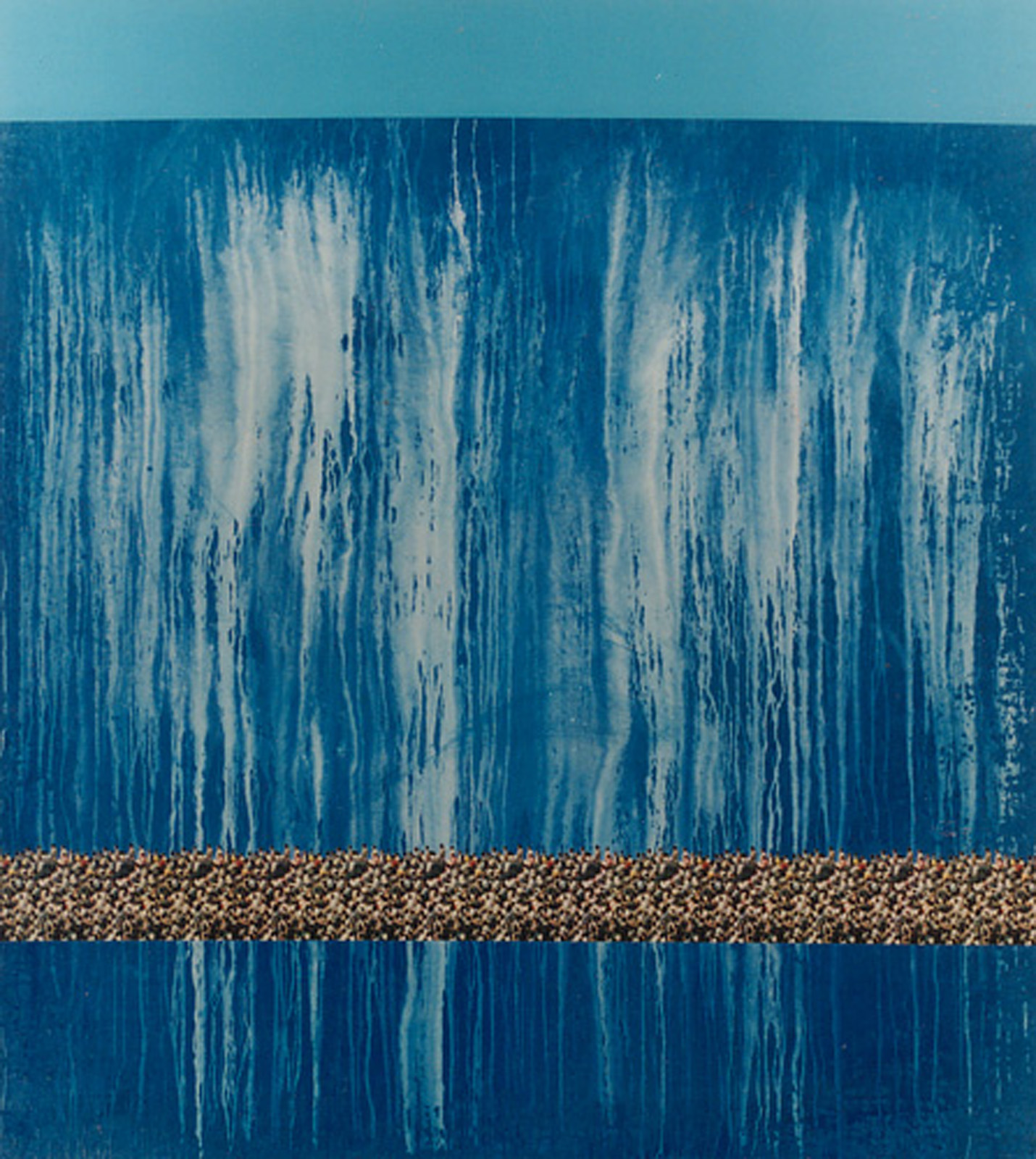
Exodus
1999 · mixed media on canvas · 179 × 160 cm
Private Collection
Exodus began with a photograph of commuters walking through a busy city street. Removed from their original setting and placed within a crashing sea, they become something altogether different. The work inevitably recalls the biblical crossing of the Red Sea, yet it never reveals whether these figures are escaping, advancing or already overwhelmed by the flood. The painting is deliberately suspended between hope and catastrophe, allowing contemporary migration, ancient narrative and environmental uncertainty to occupy the same image.
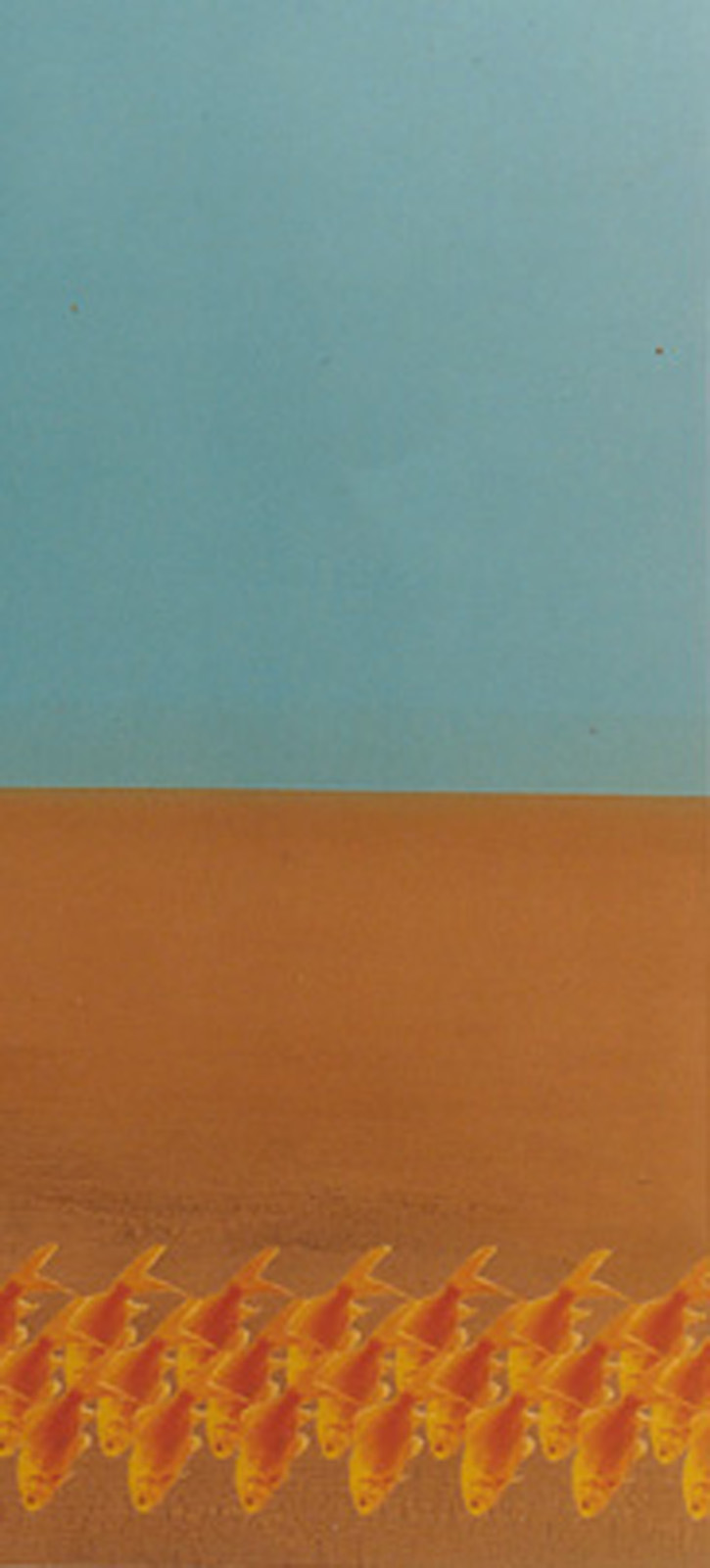
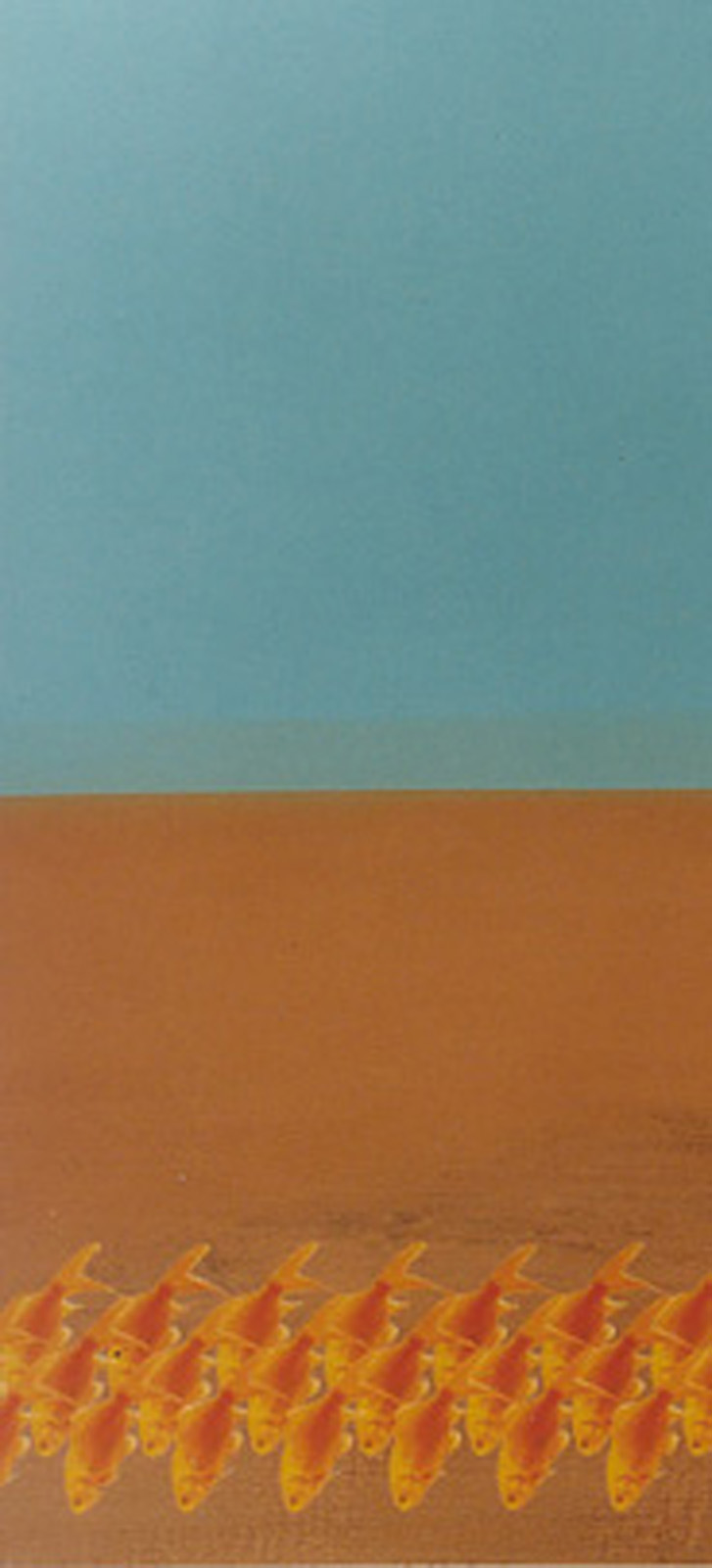
Bottom Feeders
1999 · mixed media on canvas · originally a single painting, later divided into two panels ·
each panel 140 × 65 cm
Private Collection
Bottom Feeders originated from the image of a goldfish taken from the logo on a credit card. Removed from its commercial context and repeated across the painting, the fish become strangely ambiguous. They may be stranded on a beach, gasping for water, or they may be feeding peacefully on the seabed. That uncertainty interests me. The image shifts according to the viewer's reading, occupying a space somewhere between environmental warning, commercial image, natural history and myth.
Bottom Feeders was originally made as a single painting. Following its exhibition, two collectors both wished to acquire the work, and it was eventually divided into two separate panels. That physical alteration became part of the painting's own history—another transformation within a project already concerned with reproduction, change and the unstable life of images.
As with many works from the Repetitions series, materials were incorporated directly into the painted surface. These additions acted as physical intrusions into the image, bringing representation into contact with the substance of the work itself. The paintings became objects as much as images, existing somewhere between depiction and material reality.
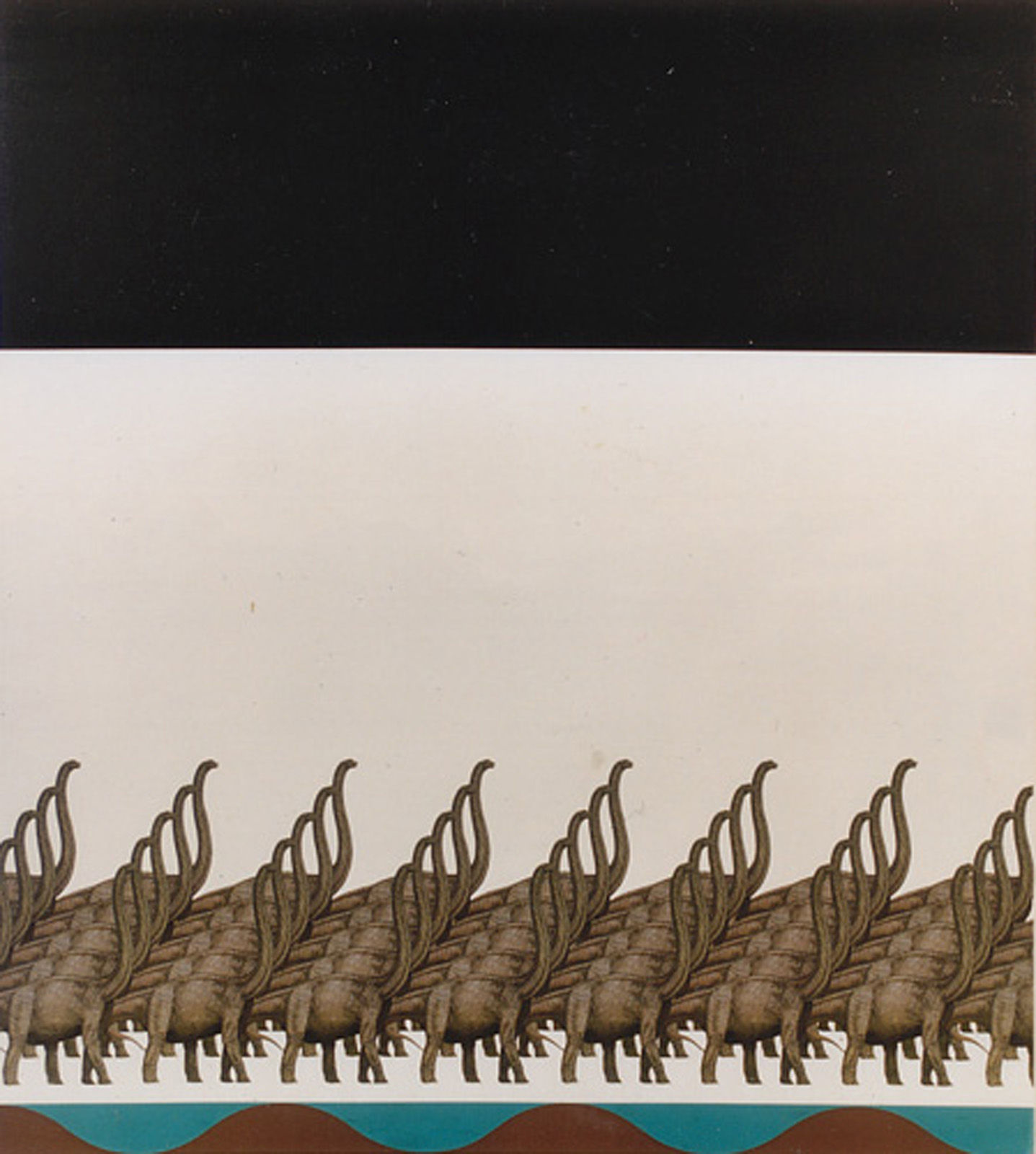
Argentinosaurus
1999 · mixed media on canvas · 179 × 160 cm
Private Collection
Argentinosaurus depicts rows of dinosaurs crossing a snow-covered landscape. The collision of deep geological time with an environment they could never have inhabited creates a deliberate impossibility. Like much of the Repetitions series, the painting is less concerned with historical accuracy than with the ways images can be displaced and recontextualised. The dinosaurs become another migration, another exodus, another species moving through an uncertain landscape. Extinction is presented not as a single event, but as part of an ongoing cycle in which environments change and even the most dominant forms of life eventually disappear.
Although each painting begins with a different image, together they reflect on the fragility of existence. Flood, drought, migration and extinction become different expressions of the same condition: life continually adapting to environments that are themselves unstable. Like many works in the Repetitions series, these paintings occupy the threshold between observation and metaphor, suggesting that every landscape carries traces of those who came before us, and that every civilisation, no matter how permanent it may appear, is ultimately temporary.