Archive / Repetitions
Motion Sickness
Motion Sickness belongs to the wider Repetitions project and explores evolution, migration and the unintended consequences of movement. The title refers not simply to physical travel but to life itself: everything moves. Cells divide, organisms migrate, species expand into new territories and populations change through contact with one another. The paintings reflect on evolution as a process that is both natural and repeatedly altered by human intervention.
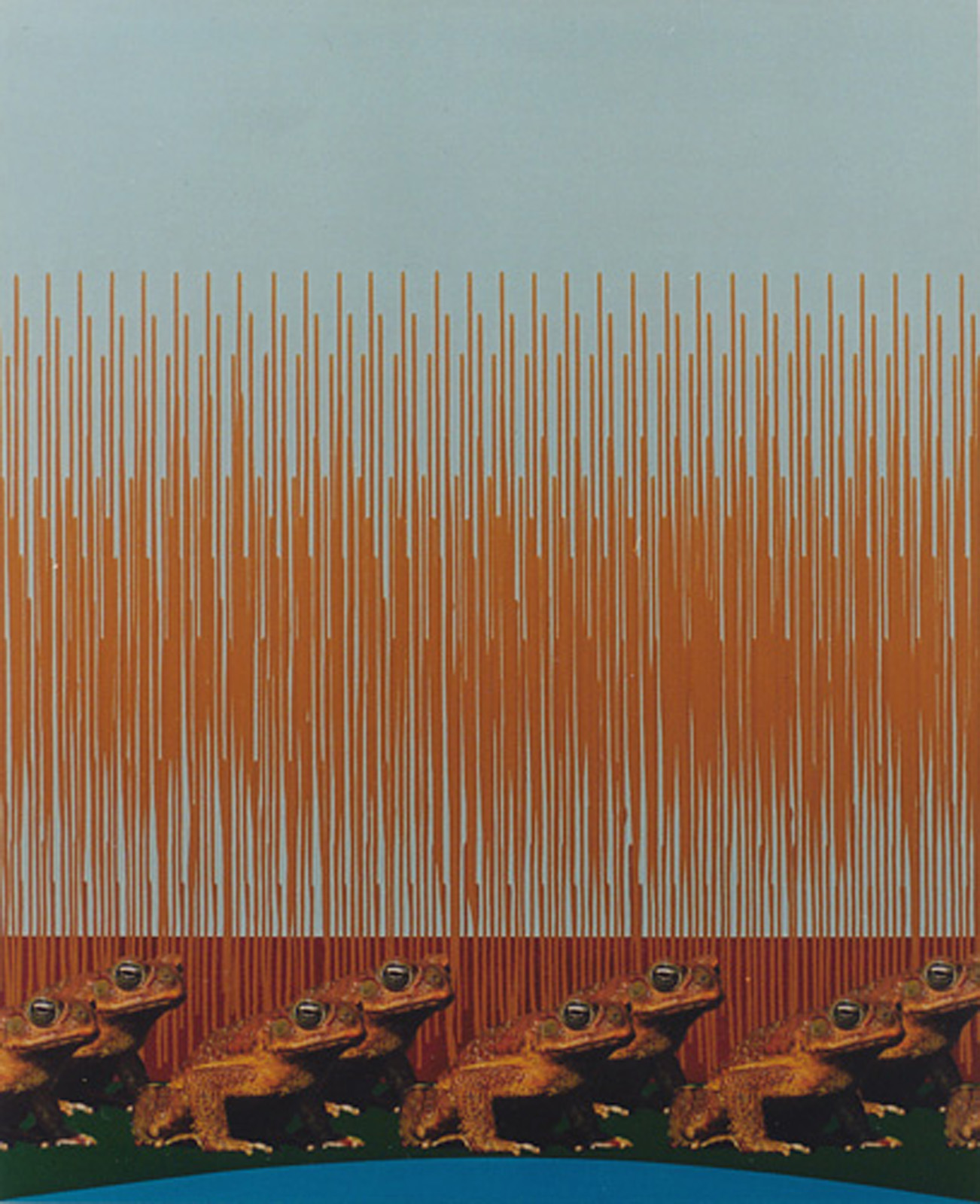
Hoppers
1998 · mixed media on canvas · 150 × 121 cm
Hoppers was inspired by Australia's cane toads. Introduced to control grey-backed sugar cane beetles, they flourished in the absence of natural predators and rapidly became an ecological problem in their own right. The painting presents rows of toads gathered at the water's edge, breeding and multiplying across a landscape where they do not naturally belong. Behind them, carefully measured drips suggest the ordered structure of sugar cane while also reading as sound waves: a visual echo of countless croaks filling the air. The work reflects on the unintended consequences of human intervention in natural systems—a kind of forced Darwinism.
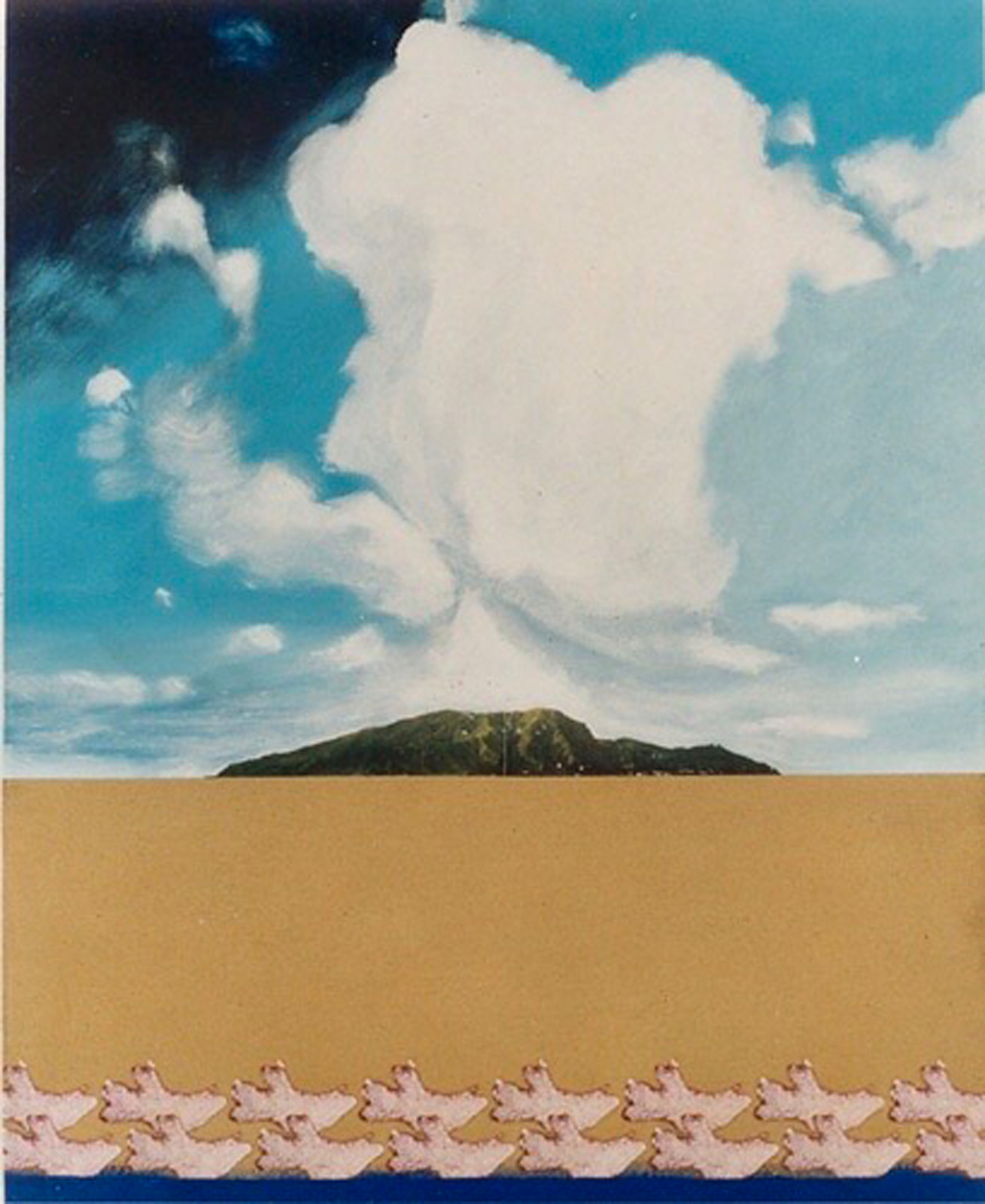
Drifters
1998 · mixed media and sand on canvas · 150 × 121 cm
Drifters depicts rows of amoeba-like forms washed onto a sandy shoreline. Real sand was incorporated into the painting, allowing the beach itself to become part of its surface. Beyond them lies the distant outline of Pitcairn Island. Once inhabited by Polynesians, the island later became home to the mutineers from HMS Bounty. Their arrival transformed the island forever through violence, settlement and the mixing of populations. The painting reflects on migration not simply as movement, but as a force capable of permanently altering the genetic and cultural identity of a place.
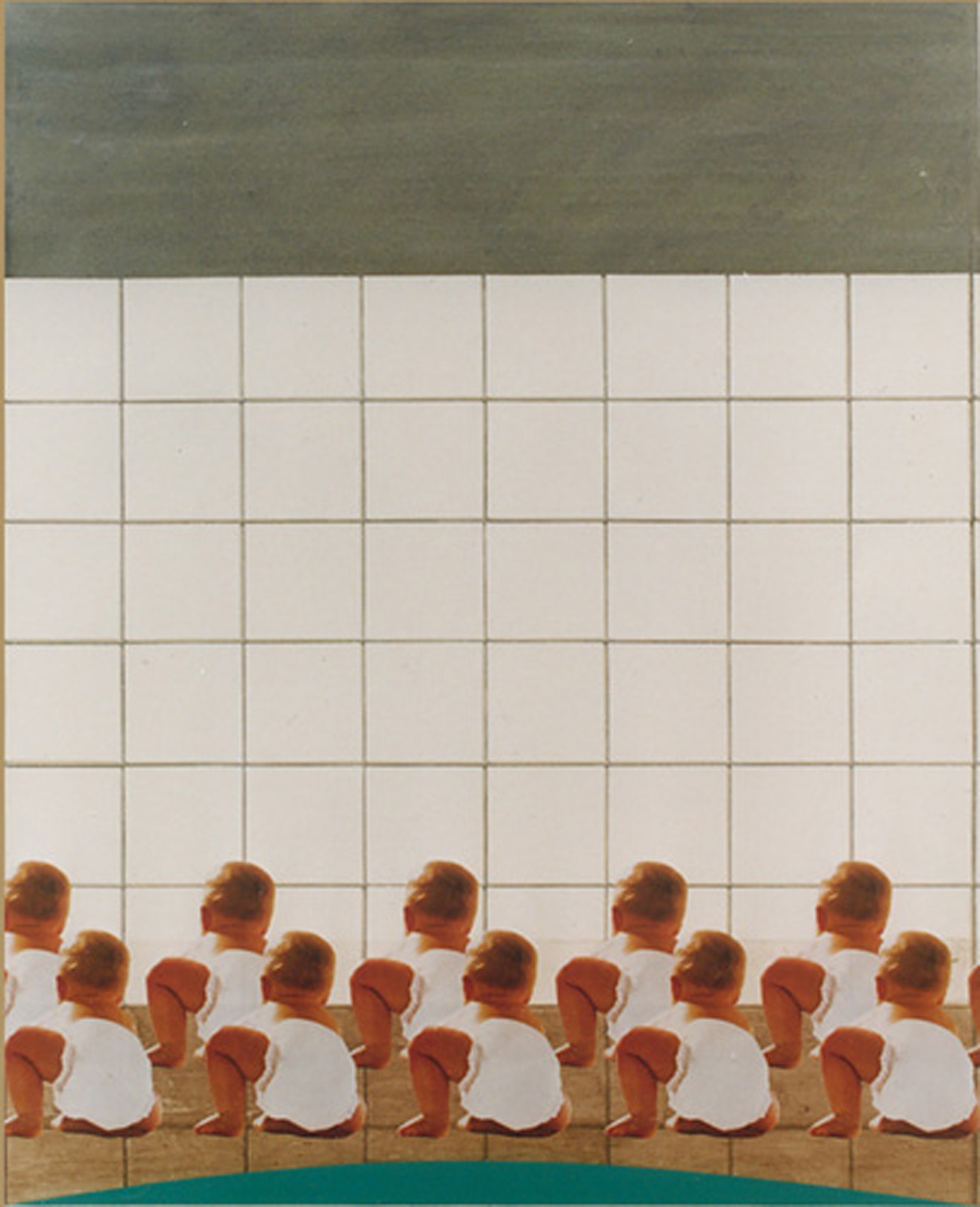
Crawlers
1998 · mixed media and dirt on canvas · 150 × 121 cm
Crawlers appears at first to depict babies crawling across a clean, sterile environment reminiscent of a tiled bathroom or swimming pool. Yet the painting contains real dirt mixed directly into its surface. The apparent cleanliness is therefore an illusion. Babies become symbols of vulnerability and the human desire for hygiene, while the real subject of the work is bacteria: life that persists regardless of our efforts to eradicate it. However carefully we clean, microscopic life continues to thrive.
As with many works in the Repetitions series, the materials are integral to the meaning of the paintings. Sand in Drifters evokes migration and landfall, while dirt in Crawlers collapses the distinction between representation and reality. Throughout the series, repeated imagery suggests multiplication, adaptation and survival. These paintings are less about individual organisms than about the restless movement of life itself, and the ways natural processes are continually reshaped by human actions.