Archive
Origins
The works on this page were made during the years immediately after I left Bretton Hall College in 1996. Looking at them now, I can see many of the concerns that would continue to shape my practice over the following decades, although at the time I had little sense of where they might lead. These paintings sit at the point where student experimentation began to give way to a more sustained artistic practice.
I arrived at Bretton Hall in 1993 after studying foundation at Rotherham College of Art. One of the first projects was titled Culture, Nature, Environment. I focused on the part of Sheffield where I was living, making painted sheets that sat somewhere between landscape paintings, maps and written records. Text was worked across the surface before the sheets were torn up and pasted back together into abstract collages. Even then, I was interested in place, surface, fragments and reconstruction.
Another early project was based around systems, and was actually called "The Systems Project". We were given two pounds of sand, two feet of dowel, two square feet of polythene, a ball of string, a roll of masking tape and a copy of Gaston Bachelard's The Poetics of Space. The instruction was to build structures and then work from them. I took the materials into a swimming pool and began making structures that dealt with buoyancy, weight and instability, documenting them with my underwater camera. Back on dry land, I reversed the logic and used water to create reservoirs. The project became an installation rather than a set of drawings.
At the same time I was trying to make work about my experience of diving. I wanted people to feel what I had felt underwater, but the work did not communicate that experience in the way I had hoped. That failure was important. It made me realise that an experience does not simply transfer from one person to another. It has to be translated, structured and transformed. Looking back, that lesson may have been one of the most important things I learned at Bretton Hall. It continues to shape the way I think about making work today.
Art history at Bretton Hall opened other doors. I was drawn to the earliest works we studied, particularly Neolithic art and the way simple objects could carry meaning across vast spans of time. At the same time I was looking at contemporary artists such as Michael Landy, whose installations examined systems, consumer culture and the structures that underpin everyday life. Although these interests appeared very different, both encouraged me to think about objects as carriers of meaning rather than simply things in themselves.
Later, through postmodernism, semiotics and post-structuralism, I began to think more carefully about signs, symbols and hidden meanings. I was guided towards alchemy, initially through its materials and processes: etched metals, patinas, transformation and change. Over time, alchemy became less about magic and more about metaphor; a way of thinking about signs, signifiers and the possibility that matter itself might carry meaning.
By my final year I was making sculptures, installations and performances concerned with identity, science, childhood and power. My degree show included Big Science, Little Shed, a coin-operated sphere in which a small shed rotated inside a white void, seen through a radar-like viewfinder. In another room I showed Dora Mania, a video performance involving mechanical children's rabbits, an autopsy-like display of their inner workings and a waistcoat made from their pelts. The work was strange, theatrical and often uncomfortable, but it taught me that objects could be staged, charged and made to perform.
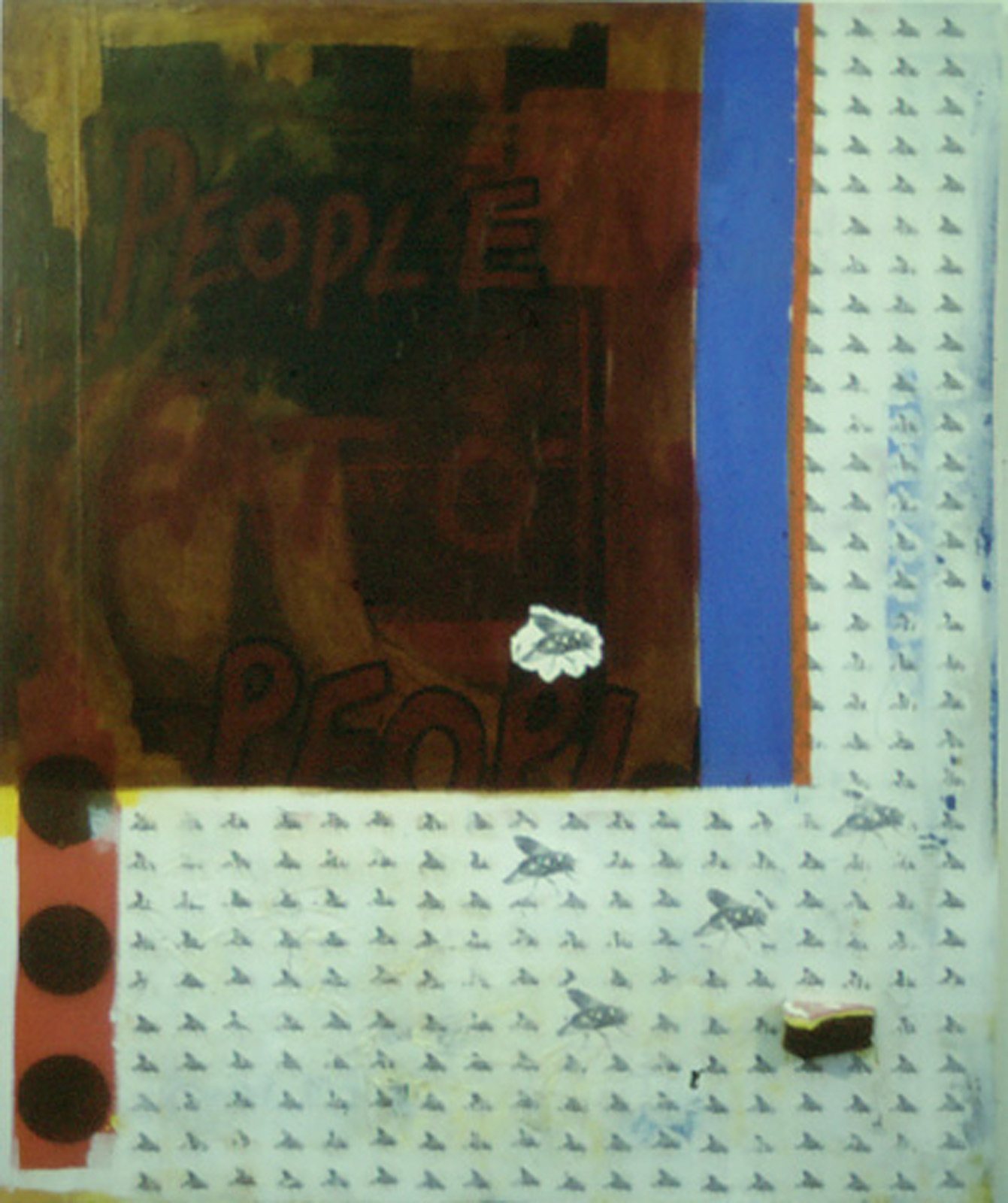
Death
1996 · mixed media and fake cake on canvas · 172 × 155 cm
After leaving university I returned to Sheffield and started Bloc Studios. My studio was small, and I returned to painting. At first the works were still full of the ideas I had been dealing with at Bretton Hall: semiotics, signs, fragments, popular imagery and the unstable relationship between personal experience and public images. I was looking at Martin Kippenberger, some of the German painters, David Salle and conceptual art, but I was also drawn to artists such as Georgina Starr. What interested me about her work was its ability to combine humour, personal narrative, memory and fiction without losing its conceptual rigour. She demonstrated that autobiographical material could be playful, theatrical and emotionally complex at the same time.
The paintings were full of signifiers, but they were also deeply subjective. I was painting about my life: my son, my home in the suburbs, media events, the Olympic bombing, consumer culture and the difficult morality of capitalism.
Gradually the work began to change. I was listening to more techno and classical music, and the paintings became cleaner, more ordered and more controlled. Gesture gave way to hard edges, repeated forms and composed surfaces. The work still came from subjective experience, but I was increasingly interested in finding a more objective language through which to hold it. It occupied the membrane between the personal and the constructed; between lived experience and image.
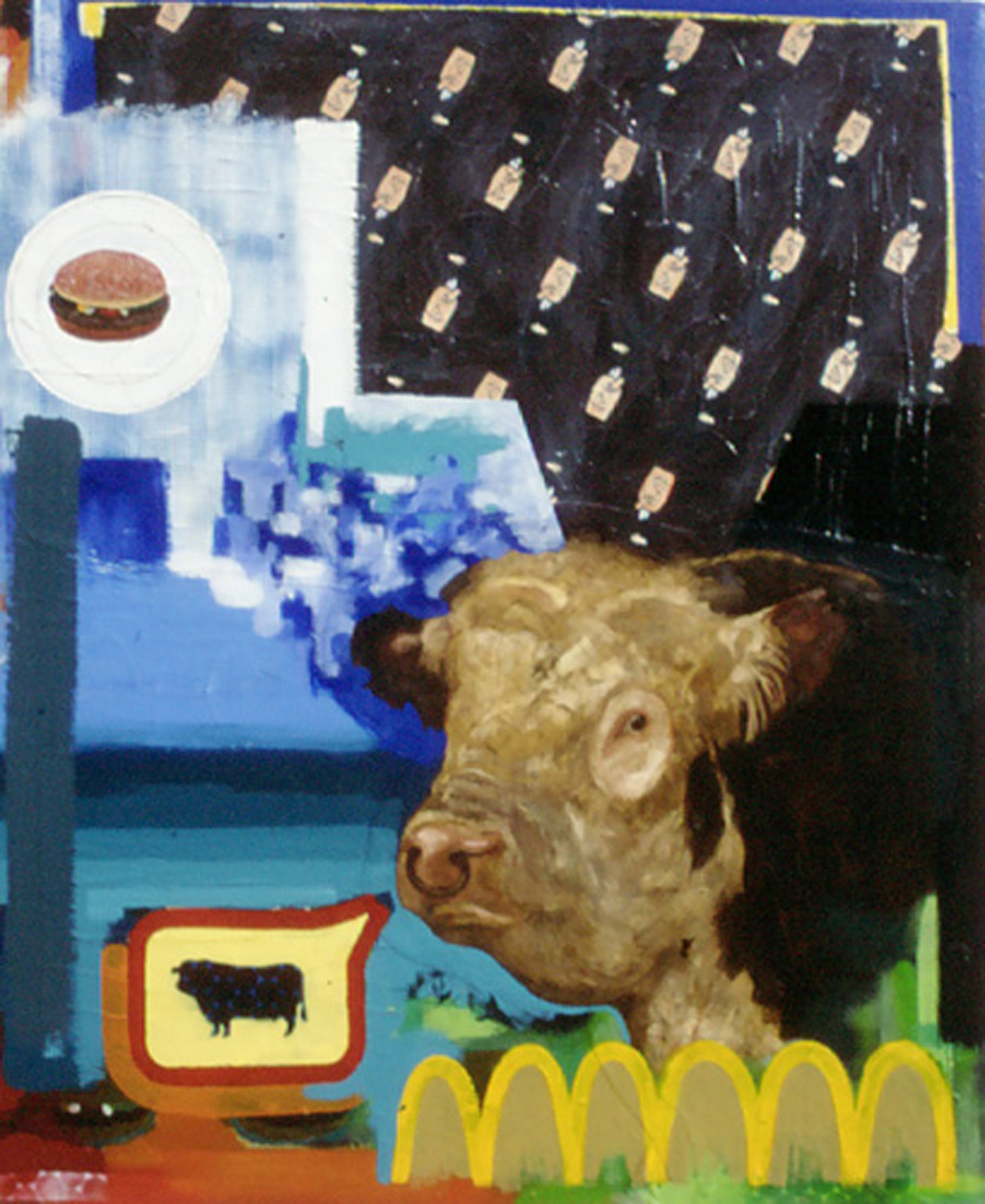
Burger
1996 · mixed media on canvas · 172 × 155 cm
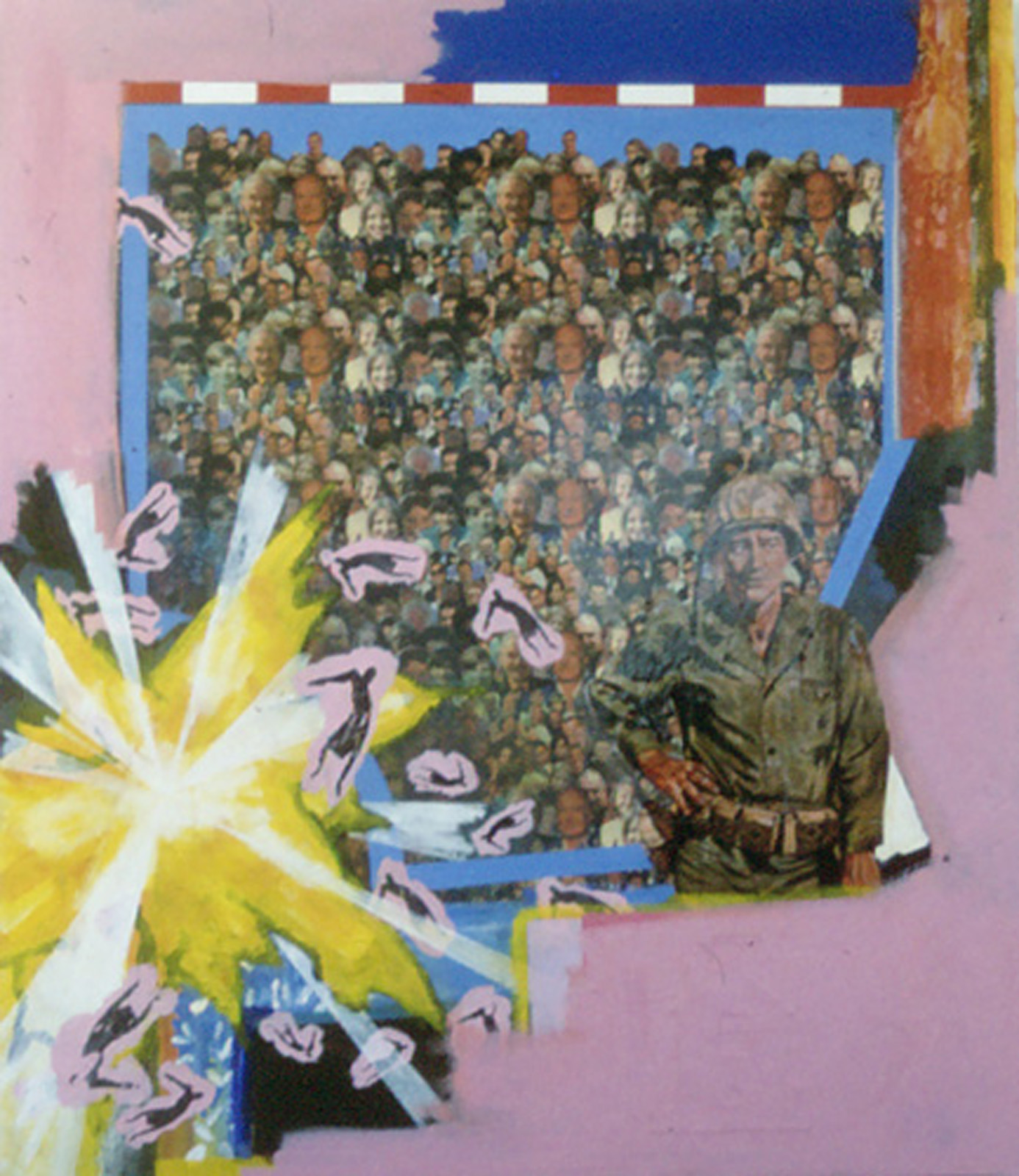
Bomber
1996 · mixed media on canvas · 172 × 155 cm
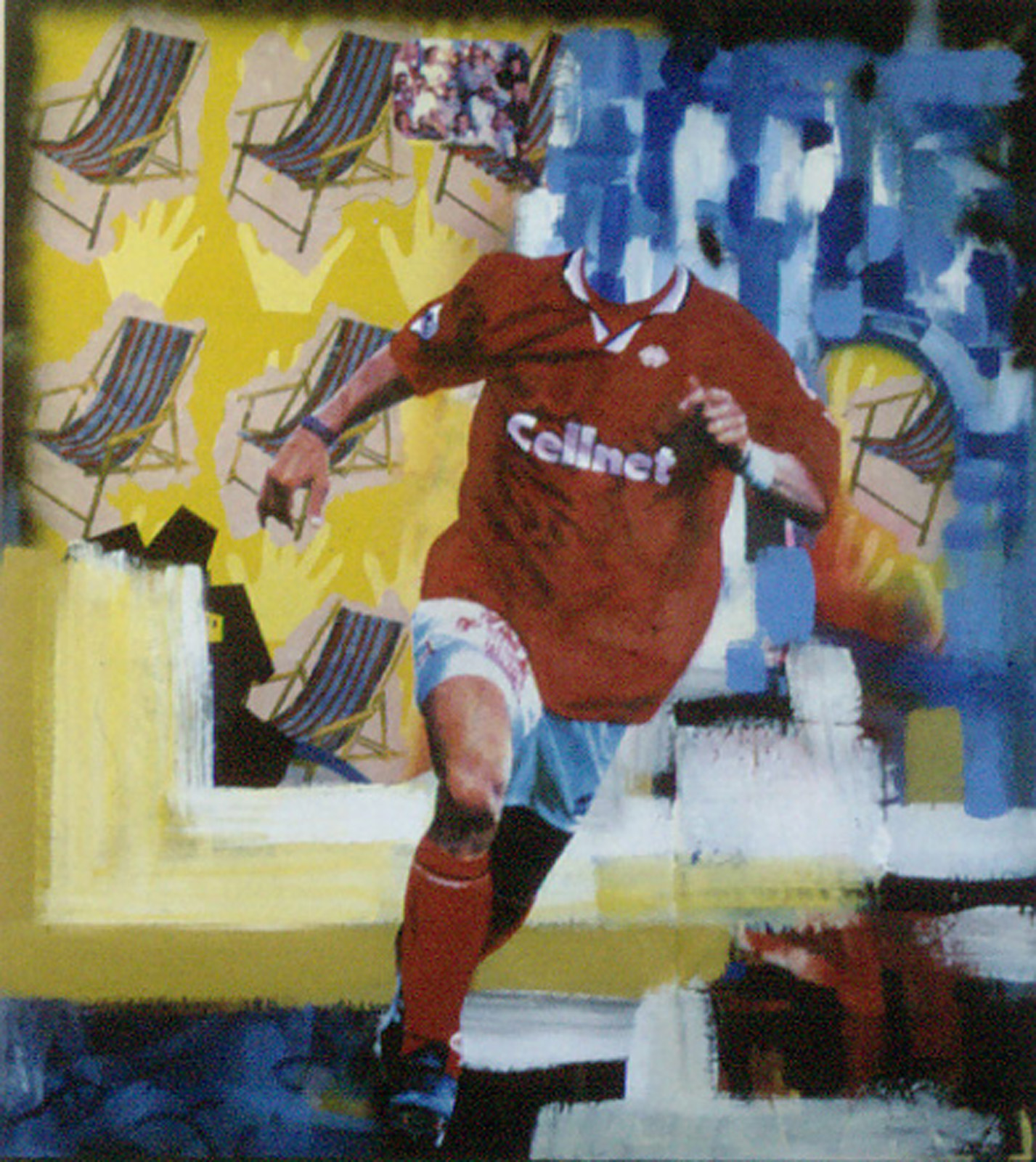
Team Player
1996 · mixed media and newspaper on canvas · 172 × 155 cm
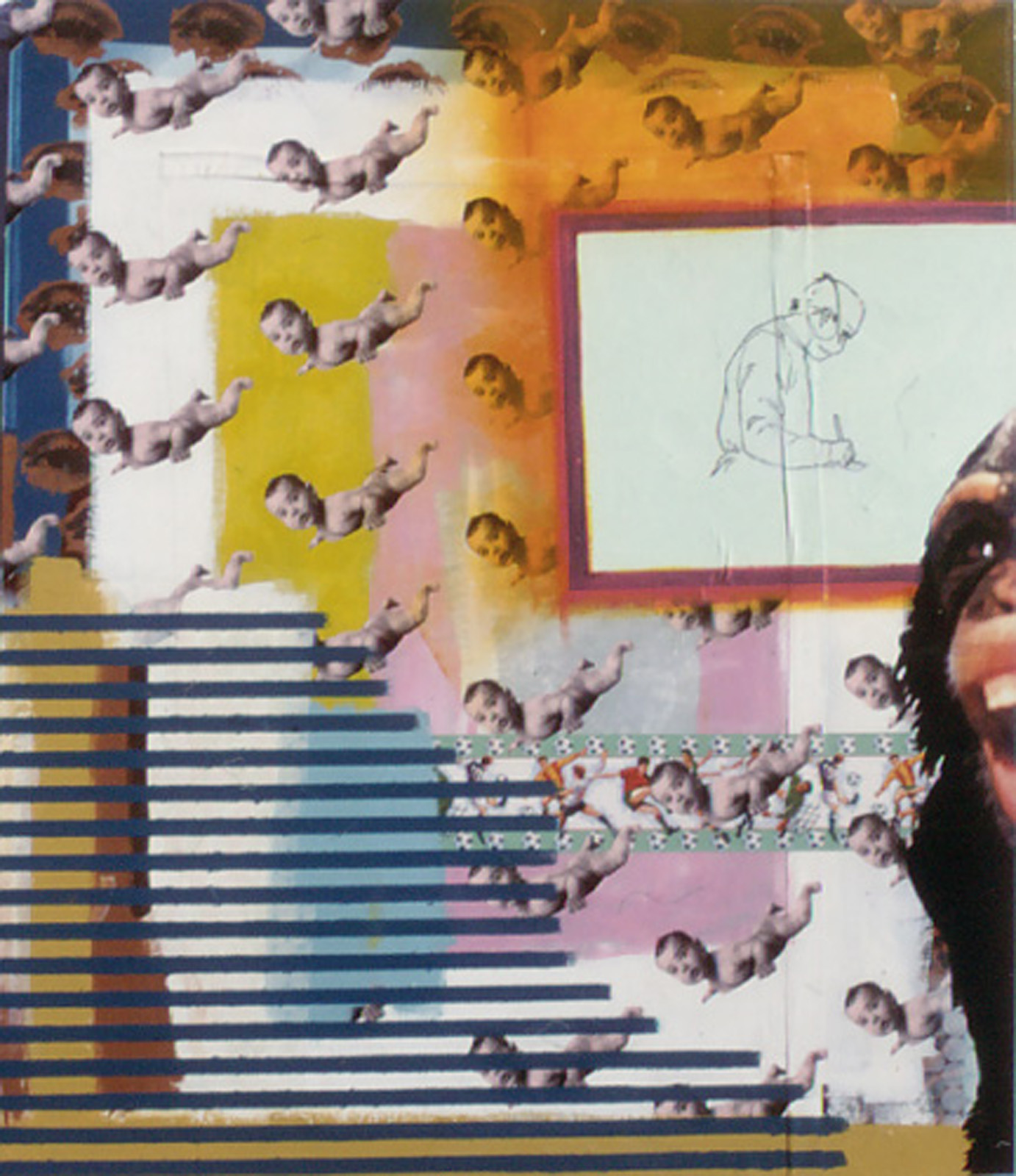
Gene Pool
1996 · mixed media on canvas · 172 × 155 cm
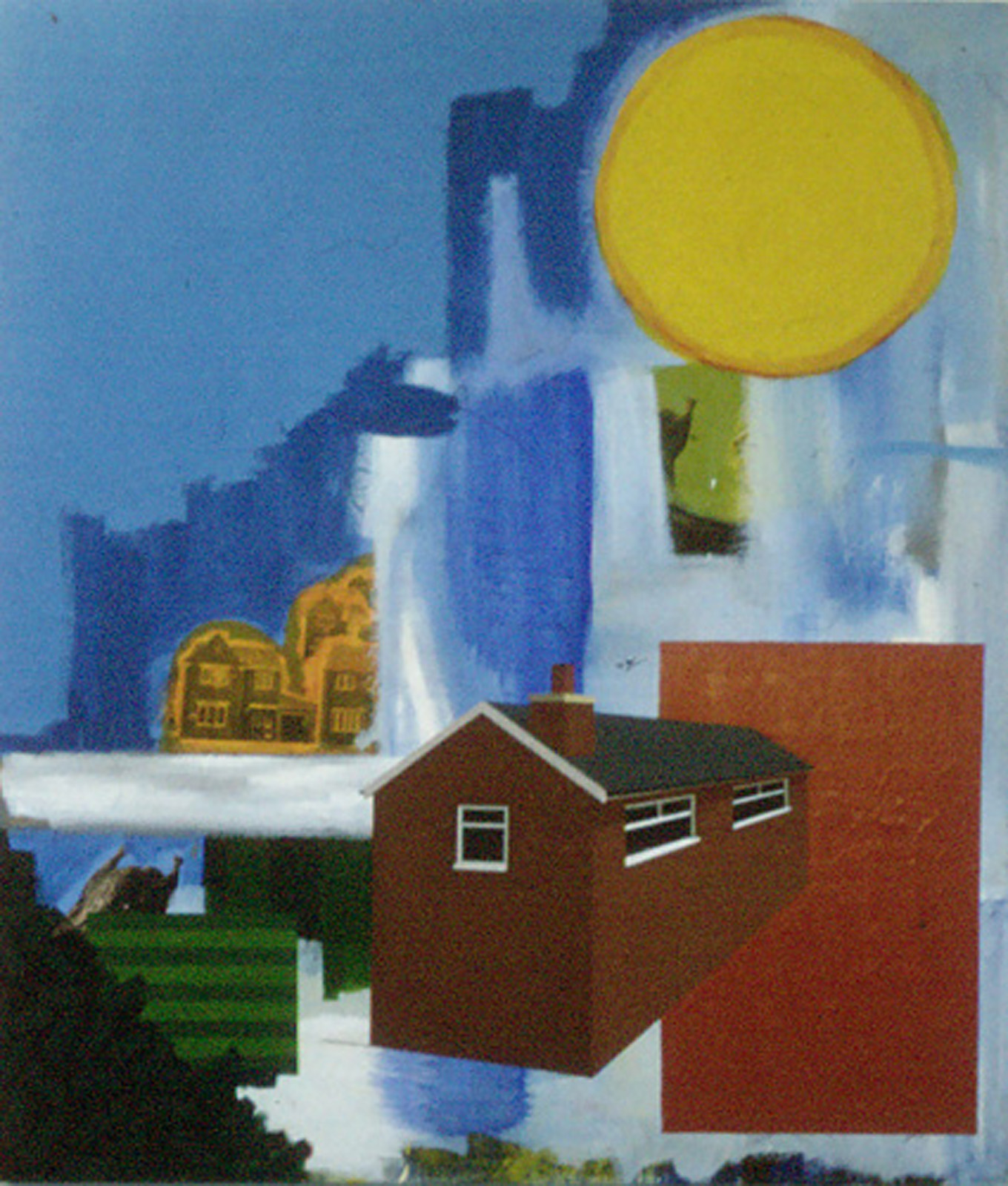
The Burbs
1996 · mixed media on canvas · 172 × 155 cm
Two paintings from this period now seem particularly important. Desirable brought together scale, repetition and a cleaner pictorial structure. I remember thinking of the word "clean" in relation to it. Make Hay pushed this further. It was ordered, minimal and controlled, but it remained located in landscape and carried a narrative about consumerism, labour and desire. It had a hot, dry, dusty feeling. Looking back, I can see that something had shifted.
These works feel less like a completed body of work than a period of transition. The concerns remained consistent, but the language was changing. The paintings were becoming cleaner, more deliberate and increasingly shaped by repetition, process and control. Those developments would lead directly into the series One, and from there into the wider body of work that followed.
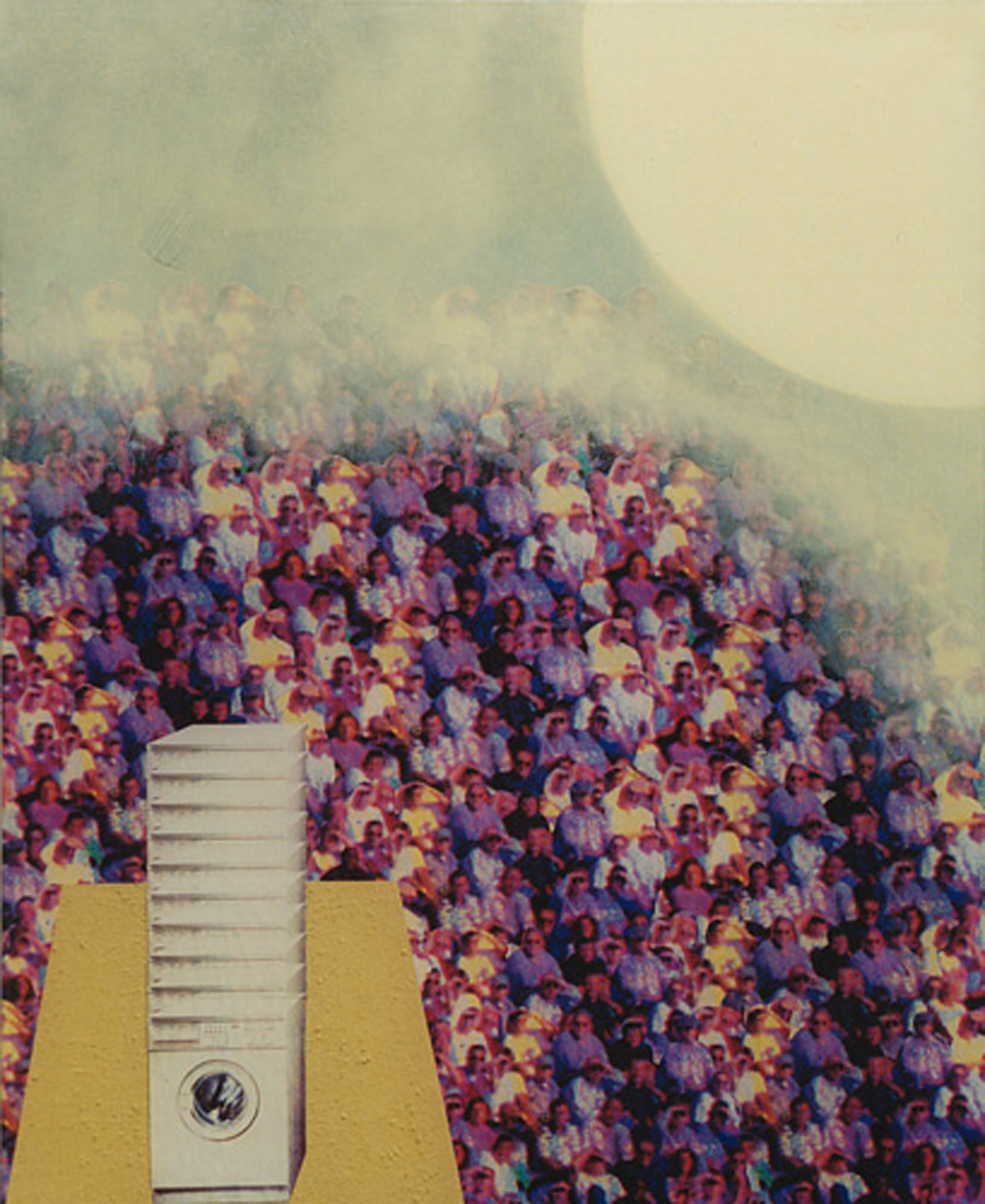
Desirable
1996 · mixed media and sand on canvas · 125 × 100 cm
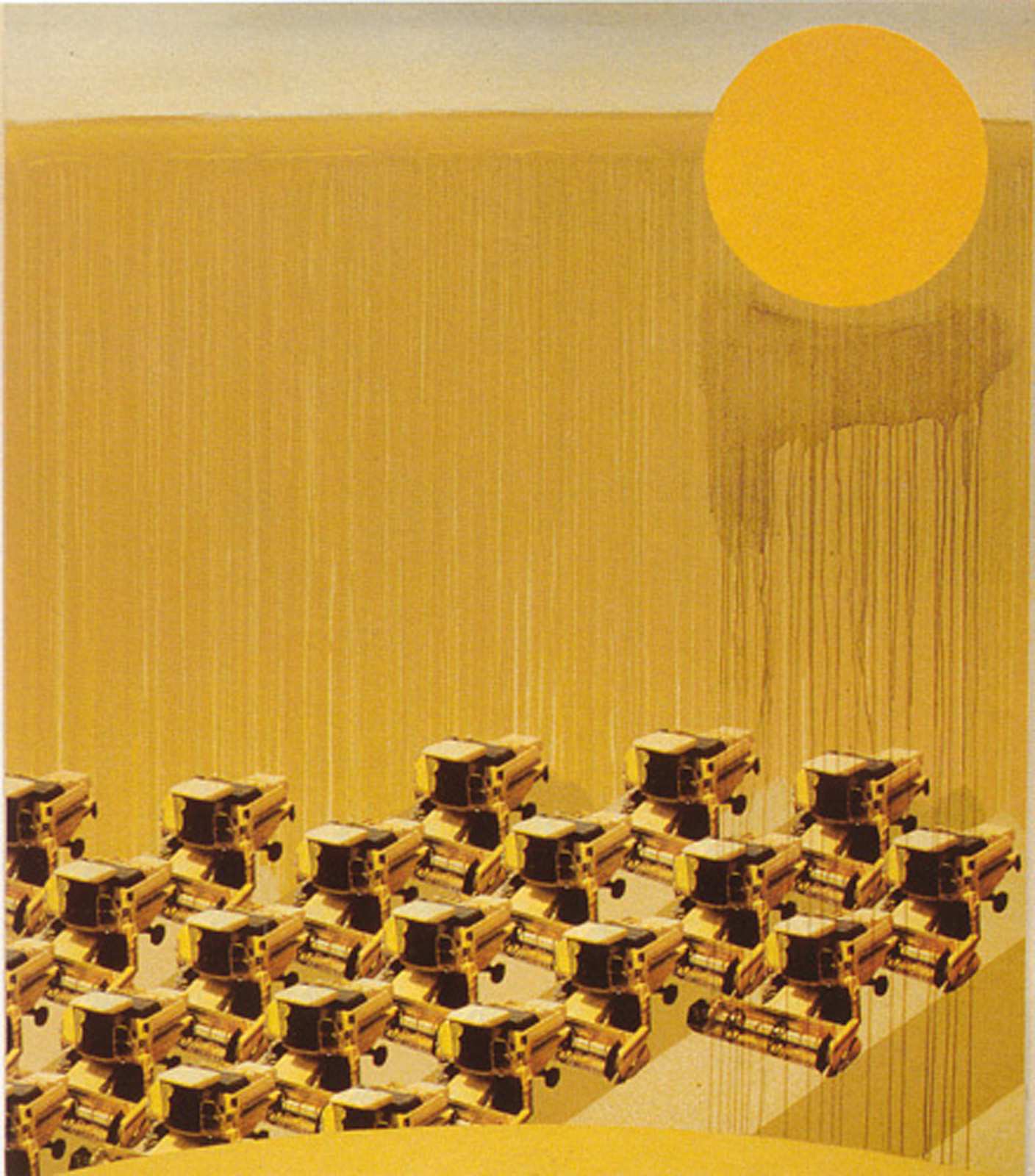
Make Hay
1996 · mixed media on canvas · 152 × 120 cm