Archive / Place
Submerged
Submerged
2016 · Bloc Projects
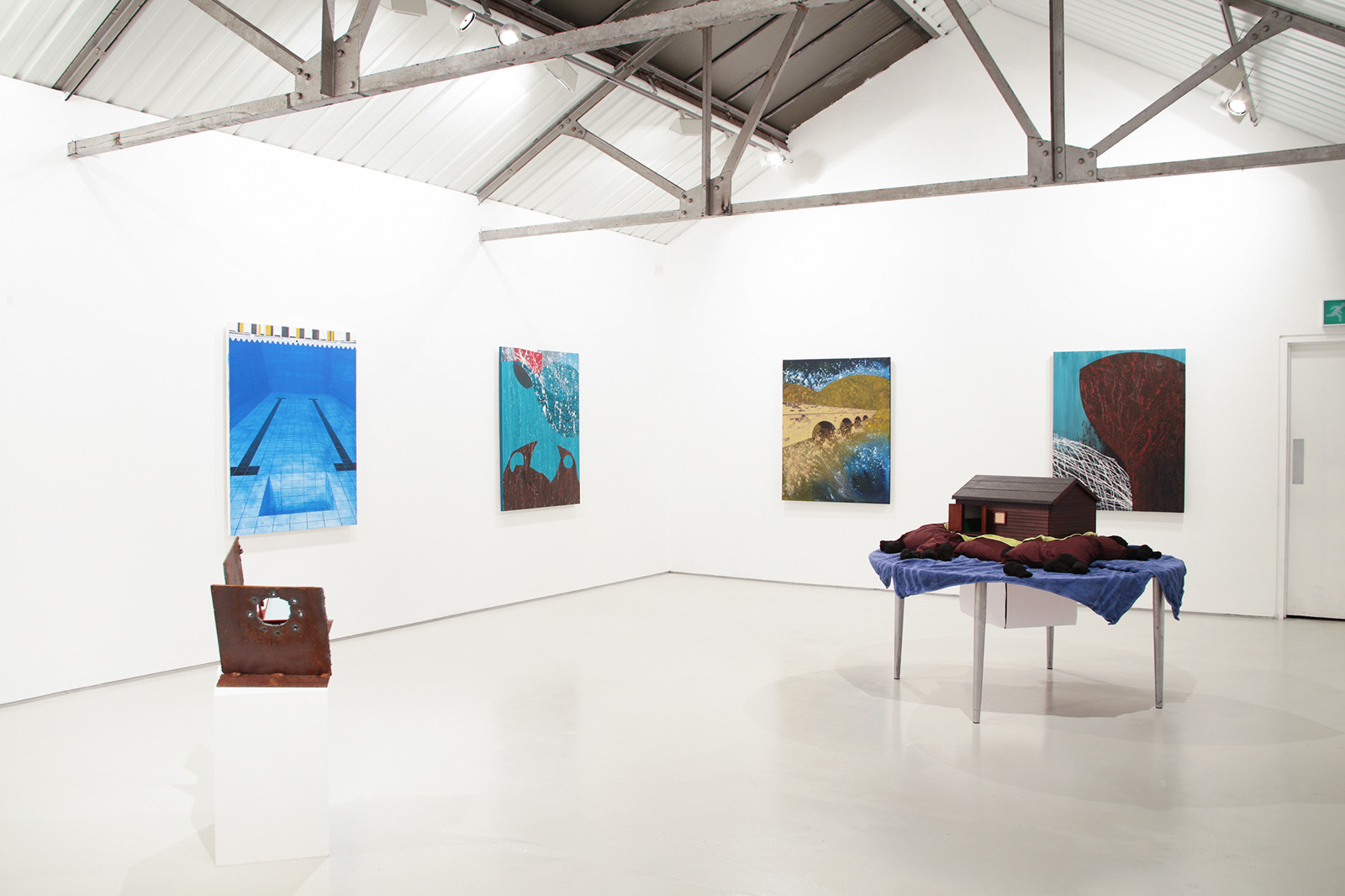
Submerged is a series of semi-autobiographical paintings that grew from my lifelong encounters with the sea and with bodies of water. Although rooted in specific memories, the works are less concerned with depicting particular places than with the emotions they evoke—wonder, fear, curiosity and the awareness that what lies beneath the surface often remains unseen.
The series marked a return to a more pictorial form of painting. Sky returns to the top of the canvas, land occupies the horizon, and water becomes a space in which memory and experience accumulate. The layered processes developed in earlier work remain—masking, staining, sanding, splashing and building surfaces—but the repeated imagery gives way to landscapes shaped by lived experience.
Each painting begins with a real encounter: childhood fears, diving expeditions, shipwrecks, reservoirs, storms and near misses. Together they form a personal geography of places that have continued to shape my imagination. Looking back now, I realise that these paintings were already pointing towards the way I would later approach archaeology and landscape—not simply as locations, but as places where memory, material and experience become inseparable.
The Deep End
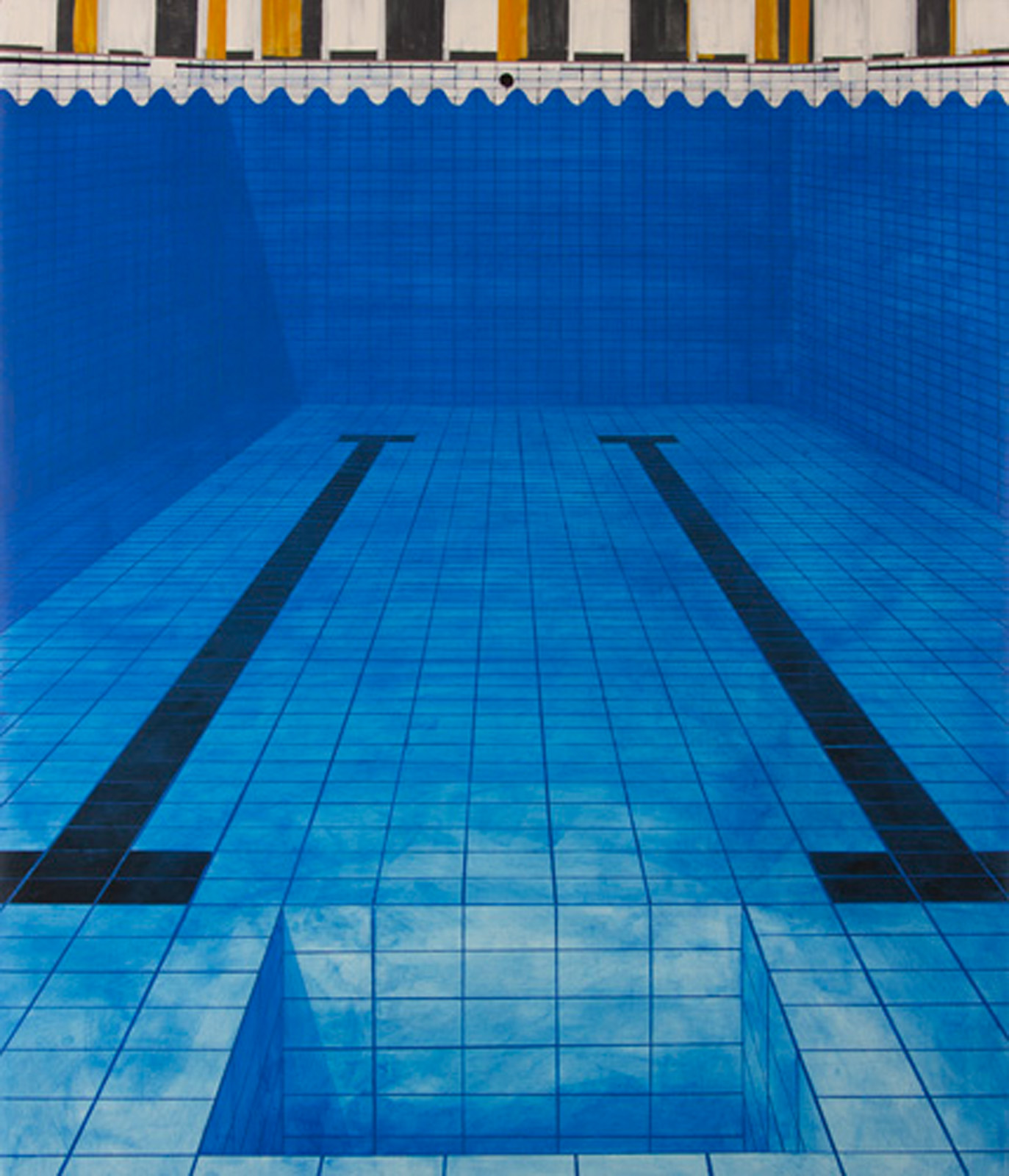
2015 · mixed media on canvas · 122 × 98 cm
The Deep End returns to the Victorian swimming baths where I learned to swim. I can still remember the rows of changing cubicles that surrounded the pool, but what stayed with me most was the great drain at the bottom of the deep end. As a child I was convinced that, if I swam too close, it would pull me under. I knew it wasn't rational, but fear has little interest in reason. Even looking into the dark opening filled me with dread.
The painting is less a picture of the swimming baths than a memory of that feeling. The architecture remains, but it is filtered through the imagination of a child, where scale becomes exaggerated and the unknown seems infinitely deeper than it really is. Looking back now, I realise that the work is about much more than learning to swim. It marks one of my earliest encounters with the strange mixture of curiosity and fear that accompanies deep water—a feeling that has stayed with me throughout my life and reappears throughout the Submerged series.
Hidden Depths
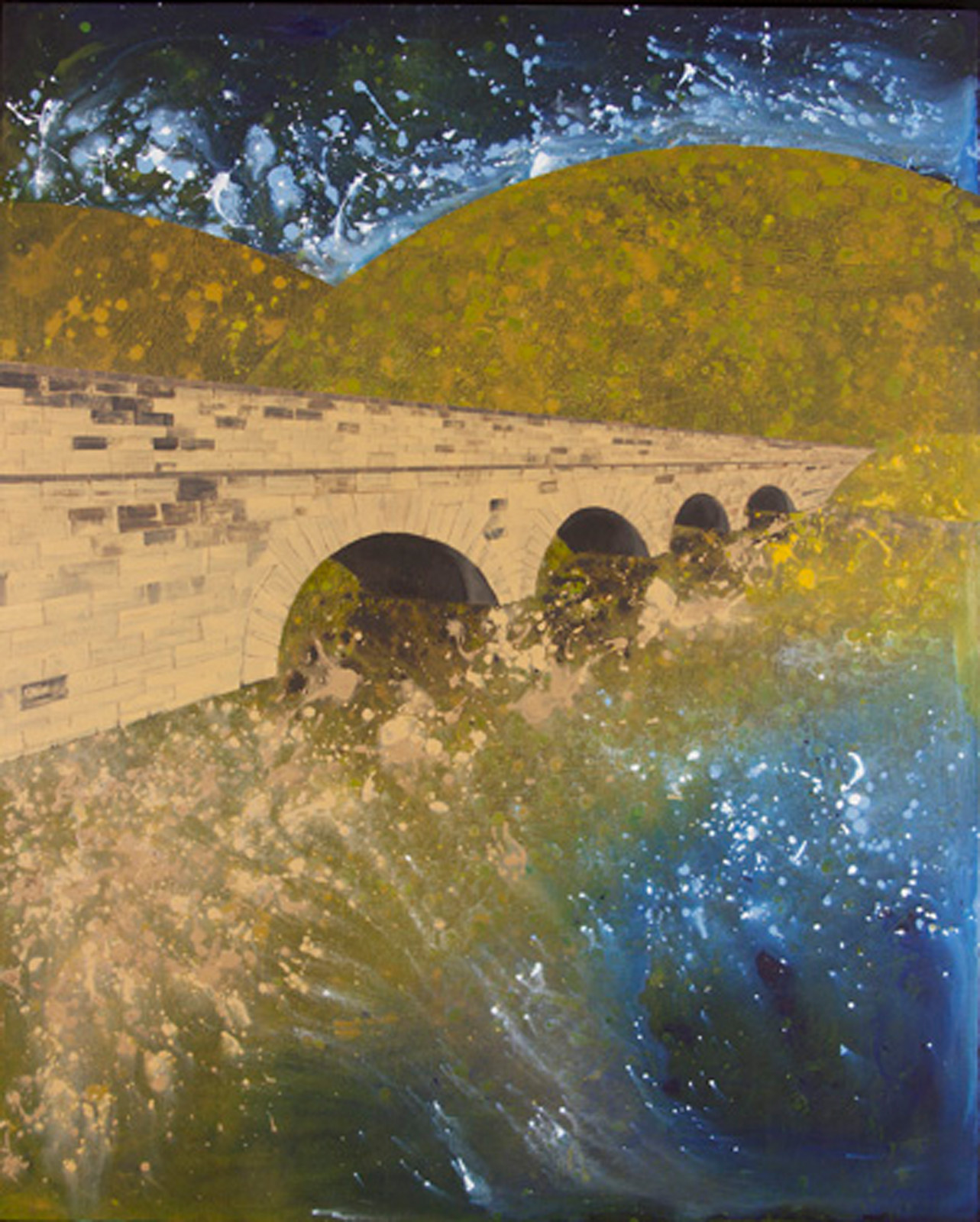
2015 · mixed media on canvas · 122 × 98 cm
Hidden Depths recalls a summer spent swimming at Ulley Reservoir, not far from where part of my family has its roots. As teenagers we spent long days there, treating the reservoir as a place of freedom and adventure. One afternoon I was swimming with my best friend and his girlfriend when she suddenly disappeared beneath the surface. She had been overcome by severe leg cramps and was sinking rapidly.
I remember looking down through the water and seeing her disappear into the depths below us. Without thinking, we both dived after her, grabbed hold of her and brought her back to the surface. It all happened in moments, but it left a lasting impression. Water had always held an element of mystery and excitement, yet in that instant it revealed how quickly it could become dangerous.
The painting is not an illustration of the rescue. Instead, it reflects that uneasy awareness of what lies beneath the surface—both physically and emotionally. Like much of the Submerged series, it explores the point where fascination and fear exist together, where the beauty of a landscape is inseparable from the memories it holds.
The Hole Through Tree Town
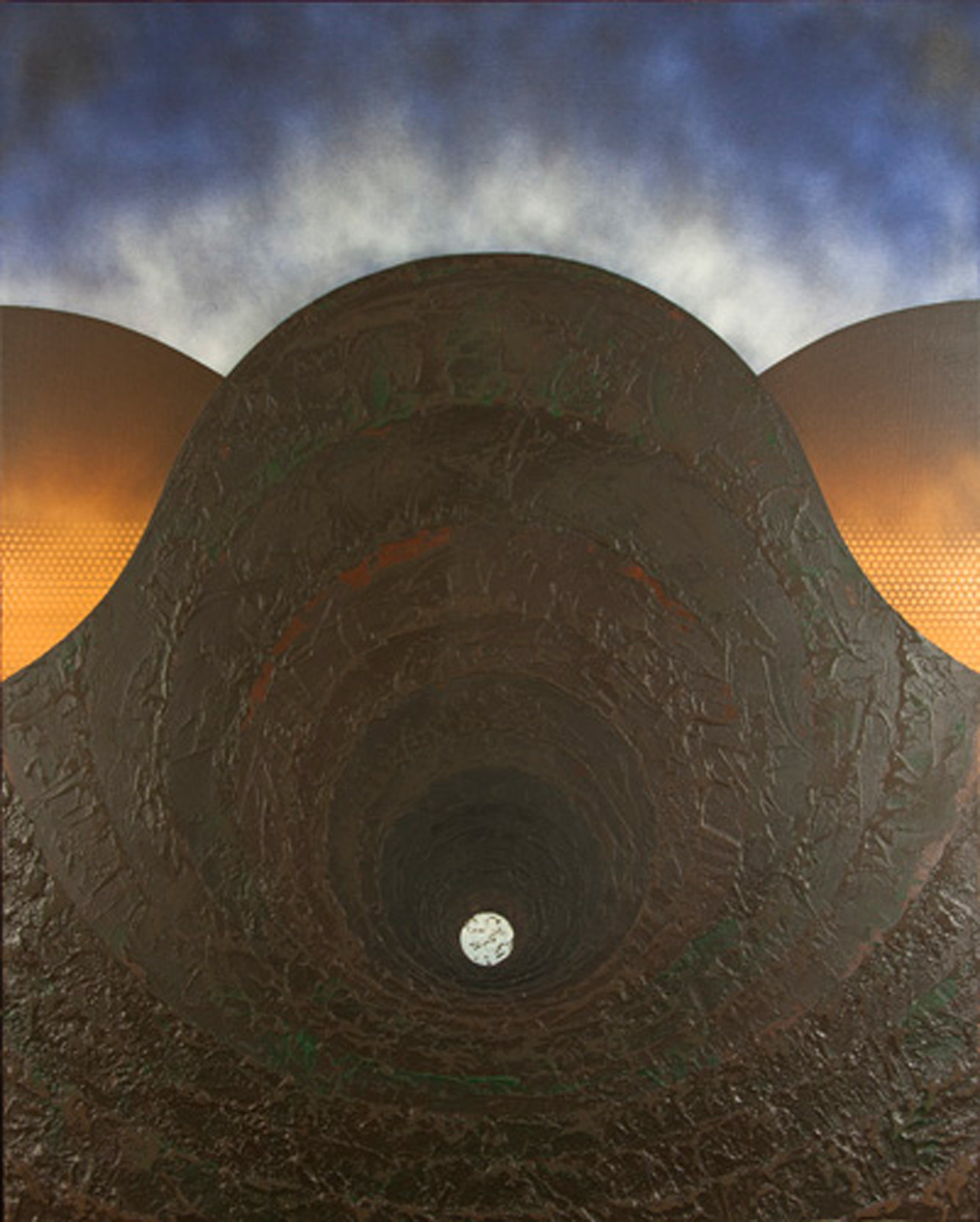
2016 · mixed media on canvas · 122 × 98 cm
The Hole Through Tree Town is inspired by an extraordinary experience exploring a medieval well beneath the floor of the crypt at the old church in Treeton, a village between Sheffield and Rotherham. Hidden beneath a stone slab, the well is mentioned in the Domesday Book. It measured around twelve feet across at the top before narrowing to a shaft barely three feet wide, descending almost eighty feet to the water below.
We volunteered to investigate it. Lowered into the darkness on a bosun's chair, breathing through a long air hose because there was no room for diving equipment, we worked at the bottom in cold, muddy water, filling buckets with sediment that were hauled back to the surface and carefully sifted. It felt less like an excavation than a descent into another world.
When we returned a short time later, the well had changed. Large stones had fallen from the shaft walls and lay scattered across the bottom. Faced with the possibility of further collapse, we abandoned the project. Looking back, it was a frightening experience, but also an unforgettable one. Long before archaeology became central to my artistic practice, I had already found myself descending beneath the surface of the landscape, driven by the same curiosity to discover what history leaves hidden from view.
On the Rocks
2016 · mixed media on canvas · 122 × 98 cm
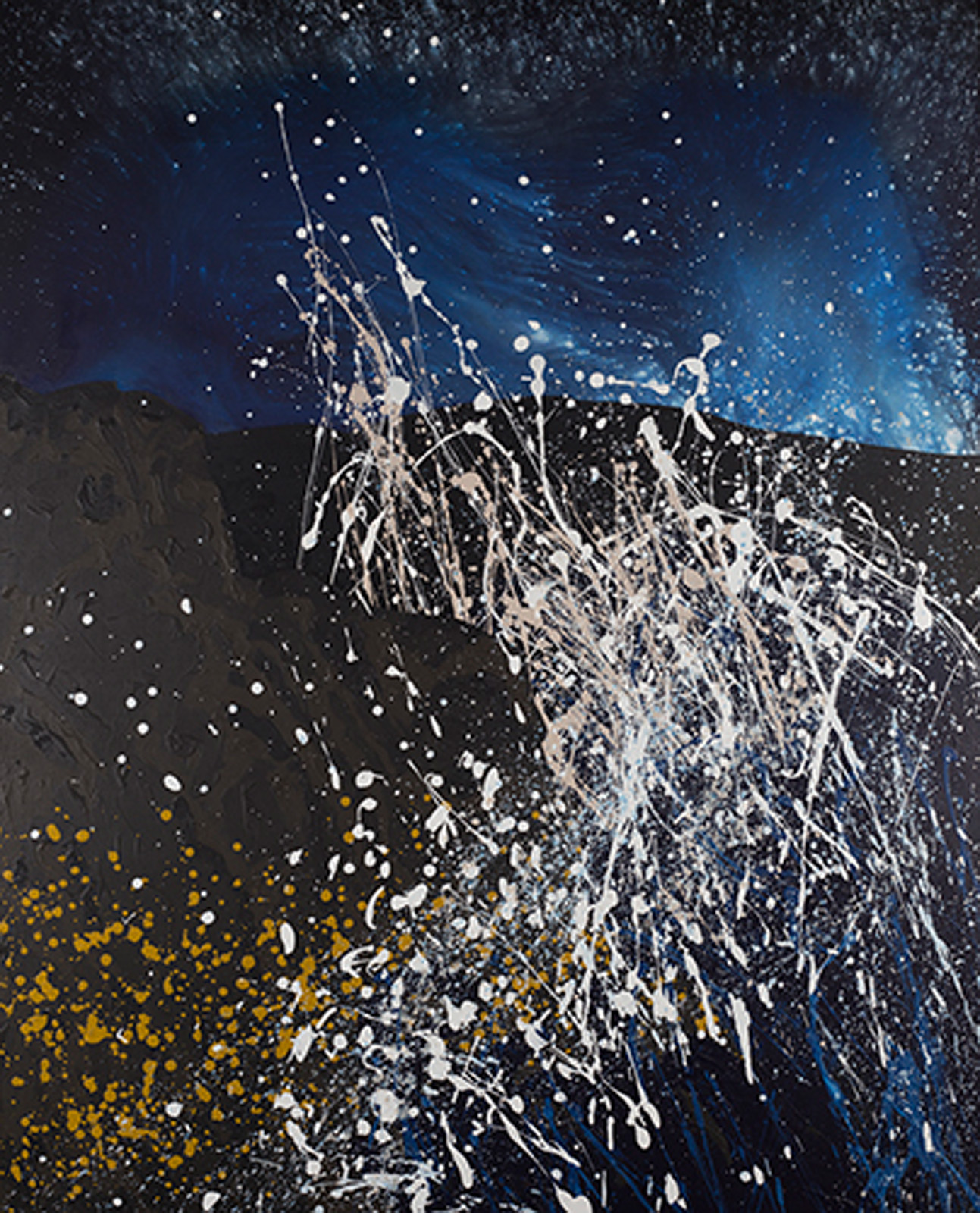
On the Rocks remembers a dive at Beadnell Reef on the Northumberland coast. We entered the water from the harbour and followed the reef beneath the sea before surfacing beyond the harbour wall. By the time we emerged, the conditions had changed completely. A heavy swell was driving waves against the rocks, and our only way out was across the jagged shoreline.
Every wave pushed us closer to the rocks. Timing each movement became critical as the sea surged and retreated around us. I was eventually thrown against the stone, the impact breaking the seals on both of my twin diving cylinders. Air escaped violently from the valves behind my head, roaring into the water at high pressure while the sea continued to break around me.
The painting is built from fragments of that memory: the dark sky above, the white water crashing against the rocks, and the overwhelming awareness of how quickly confidence can give way to vulnerability. Like the other works in Submerged, it is less a record of an event than an attempt to paint the experience of being completely immersed in it.
Squall
2016 · mixed media on canvas · 122 × 98 cm
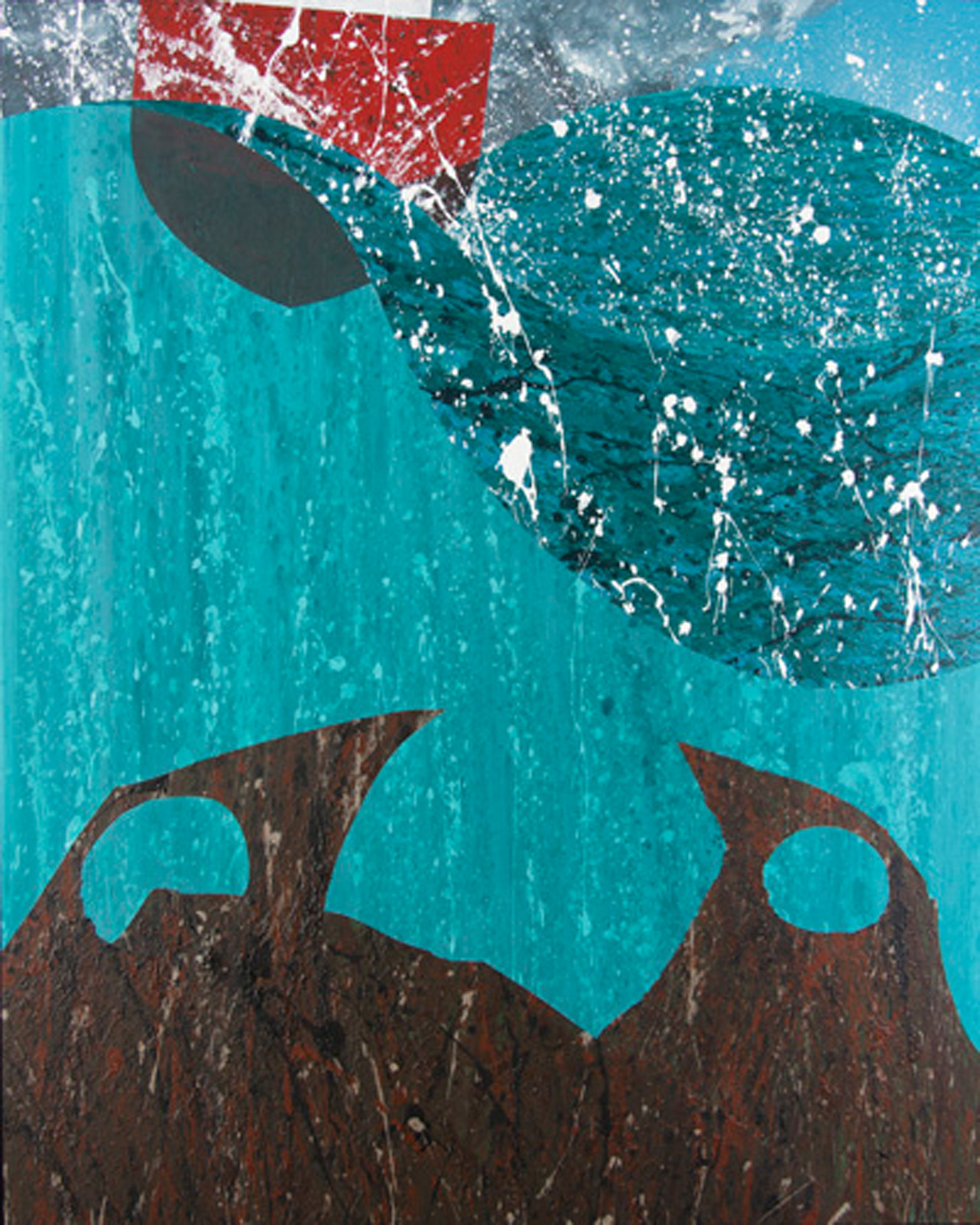
Squall recalls a dive on the wreck of The Canada, lying off the Yorkshire coast near Withernsea. When we entered the water the sea was calm, and there was little to suggest that the weather was about to change. We descended to the wreck as planned, but while we were below, the North Sea turned.
By the time we surfaced, a violent squall had swept in. The salvage vessel was pitching heavily in the growing swell as hailstones hammered down around us. Climbing back aboard became an exercise in timing and endurance, waiting for the right moment to catch the boarding ladder as the ship rose and fell above us. Around us, the sea had transformed from calm water into something entirely unpredictable.
The painting is less concerned with the wreck than with the sudden violence of the storm itself. The darkening sky, the white streaks of hail and the restless surface of the sea become a record of that rapid change, reminding us how quickly the natural world can shift beyond our control. It is another encounter with water that remains vivid long after the details of the dive itself have faded.
In a Tangle
2016 · mixed media on canvas · 122 × 98 cm
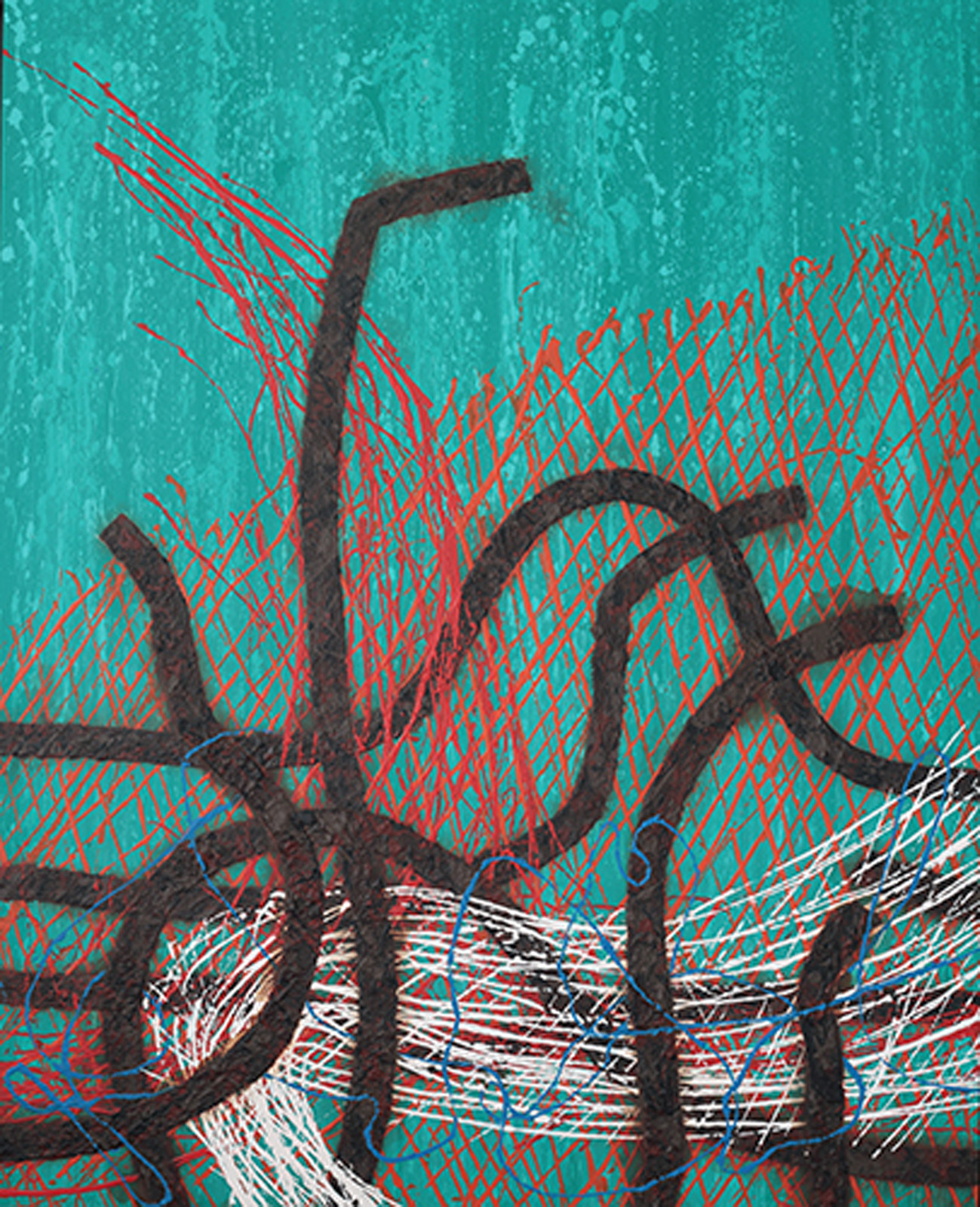
In a Tangle remembers a dive on the wreck of the Chagres while I was working in commercial salvage diving in Liverpool Bay. By the time we reached it, the ship itself had become almost impossible to distinguish. Decades of fishing had left their mark. Lost trawler nets, ropes, drift lines, jiggers and discarded tackle had become woven into the twisted steel until wreck and debris had become inseparable. I hated diving on this wreck.
Swimming through it demanded constant concentration. Every length of rope or strand of net had the potential to catch on equipment or become an unexpected hazard. The wreck no longer belonged solely to the ship that had sunk there; it had become a record of everyone who had encountered it since.
The painting reflects this accumulation rather than any single event. Layers of line, texture and colour overlap like the tangled remains of nets and steel beneath the sea. Looking back now, I realise that the wreck had become an underwater archaeology of human activity, where every discarded object added another chapter to its history. Long before I began working directly with archaeology, I was already fascinated by the way places gather traces of the lives that pass through them.
The Turning of the Tide
2016 · mixed media on canvas · 122 × 98 cm
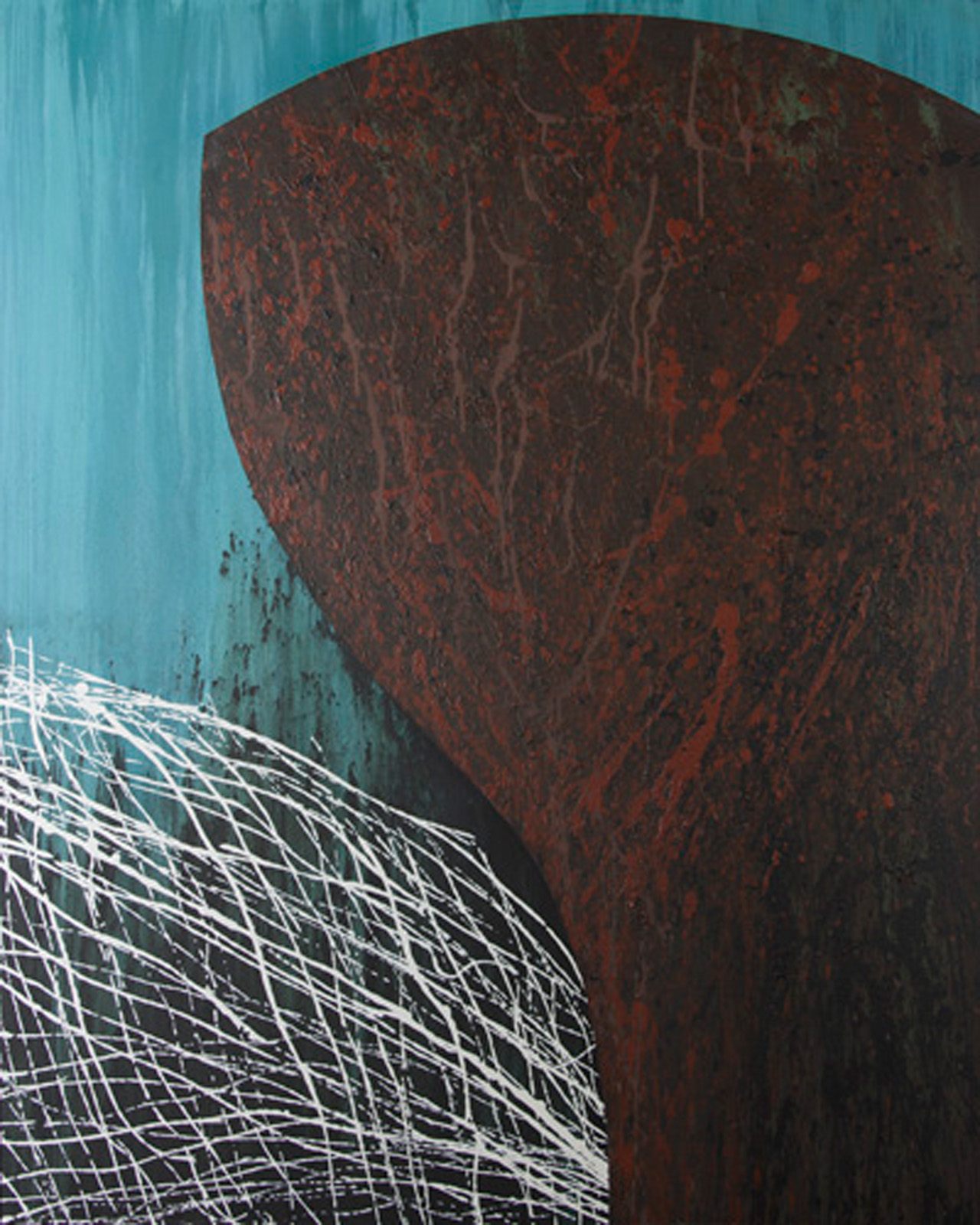
The Turning of the Tide tells the story of the dive that finally persuaded me to leave commercial diving and apply to art college.
We were working on the wreck of the Albinia, salvaging brass tubes from the cargo. The vessel was anchored at three points while the divers worked below, but an unexpected turn in the tide left the ship unable to swing with the current. As the list increased, we rushed from breakfast to release the stern cables before the situation became dangerous. Once the bow anchor had been recovered, I was sent down to retrieve an expensive multiplait mooring rope that had to be sacrificed.
Descending with only a fid and a hacksaw, I began cutting through the rope. My buoyancy was heavier than I realised, and in the darkness I drifted silently onto the seabed, disappearing into a cloud of silt. As the water slowly cleared, I discovered I had settled directly into an old fishing net. I had carried it to the bottom with me without even knowing it. There was a moment of choice: abandon the job and try to free myself, or finish what I had been sent to do. I kept cutting. Eventually the rope gave way, the buoyancy of the rope lifted me clear of the tangled net, and I was able to return safely to the surface.
The dive itself was not unusual. Incidents like this were accepted as part of the job. It was during the long decompression stops that followed, suspended between the seabed and the surface, that I found myself thinking about the life I wanted to lead. By the time I climbed back aboard, I had already decided to leave commercial diving. I completed one final trip, and that autumn I enrolled at art college.
Looking back now, The Turning of the Tide records the moment the tide turned, carrying me away from one life and quietly towards another.
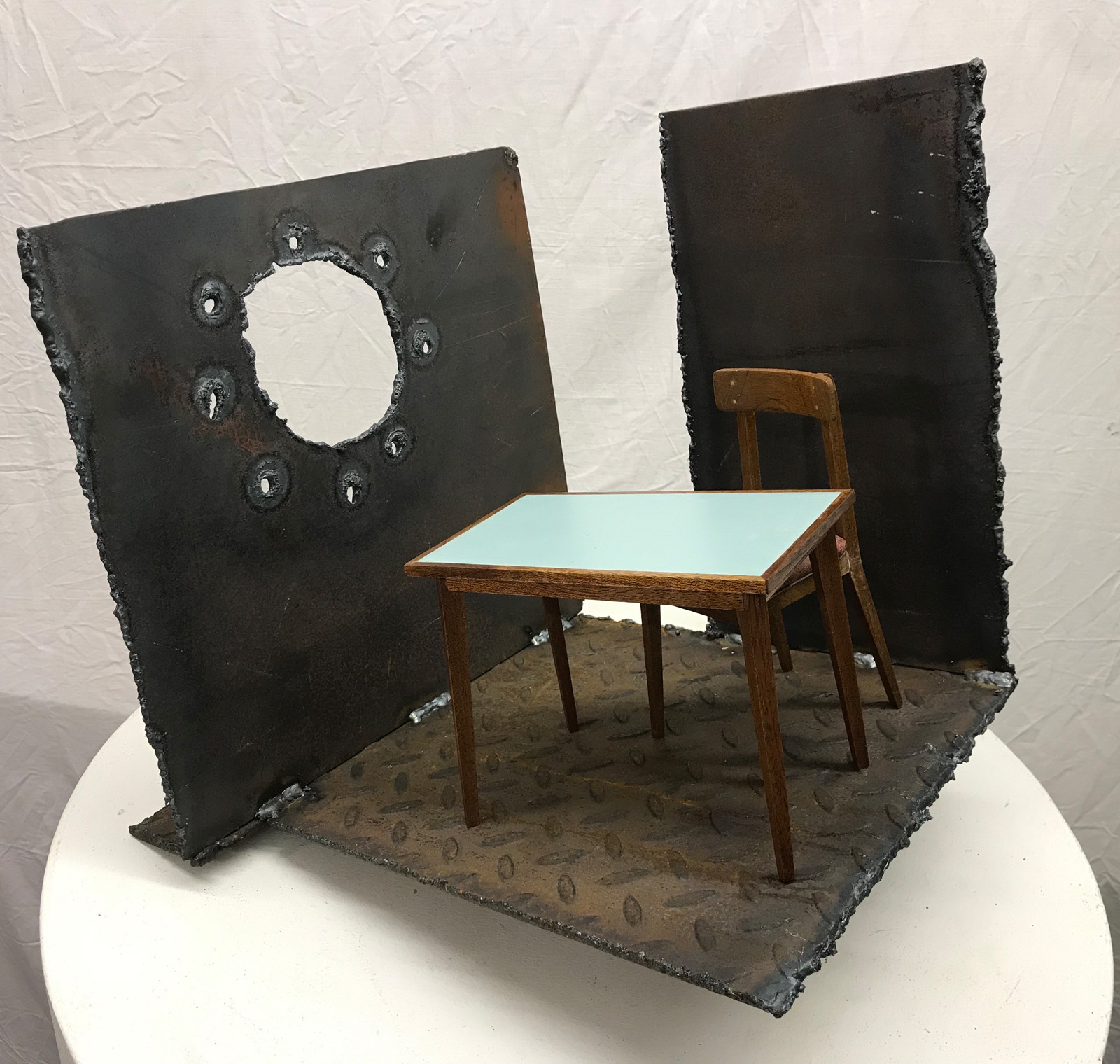
Galley
2016 · mixed media sculpture
Galley was made towards the end of my career as a commercial diver and grew from an experience that has stayed with me ever since.
We were returning to Liverpool when an SOS call came over the radio. A cargo ship carrying potash had begun taking on water, and a rescue operation was already underway. We altered course, hoping there might be work for us once the crew had been evacuated. By the time we arrived, the ship had already disappeared beneath the surface. The crew had been rescued safely, and the coastguard had departed.
A few hours later we dived the wreck. Unlike the rusting ships we normally worked on, everything still felt strangely alive. The paintwork was fresh, the fittings intact. The crew had locked the cabin doors before abandoning ship, perhaps imagining that salvage divers would soon arrive. They needn't have worried—we had no interest in their possessions. Looking through the portholes with a torch, I could see furniture, clothing and personal belongings drifting silently through the flooded rooms. It was one of the eeriest dives I ever experienced.
The sculpture is not a reconstruction of the ship. Made from welded steel, Galley recalls only fragments: listing bulkheads, rusting portholes and, standing alone in the centre of the floor, a small Formica table and chair. Looking back now, I realise this modest sculpture marked another turning point in my practice. It returned me to ideas first explored in Deities at the Bottom of the Garden and Yuvarlak Masada, where simple objects became vessels for memory and imagination. More importantly, it suggested a way of thinking that would soon lead me back to Istanbul and the world of Siyah Kalem. From this small sculpture, the first seeds of Nomadic Tales began to emerge.
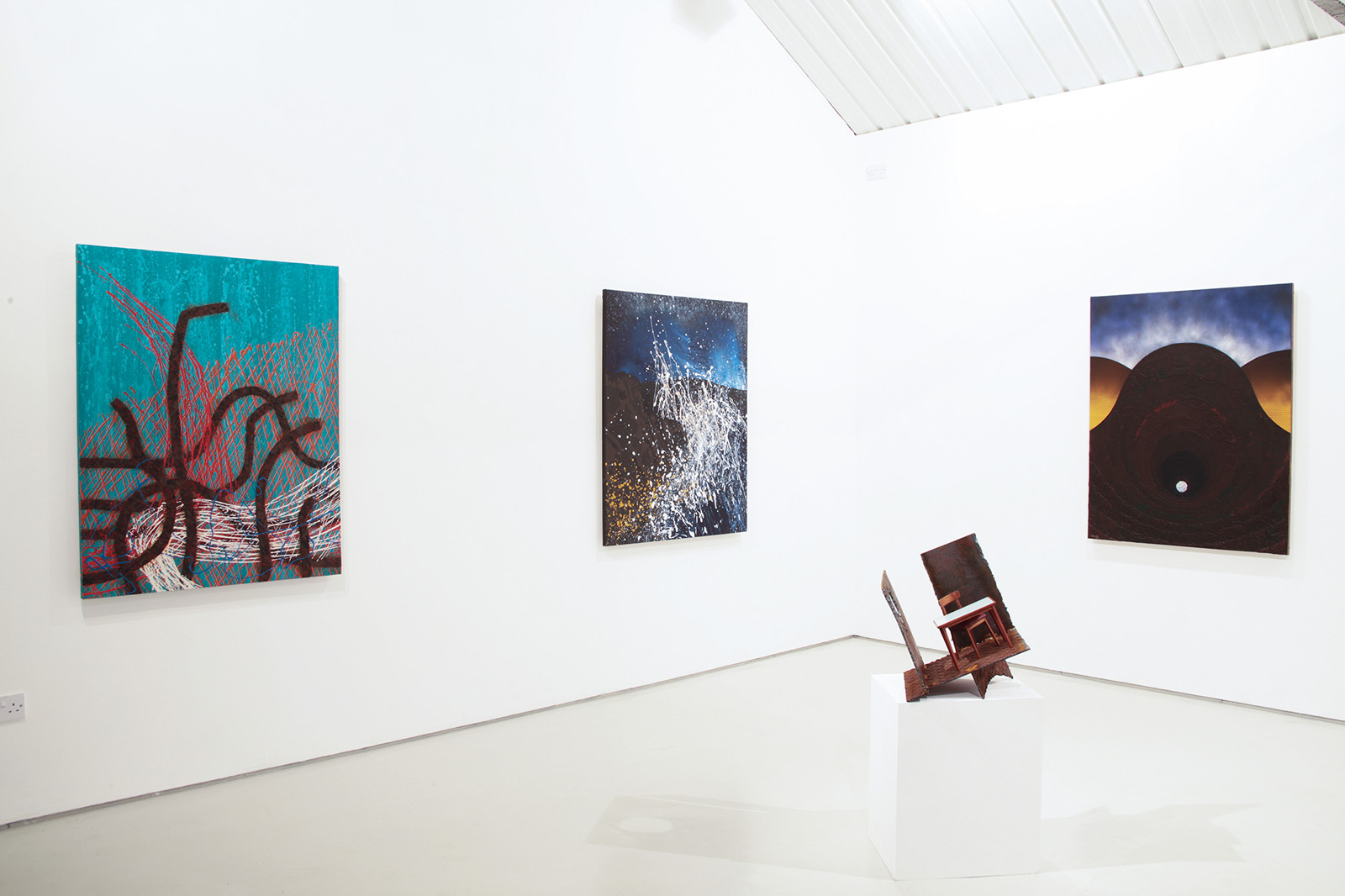
Submerged
2016 · Bloc Projects
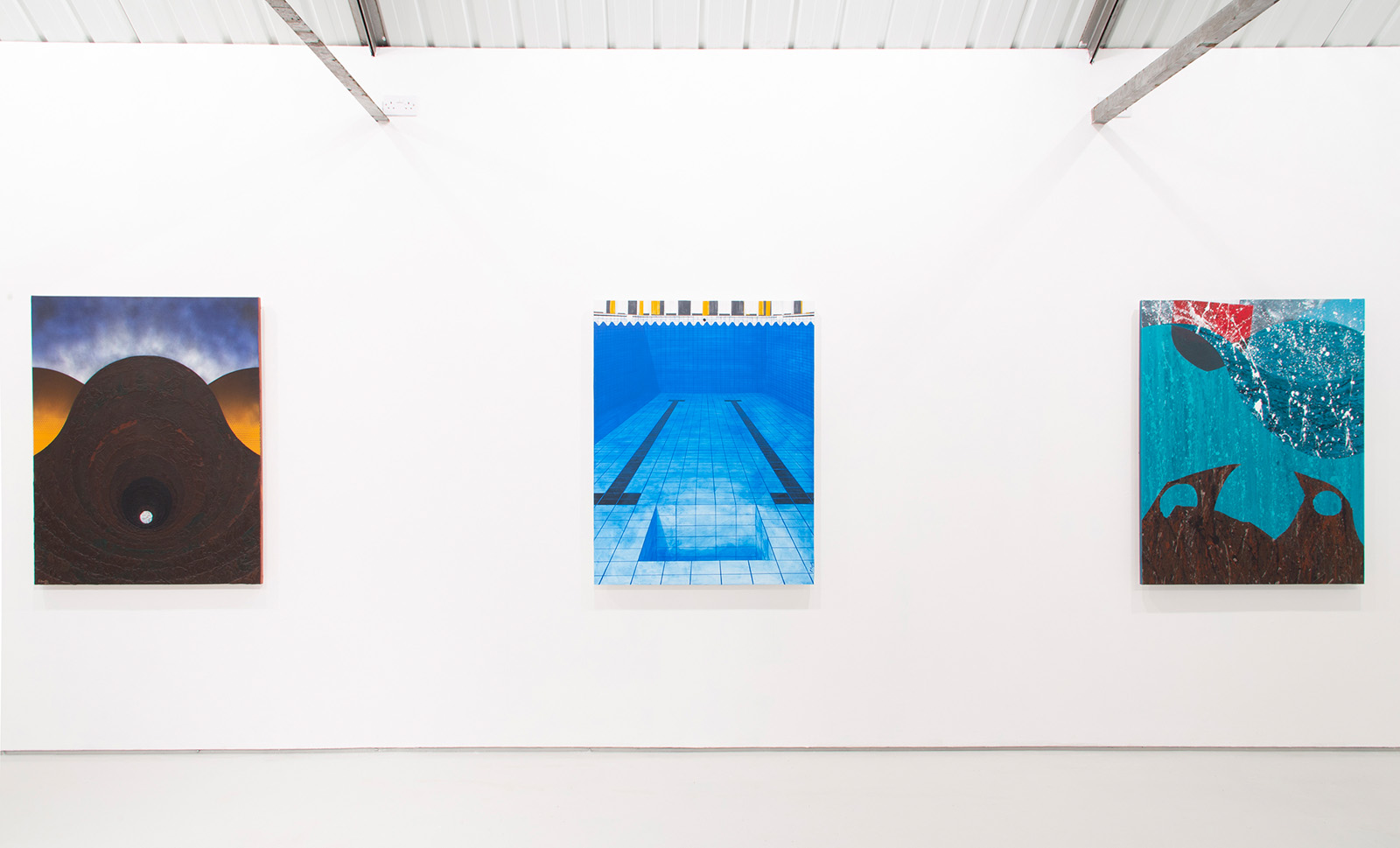
Submerged
2016 · Bloc Projects