Archive / Repetitions
Unstable Relations
Unstable Relations belongs to the wider Repetitions project and continues my interest in transformation through repeated process, image reproduction and the accumulation of materials. In this series I turned my attention towards the fragile relationship between human ambition and the natural world. The paintings explore situations in which transport, agriculture, industry and settlement exist in uneasy balance with the environments they attempt to control. Throughout the series I became interested in the illusion of stability. The systems we build often appear permanent, yet they remain dependent upon forces far beyond our control.
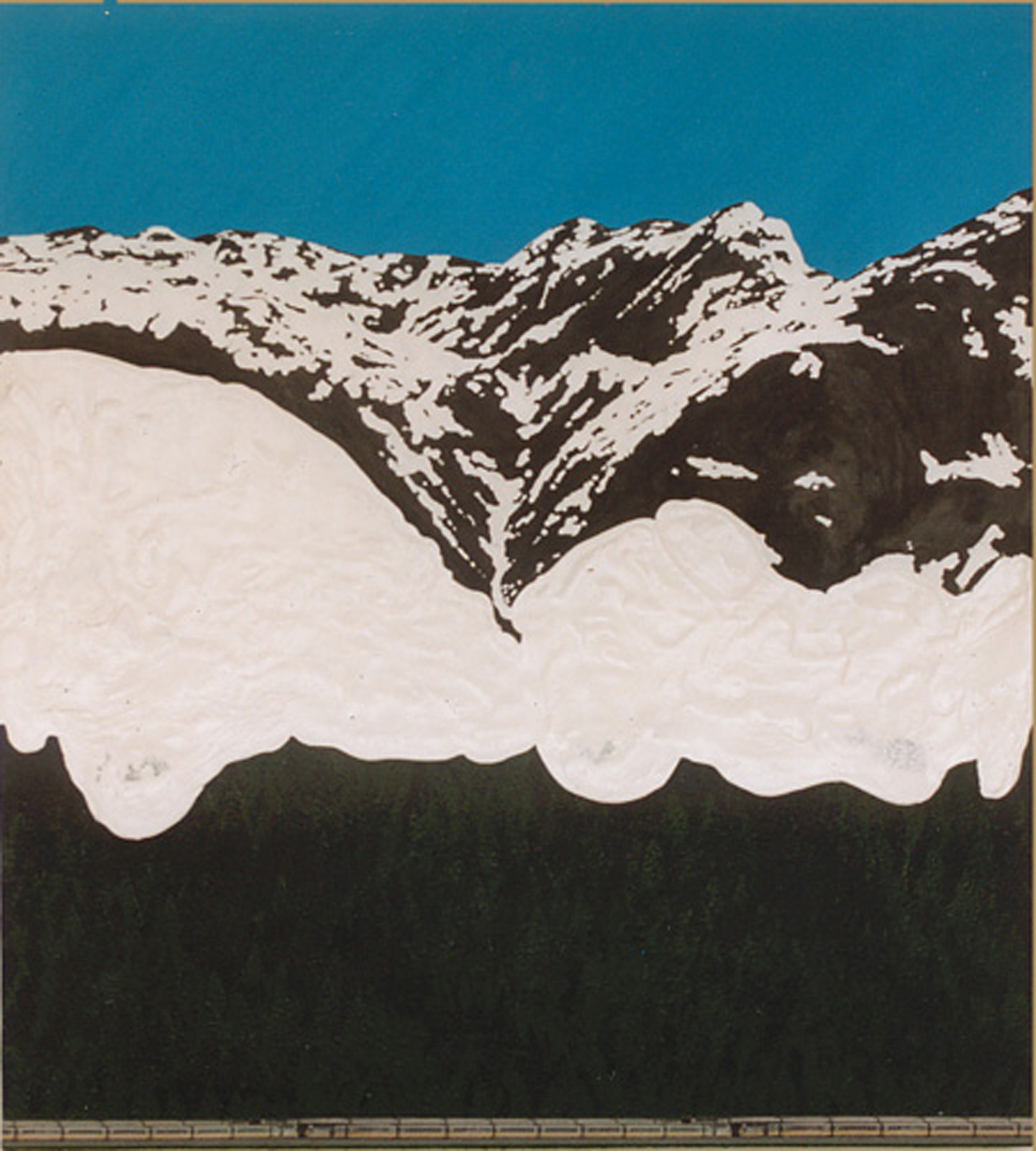
Avalanche
1999 · mixed media on canvas · 124 × 112 cm
Private Collection
Avalanche depicts rows of trains passing along a railway line at the foot of a mountain. Above them a stylised forest rises towards an overhanging ledge of thick white paint, representing a shelf of snow ready to collapse. The painting imagines a simple but terrifying possibility: that the vibrations generated by the trains below might be enough to trigger the avalanche that ultimately buries them. Human engineering and natural forces exist in an unstable relationship, where progress itself can become the catalyst for disaster.
As with many works in the Repetitions series, materials were incorporated directly into the painted surface. These additions acted as physical intrusions into the image, bringing representation into contact with the substance of the work itself. The paintings became objects as much as images, occupying a threshold between depiction and material reality.
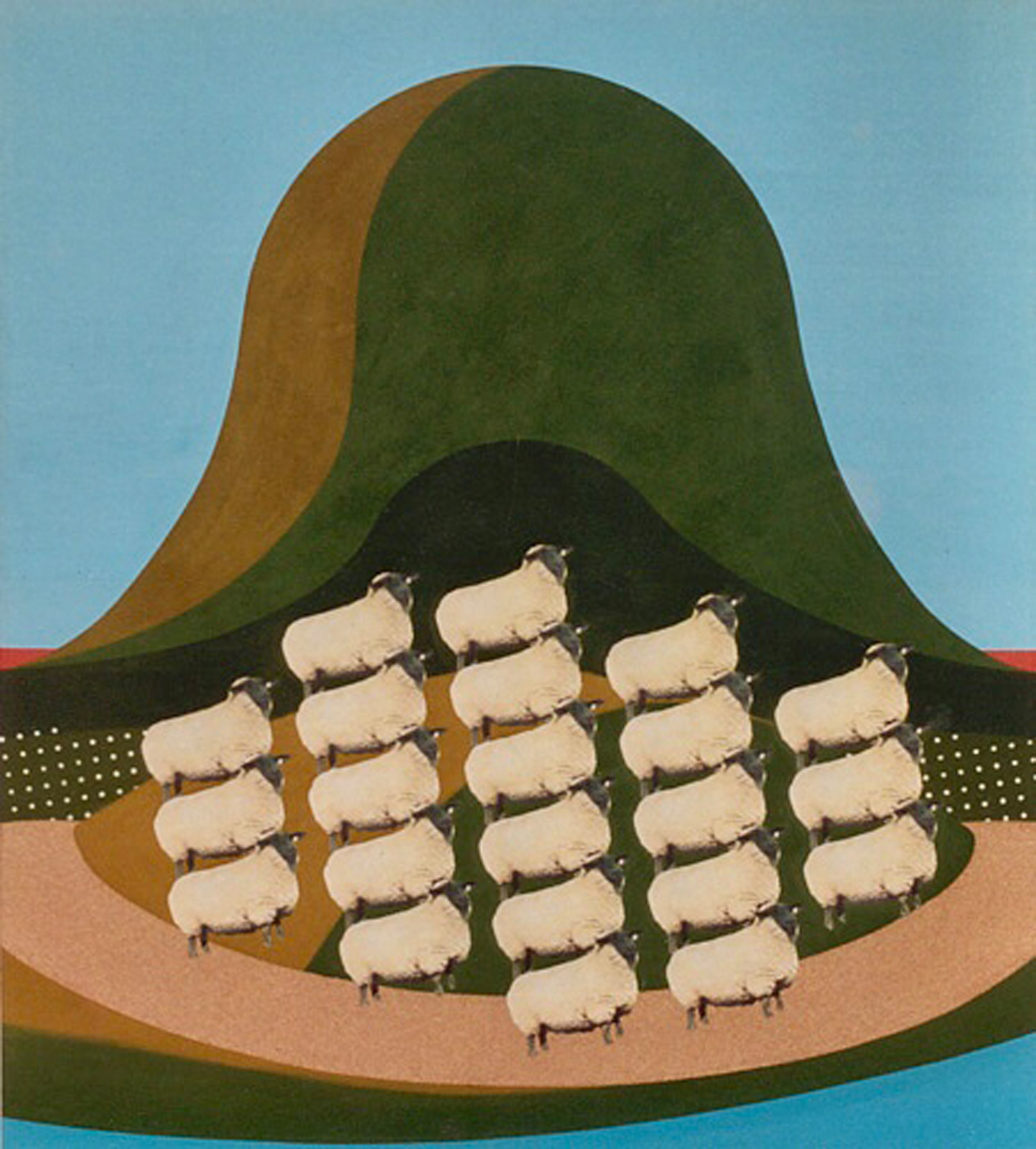
Bad Bend
1999 · mixed media on canvas · 124 × 112 cm
Private Collection
Living on the edge of the Peak District, I regularly drove the winding roads towards Manchester. They pass through sheep country, where blind bends are often shared with wandering livestock. Bad Bend grew directly from that experience. The danger lies not in reckless driving but in the unstable relationship between speed, landscape and animals that have no understanding of roads. The painting reflects on the fragile coexistence of human transport systems and the older rhythms of the countryside.
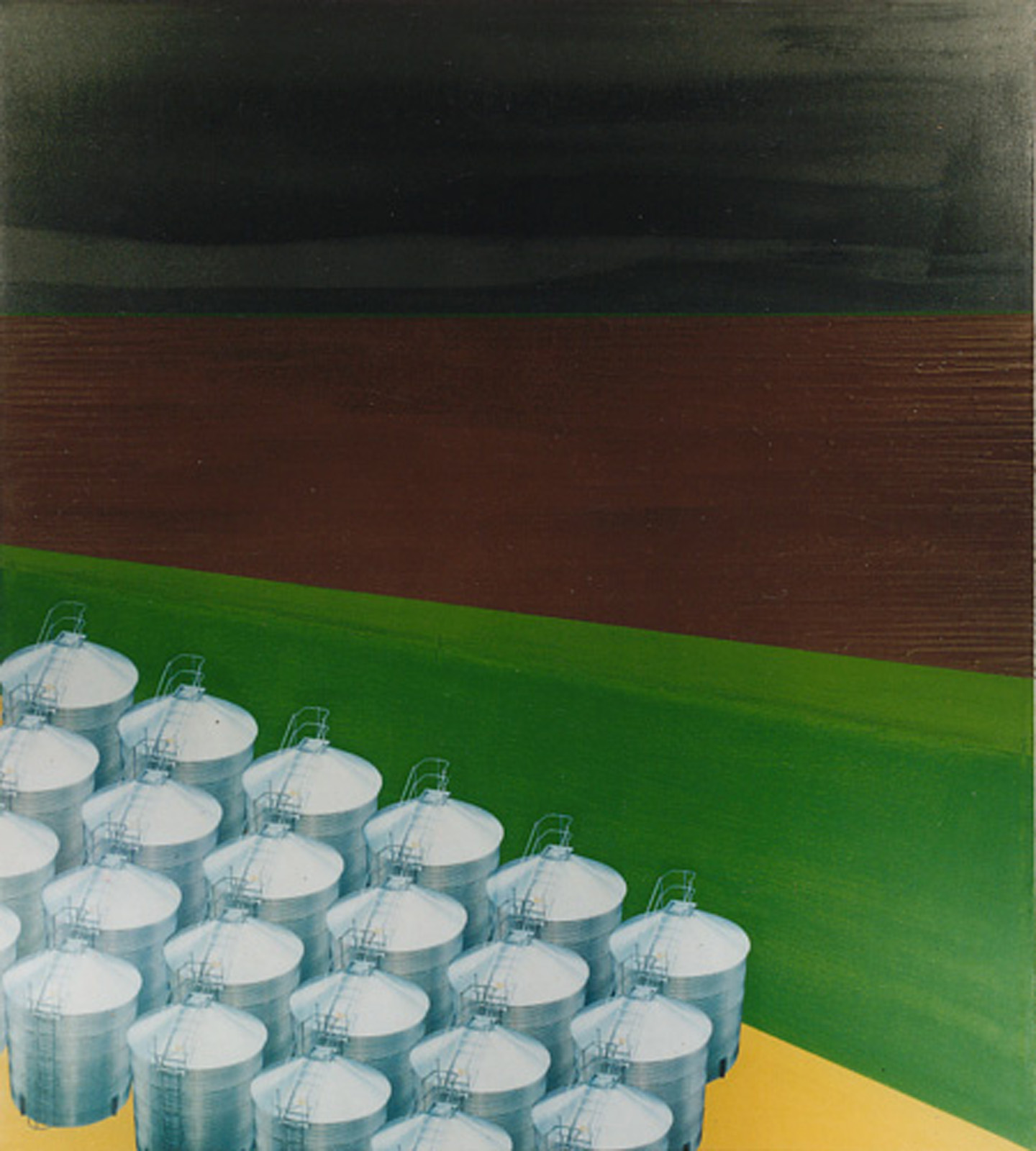
Silos
1999 · mixed media on canvas · 124 × 112 cm
Private Collection
Silos reflects on humanity's long attempt to master rivers and reshape the landscape. We construct dykes and levees, cultivate floodplains and store harvested grain in silos, believing we have secured both the land and our future. Yet rivers resist control. The muddy water in the painting rises almost to the top of the flood defences, threatening to reclaim the ground beneath. A silo suggests safety and permanence, but the painting reminds us that our confidence depends upon forces that can never be fully contained.
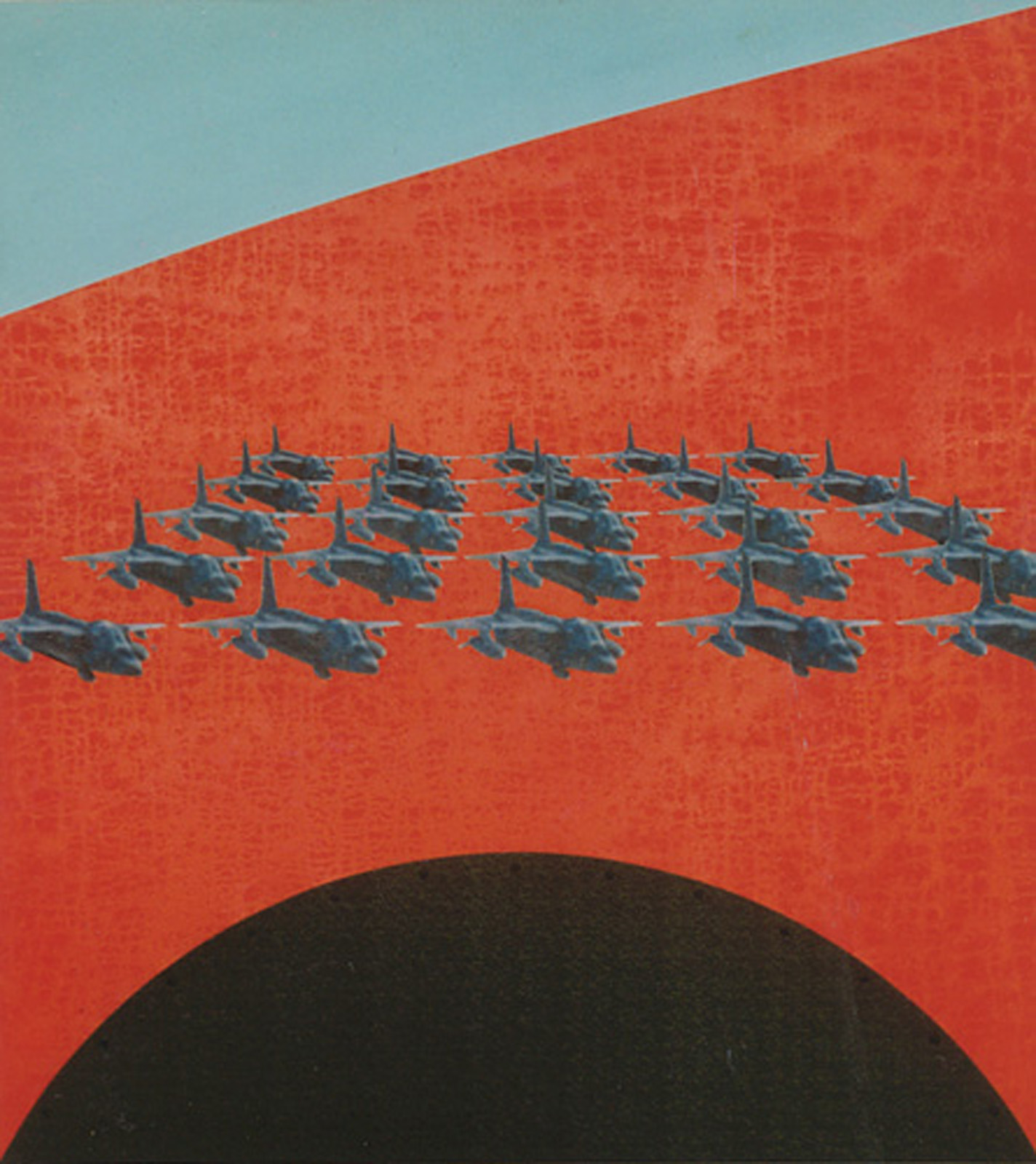
Wasters
1999 · mixed media and metal on canvas · 124 × 112 cm
Private Collection
Wasters depicts fighter aircraft reducing the landscape below them to a burning wasteland. The painting is less concerned with warfare itself than with the destruction of the ground upon which future generations depend. The land becomes both battlefield and inheritance. It reflects the paradox that civilisation often destroys the very resources upon which it relies, leaving behind landscapes that can no longer sustain life.
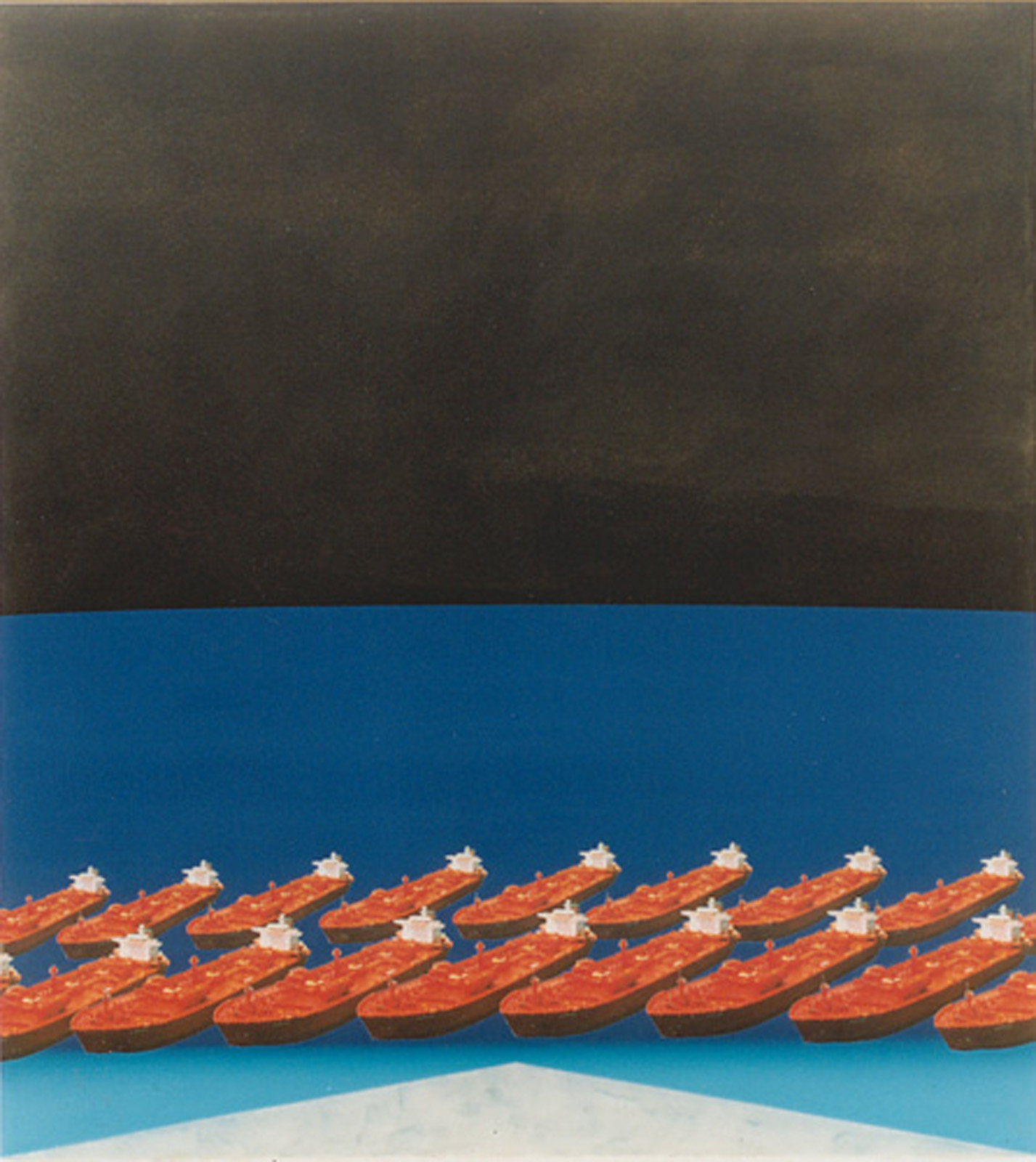
Crude
1999 · mixed media on canvas · 124 × 112 cm
Private Collection
Crude considers the unstable relationship between industry and nature. Oil tankers navigate towards floating icebergs across an uncertain sea. The irony within the painting is deliberate: the more fossil fuel we extract and burn, the more the polar ice melts, producing the very icebergs that threaten the ships transporting that fuel. Human progress and environmental change become locked in a cycle in which each continually reinforces the other.
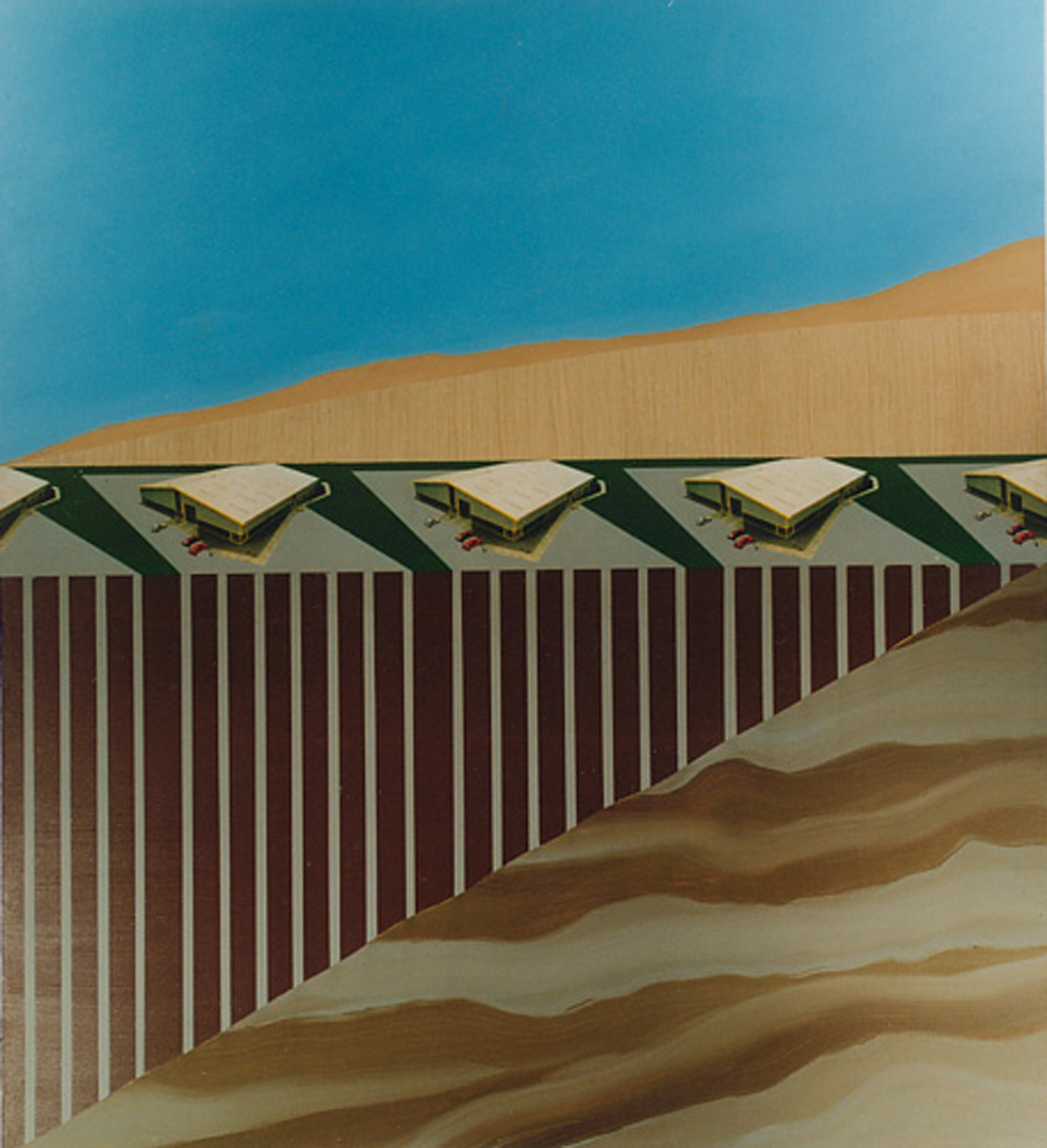
Enterprise Zone
1999 · mixed media on canvas · 124 × 112 cm
Enterprise Zone grew from my own experience working on the construction of a B&Q store at Halesowen, built on reclaimed landfill. The ground beneath the site consisted largely of waste, much of it construction debris of the kind later sold in the finished building itself. After heavy rain the earth became unstable, turning to thick mud beneath our feet. The building stood only because deep piles had been driven through the landfill into solid ground below. The painting reflects on the uncertain foundations upon which much modern development is built, both literally and metaphorically.
Although each painting begins with a different subject, together they describe a common condition. Trains, roads, flood defences, military technology, oil transport and urban development all represent attempts to impose order upon the world. Yet each ultimately depends upon landscapes that remain beyond complete human control. The series suggests that stability is often an illusion, and that beneath the systems we build lie natural forces that continue to shape the world on their own terms.