Archive / Repetitions
Water Works
Water Works explores the ways in which people live with one of the elemental forces that shapes both landscape and human existence. Water sustains us, cleanses us and carries us, yet it also erodes, isolates and overwhelms. Across the series, repeated figures occupy fragile environments in which shelter, immersion and navigation become recurring themes.
Rather than depicting water as scenery, these paintings treat it as an active presence. It is the force around which human behaviour is organised: something to escape from, descend into, cross, measure, carry or survive. The works are quiet, sometimes playful, but beneath them is a sense of vulnerability. Human beings appear small within larger natural systems.
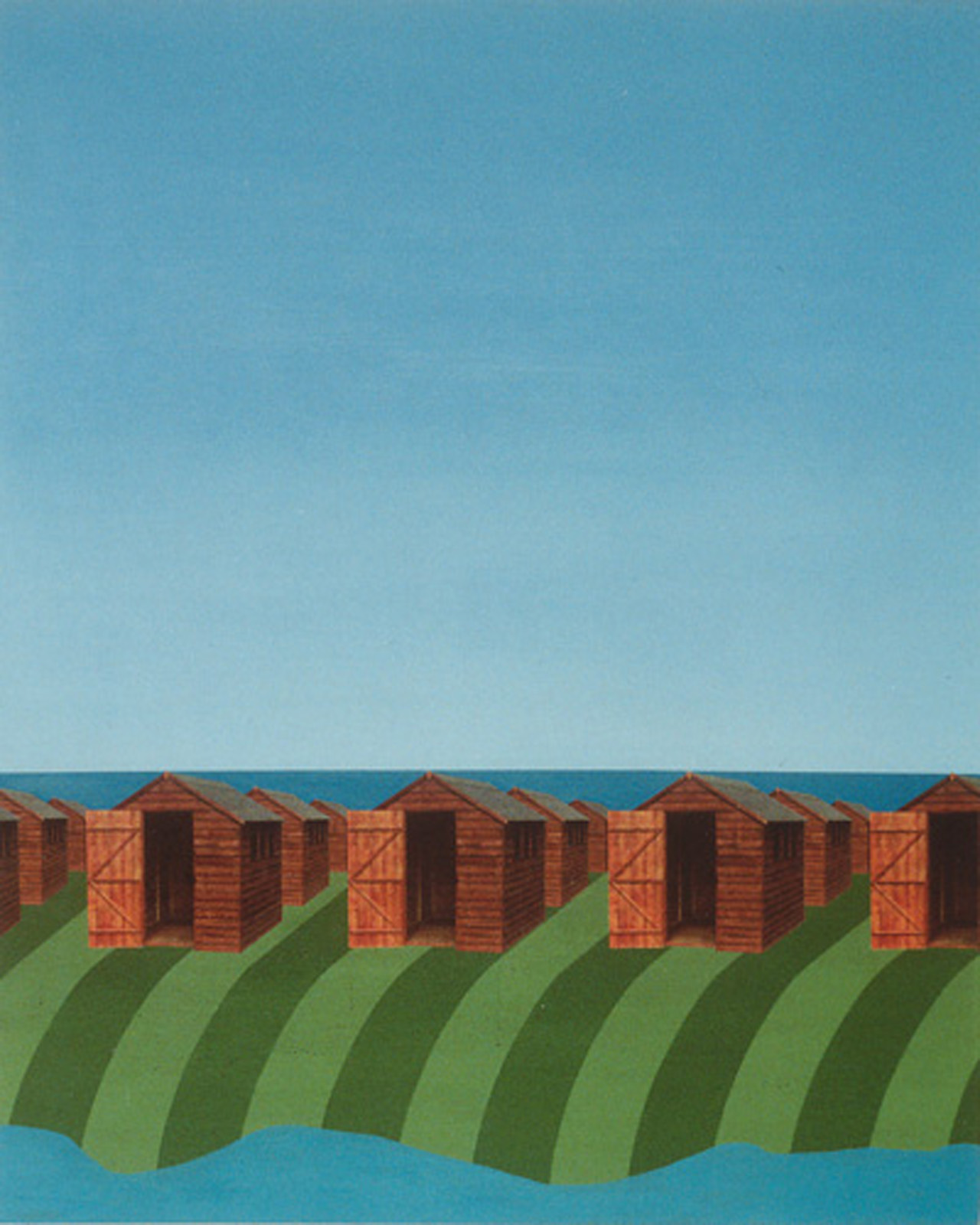
Refuge
1999 · mixed media on canvas · 175 × 140 cm
In Refuge, rows of garden sheds stand on an island, slowly crumbling like the eroding cliffs of the east coast of England. They appear temporary, fragile and exposed, caught between shelter and collapse.
The shed is the refuge.
Yet even this refuge is vulnerable. The buildings seem to be sinking, weathering and breaking apart, suggesting that the places we create for safety are themselves subject to the same forces from which they attempt to protect us.
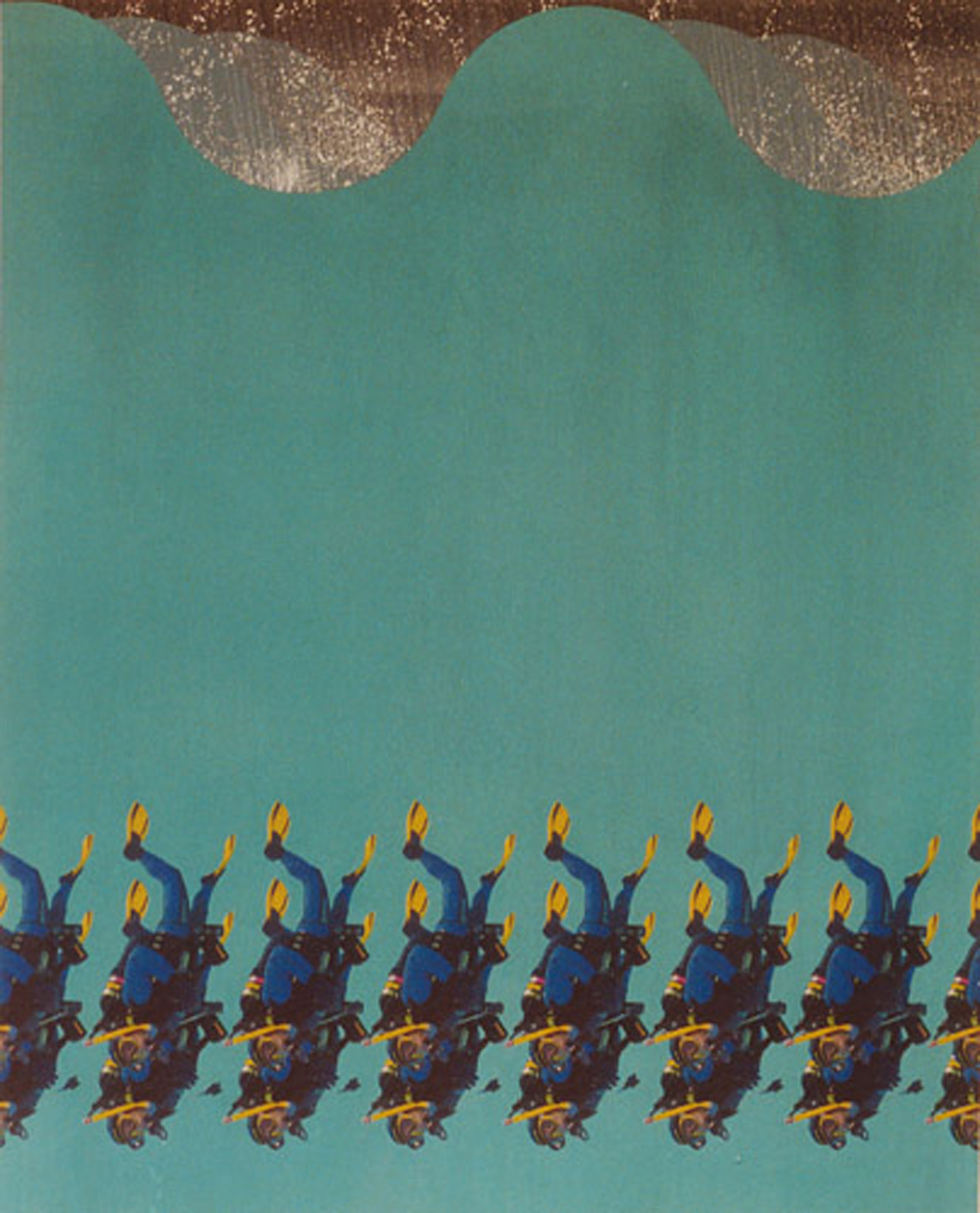
Descendants
1999 · mixed media on canvas · 175 × 140 cm
In Descendants, divers descend beneath a stormy sea. Above them, the surface appears turbulent and unstable, but below the water there is stillness. The underwater space becomes a temporary safe haven, a calm world separated from the violence above.
But the refuge cannot last. The divers can descend, but they cannot remain there indefinitely. Inevitably they must return to the surface.
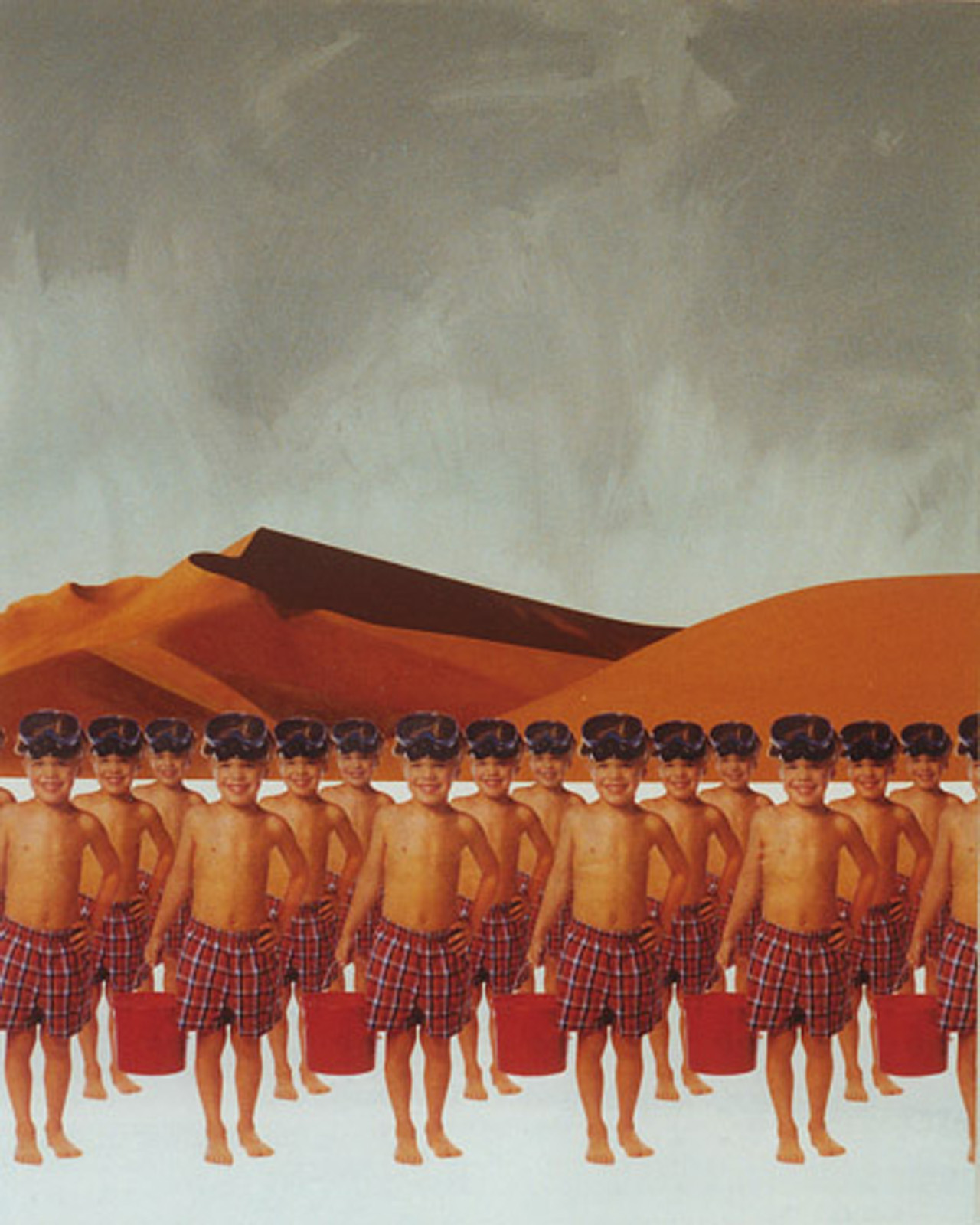
Buoys
1999 · mixed media on canvas · 175 × 140 cm
Buoys plays on the relationship between boys and buoys, bodies and markers, people and systems of navigation. Rows of boys with red buckets and snorkels crowd a red shoreline. The beach appears strangely dry. The buckets seem to promise water, but it is unclear whether they have been filled, emptied, or are waiting to be used.
The painting also draws on the old nautical phrase: "There's no port left in the red can." The phrase is a memory device for distinguishing port from starboard, left from right, red from green. In the painting, this practical language of navigation becomes entangled with childhood, thirst, play and uncertainty.
Looking back, Water Works marks an early exploration of ideas that continue throughout my practice. Water is presented not simply as a subject, but as a force that shapes human behaviour, memory and landscape. Even in these early paintings, the relationship between people, place and the environments they inhabit was becoming central to the work.