Unearthed
Brick & Stone, Iron & Bronze
Brick & Stone, Iron & Bronze was developed during a three-month residency in Wood Enderby, Lincolnshire, bringing together fieldwalking, research, painting and a sustained dialogue with the communities connected to the landscape. First exhibited at Tattershall Castle in 2024, the project explored how the historic environment can be encountered through material, memory and observation, allowing painting to become a means of understanding place rather than simply representing it.
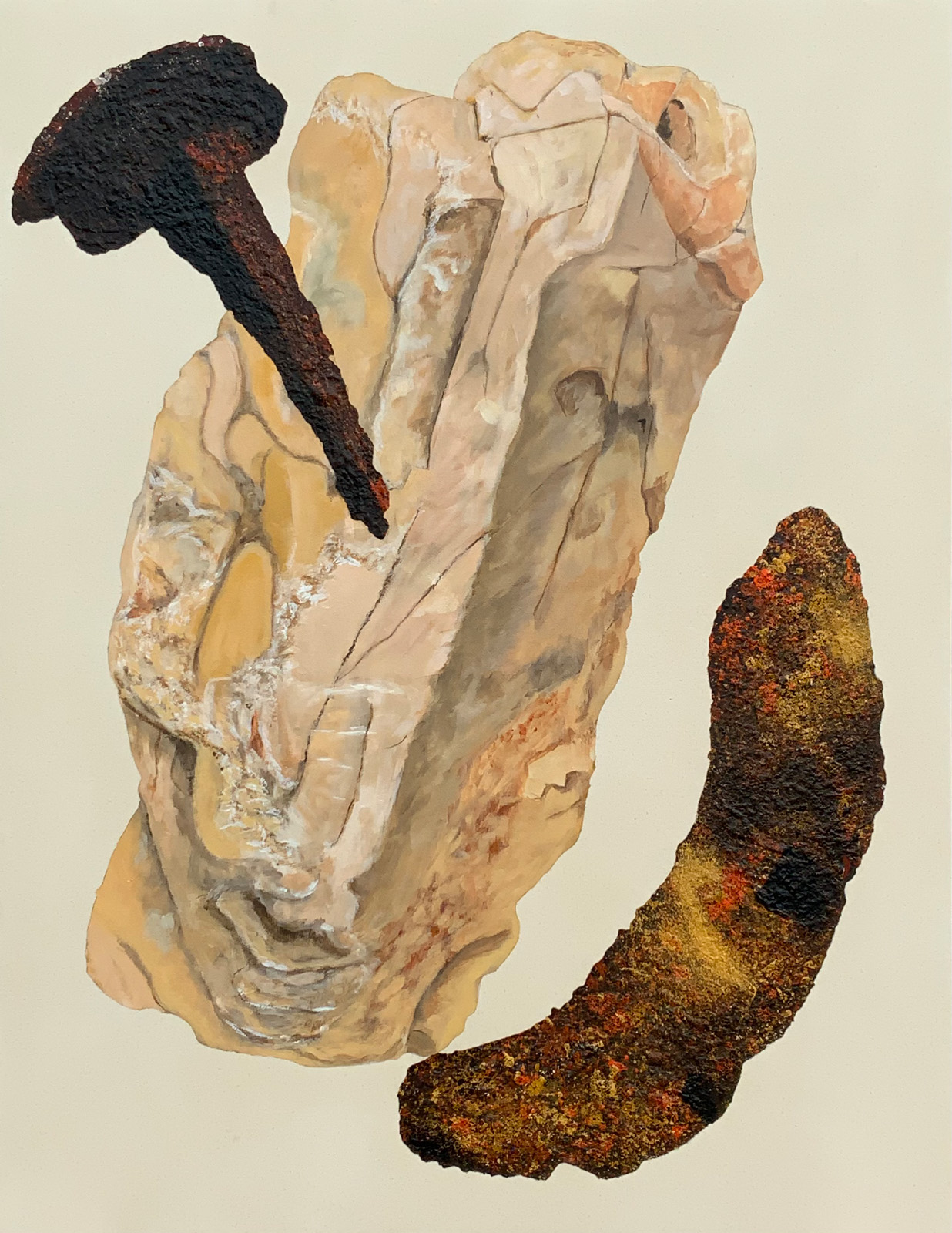
Multi Tool
2024 · acrylic on canvas · 155 × 120 cm
The project emerged from a period of immersion in the landscape surrounding the village. Through fieldwalking and metal detecting, I collected fragments of brick and pottery, pieces of iron, buttons, coins and occasional archaeological artefacts. Gathered from the surface and subsoil of working farmland, these objects became the starting point for a series of paintings exploring the traces people leave behind and the relationship between place, memory and material. The work formed part of a longer process of learning about the landscape itself, returning repeatedly to the same fields and gradually building an understanding of their accumulated history.
Alongside the development of the paintings, the residency became an ongoing conversation with the people connected to the landscape. Farmers, local residents, detectorists, historians and visitors all contributed different forms of knowledge, extending an understanding of the historic environment beyond books and archives. These exchanges became an important part of the project, demonstrating how local memory, lived experience and careful observation can deepen the reading of a place.
Brick & Stone, Iron & Bronze
A film about my artist residency at Wood Enderby
By Matthew Lewis.
Conversations
The residency continued beyond the studio through a programme of talks and discussions across the local community. Presentations to the Women's Institutes at Marham-le-Fen and Coningsby explored the relationship between painting, archaeology and the historic environment, while conversations with visitors at Tattershall Castle often developed into shared reflections on local history, farming and the changing landscape. Rather than presenting finished conclusions, these events became opportunities to exchange knowledge and experience, allowing the project itself to continue evolving.
One particularly valuable day was spent with members of the Spilsby Metal Detecting Club, who visited the studio to discuss both the paintings and the landscape from which they had emerged. During these conversations I first learnt about the nineteenth-century agricultural use of shoddy as a soil improver, explaining the remarkable concentration of buttons recovered from the surrounding fields. What had initially appeared to be a curious pattern of finds became evidence of changing agricultural practices, demonstrating how knowledge held within local communities can transform the way the material record is understood.
These conversations reinforced an important aspect of the residency. Knowledge did not flow in a single direction. The paintings and objects became a starting point for discussions about archaeology, farming, local history and memory, while the generosity of those willing to share their own experiences continued to shape my understanding of the landscape. In this sense, the exhibition at Tattershall Castle marked not the conclusion of the residency, but another stage in an ongoing relationship with Wood Enderby and its historic environment.
Tattershall Castle provided more than a venue for the exhibition. Situated within the same historic landscape that had generated the work, it created a dialogue between contemporary painting and centuries of human occupation. The paintings were not intended to illustrate the history of the castle itself, but to reflect upon the wider historic environment that surrounds it, connecting archaeological material, agricultural practice and local memory across the Lincolnshire landscape.
Presented against fields of raw canvas, the objects are removed from their original context and transformed into records of encounter. Rather than reconstructing history, the paintings reflect upon the act of discovery itself and the connections that emerge between contemporary experience and the material remains of the past.
Essay
Sean Williams
Sean Williams' essay was written in response to the residency and exhibition, extending many of the ideas surrounding archaeology, memory and contemporary painting that emerged through the project.
The Work
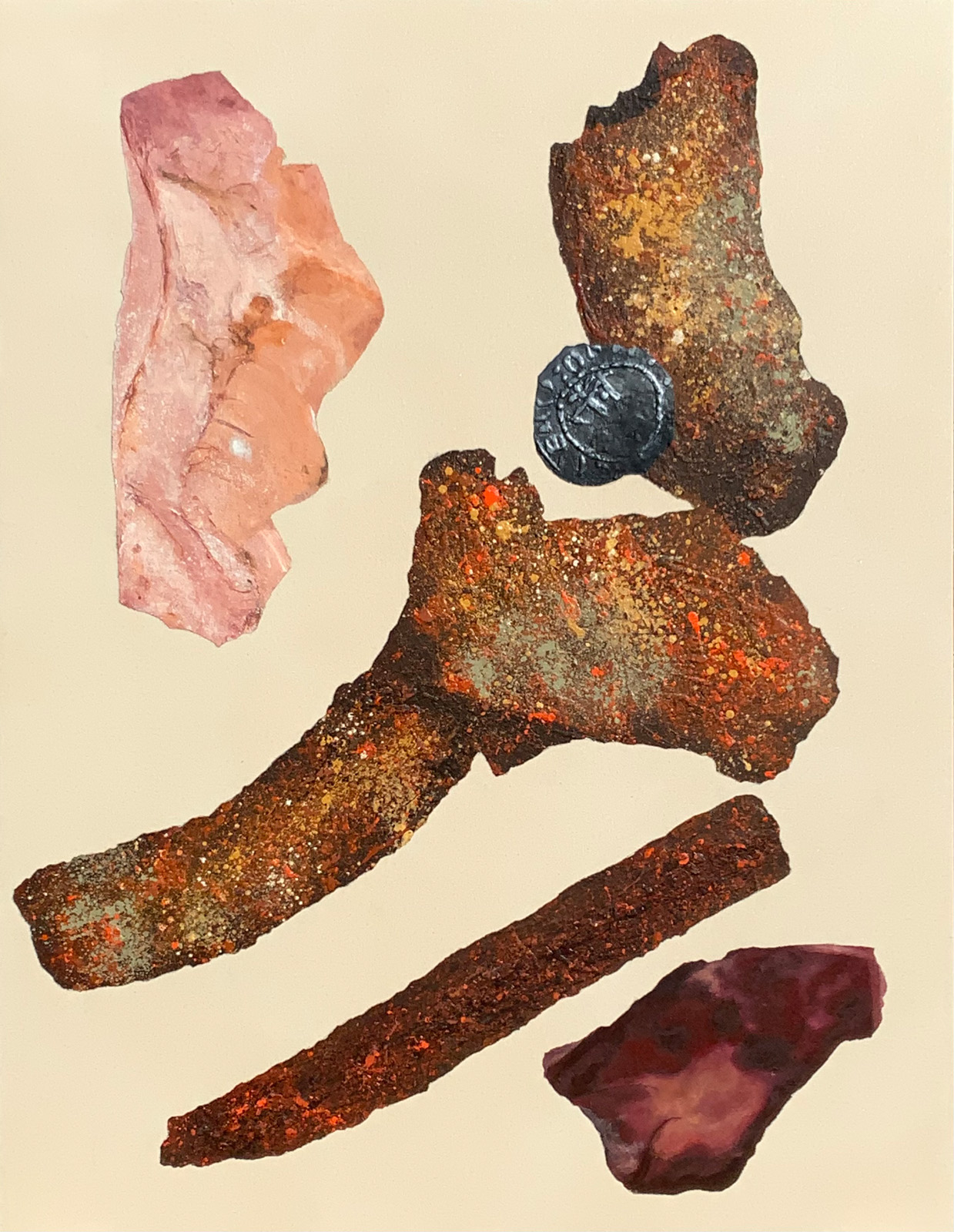
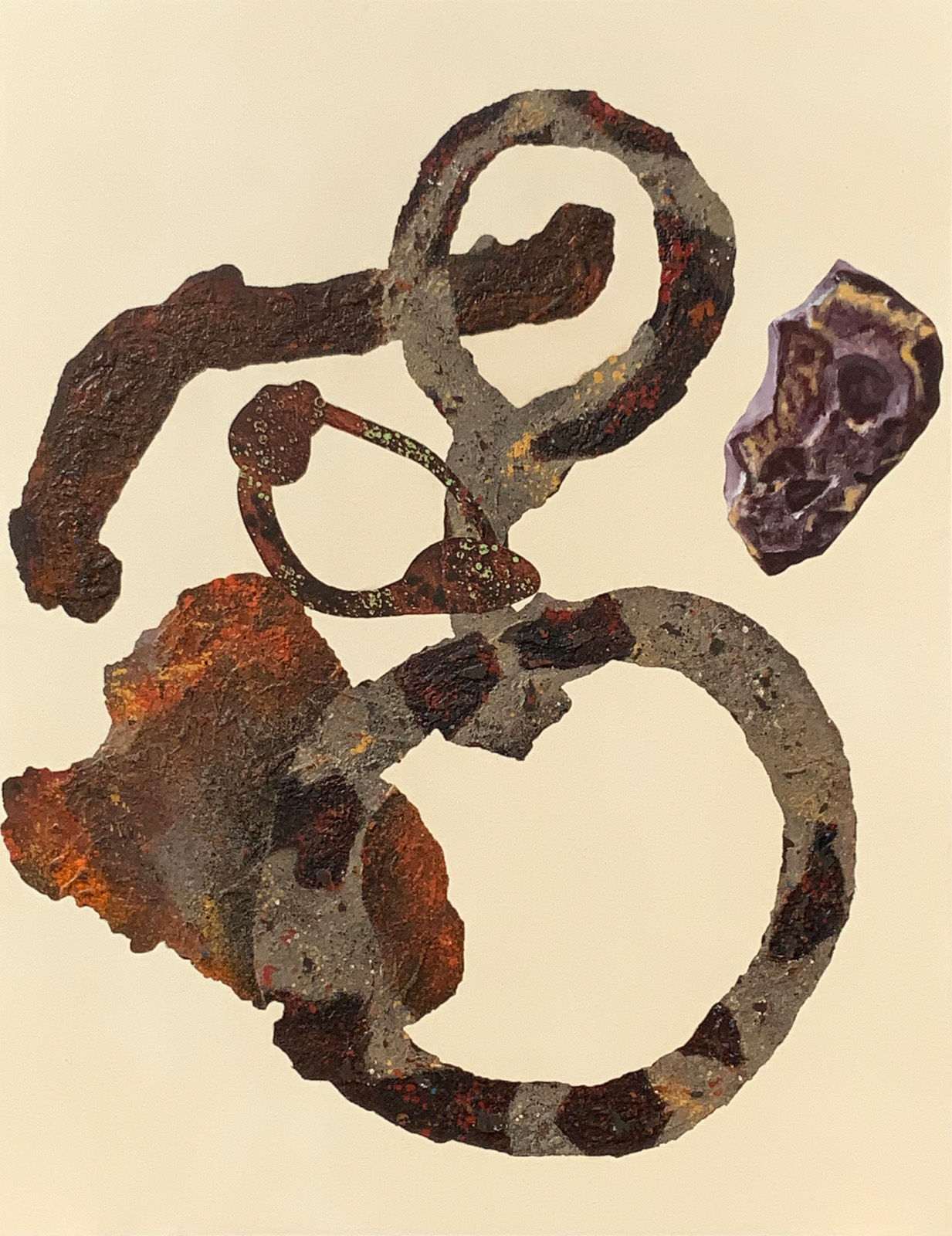
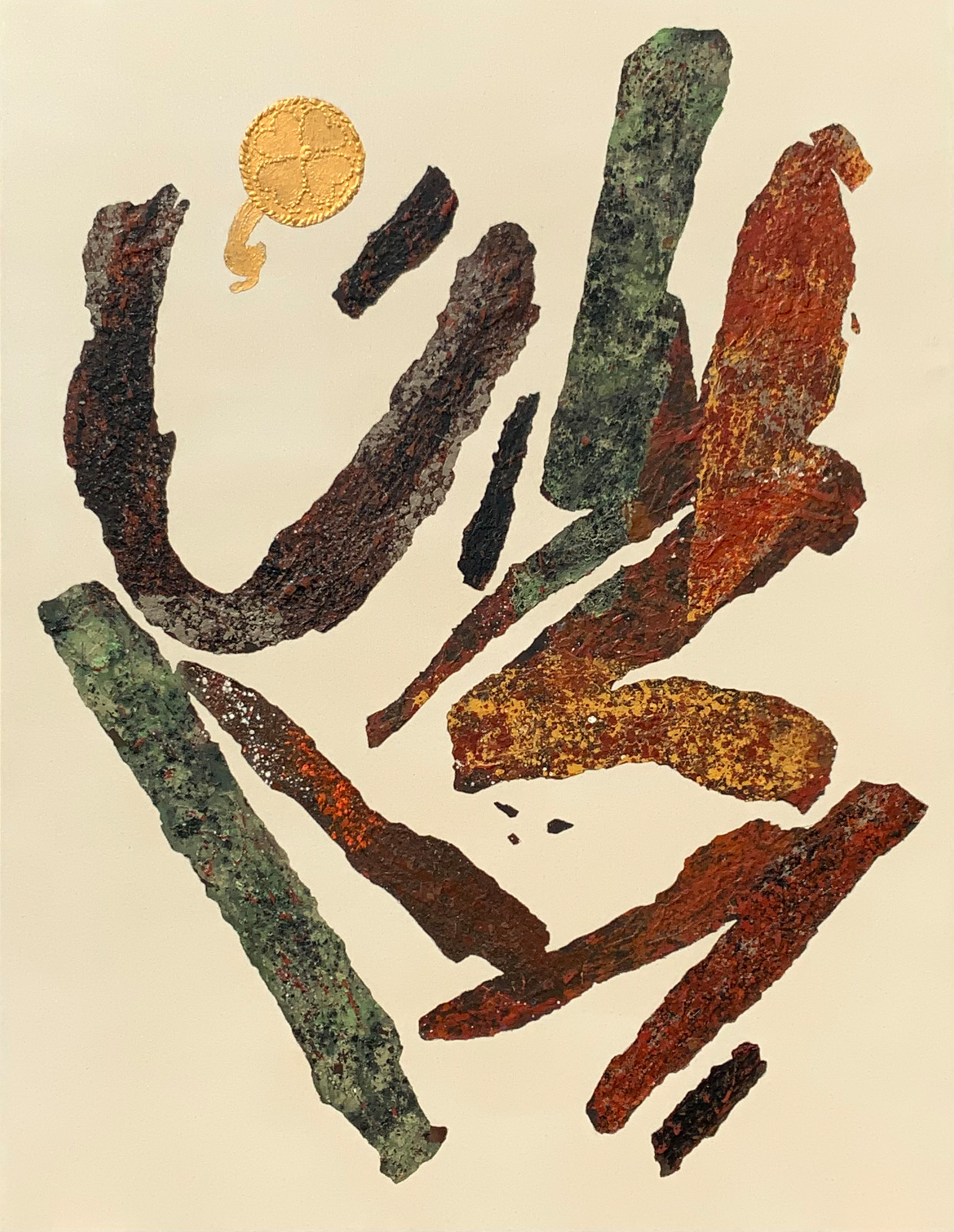
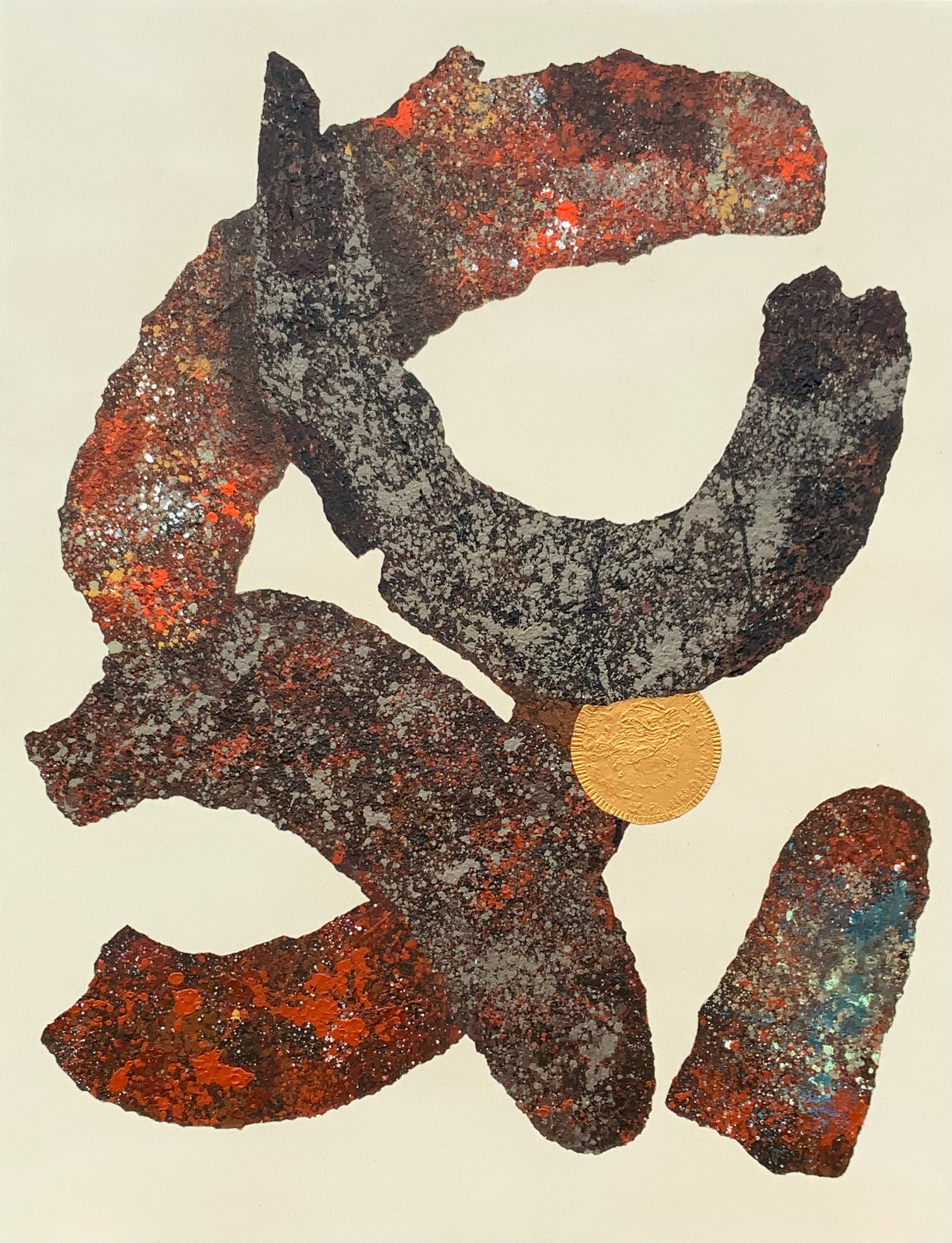
The method of production is central to the work. Each painting begins with the careful selection and composition of found objects, assembled and edited on the bed of an overhead projector before their silhouettes are projected directly onto the canvas. The forms are then drawn, meticulously masked and sealed, leaving areas of raw canvas that remain visible throughout the process. The canvas is wrapped in protective polythene and the painting begins to evolve through successive layers of thin acrylic washes, pouring, scraping, splattering and sanding back. The surface is repeatedly built, disrupted and reworked, with techniques developing in response to the character of each object. Control is constantly negotiated with chance, allowing unexpected events and accidents to become active participants in the making of the work. Only at the end of the process is the masking removed, revealing the final painting.
Like the landscapes from which the objects are recovered, the paintings accumulate their own history. Layers remain partially visible beneath the surface, traces of earlier decisions are retained, and the final image emerges through a process of construction, erosion and rediscovery. As with all my work, Unearthed is about the joy of painting and a continuing spirit of experimentation, but it is equally about becoming immersed in a place, engaging with its historic environment and searching for stories that might offer a deeper understanding of my own position within the world and a stronger sense of belonging.
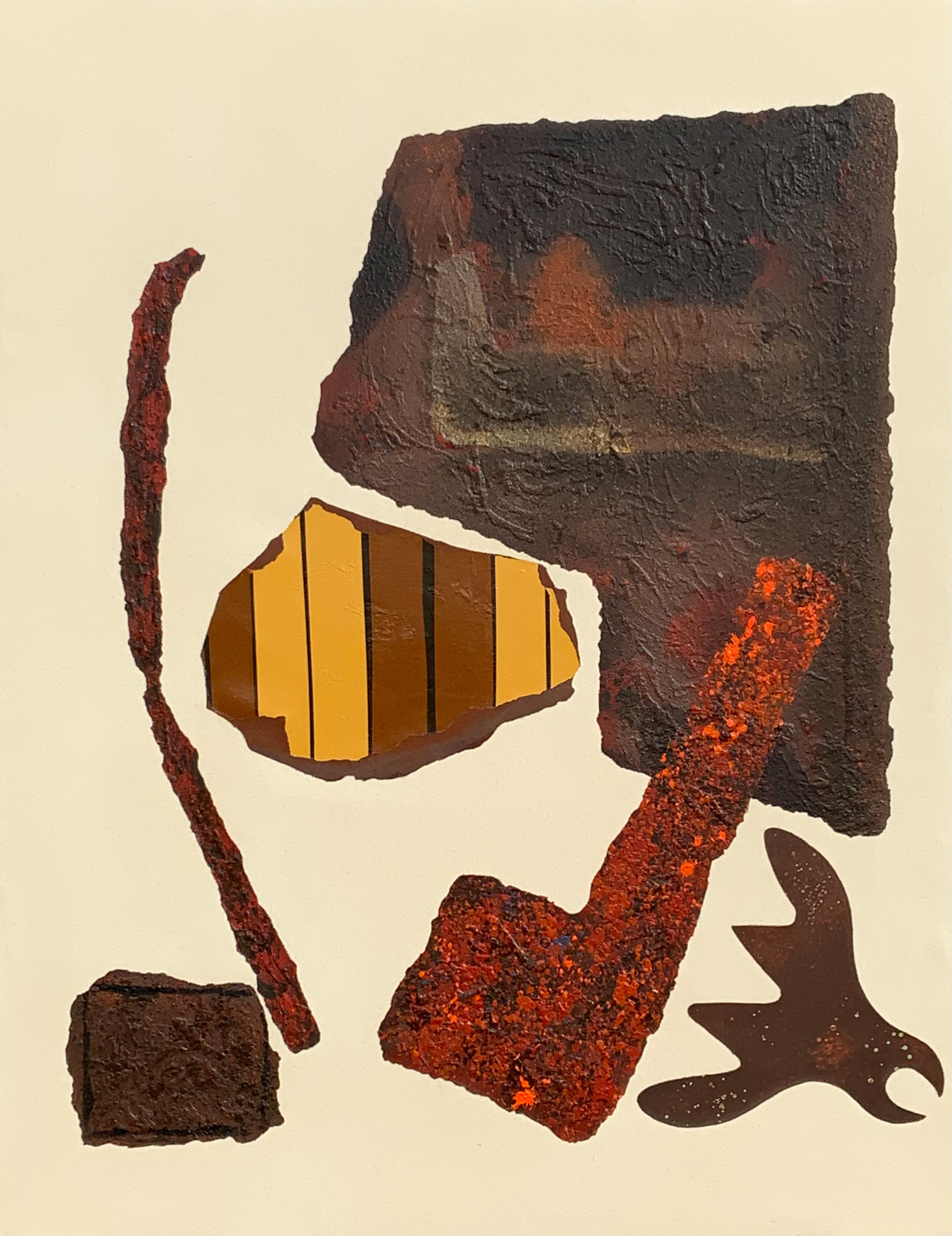
Picnic in the 36.72 Acre Field
2024 · acrylic on canvas · 155 × 120 cm
One of the Henrys
2024 · acrylic on canvas · 155 × 120 cm
Trinkets from the Riverbank
2024 · acrylic on canvas · 155 × 120 cm
Private Collection
He Loveth Me, Yeah! Yeah! Yeah!
2024 · acrylic on canvas · 155 × 120 cm
Private Collection
The Huntsman's Dance
2024 · acrylic on canvas · 155 × 120 cm
Private Collection
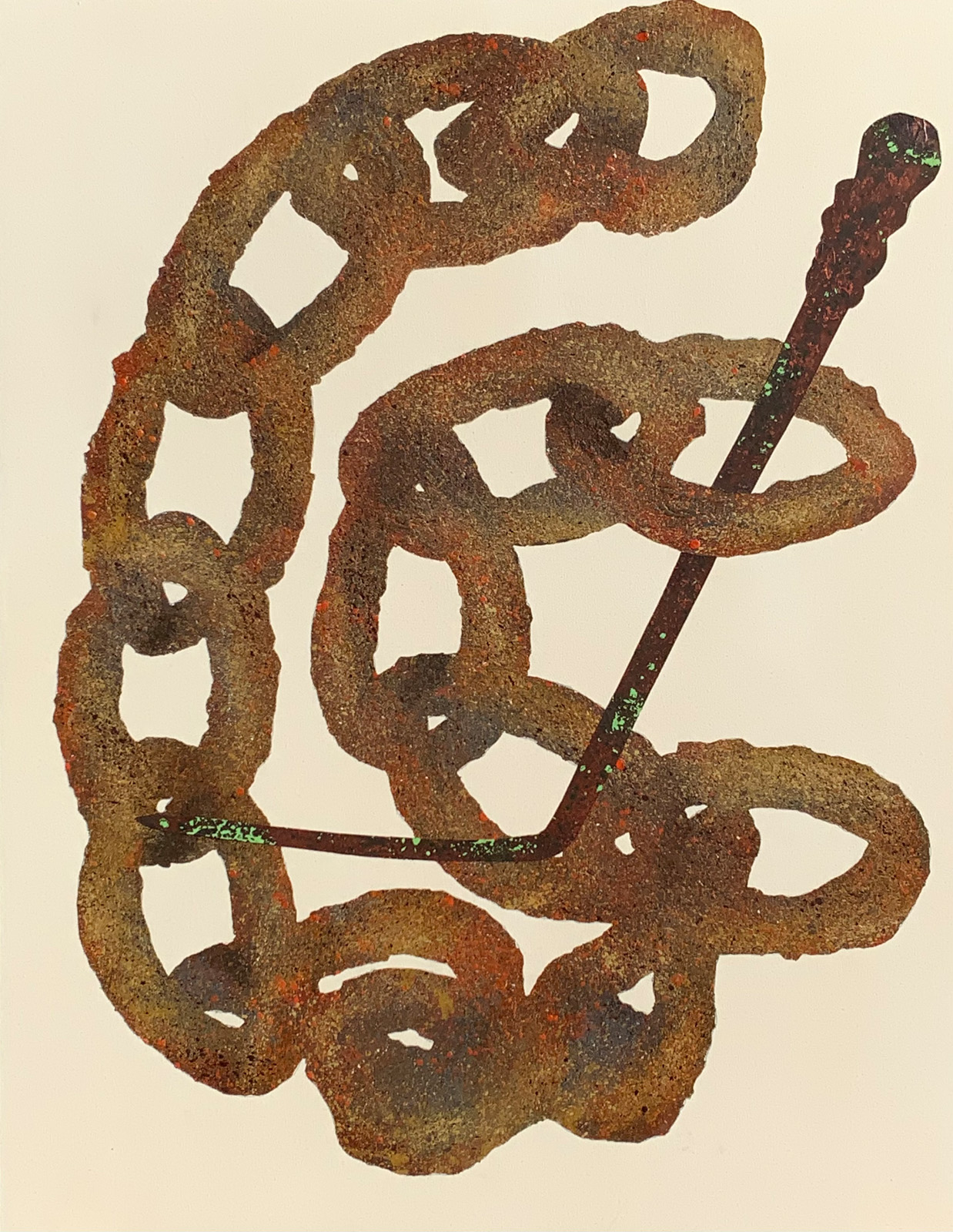
Bun Fall
2024 · acrylic on canvas · 155 × 120 cm
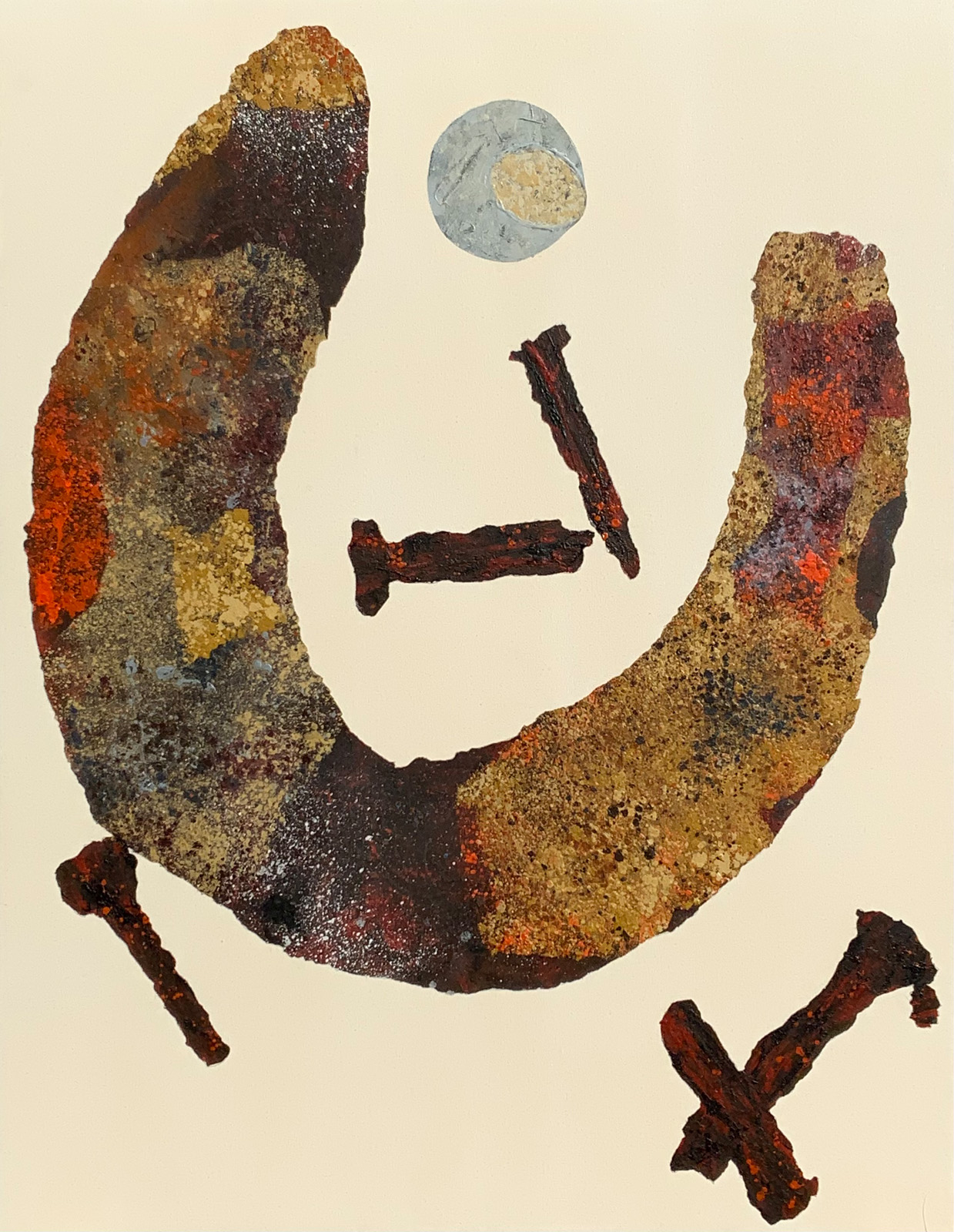
Oliver's Army
2024 · acrylic on canvas · 155 × 120 cm
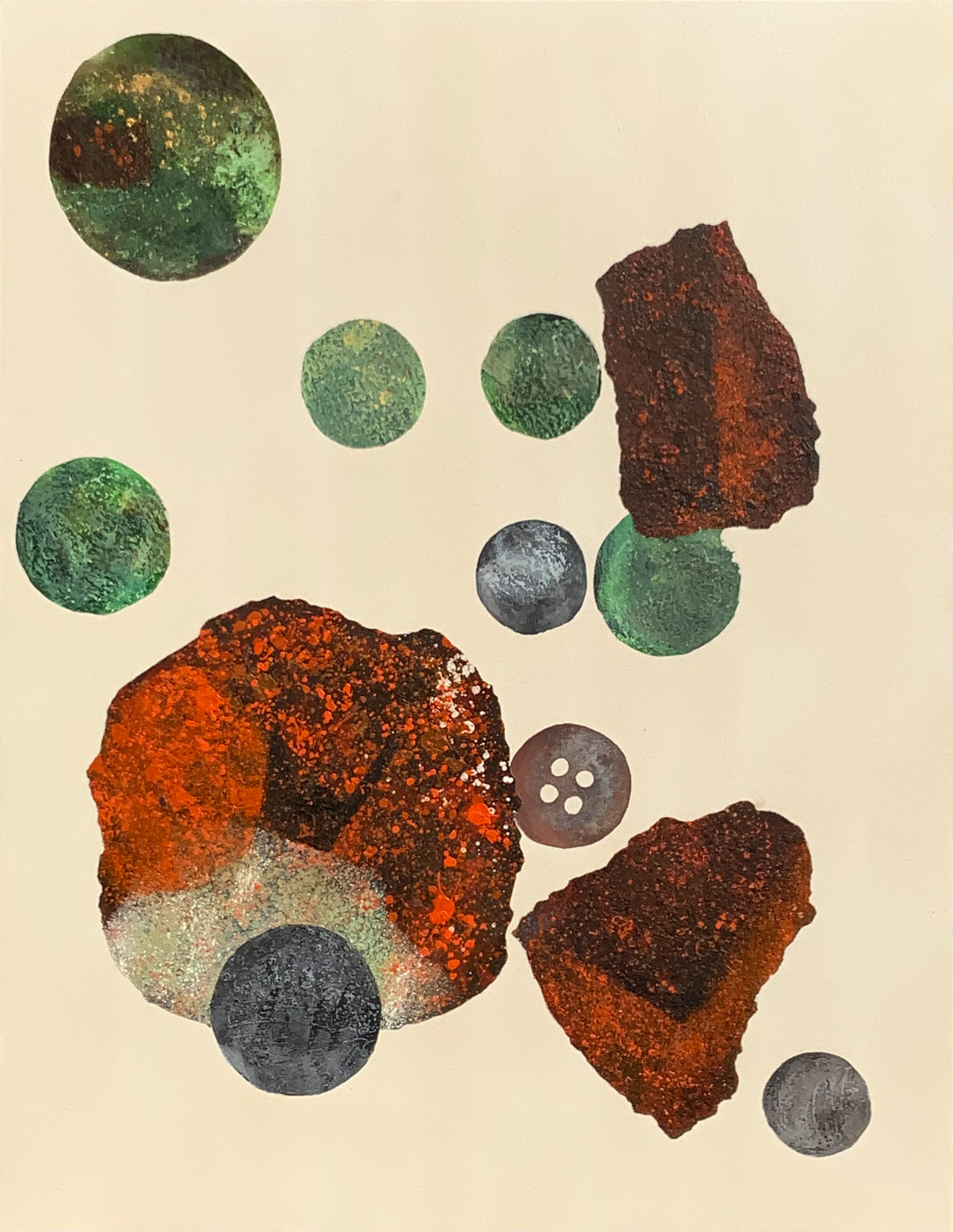
The Land of Shod
2024 · acrylic on canvas · 155 × 120 cm
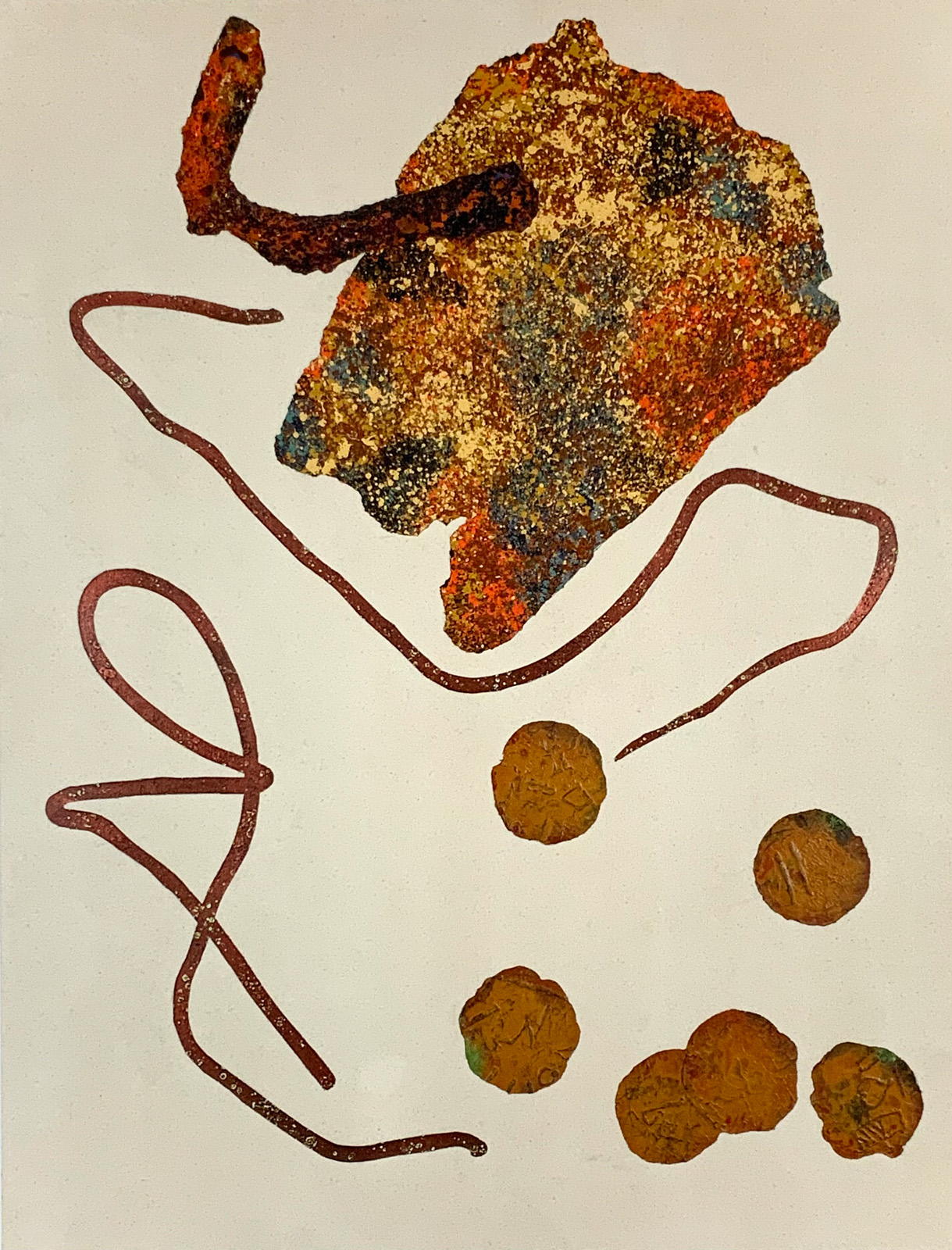
Ripae Artificis
2024 · acrylic on canvas · 155 × 120 cm
Supported by