Unearthed
Lincolnshire Series
The Lincolnshire Series developed through a sustained engagement with the rural landscape around Wood Enderby. During a six-month residency, walking the fields, looking, gathering and learning about the history of the area became inseparable from the making process. I have continued to return to the same land, developing a relationship with a place whose history is not contained within a single period, but remains dispersed through its soil, watercourses, field boundaries, buildings and local memory.
The paintings begin with small things encountered in the landscape: fragments of brick and pottery, iron and bronze, buttons, coins, worked stone and other objects disturbed by cultivation and brought back into the present. I do not treat them as illustrations of history or as isolated archaeological curiosities. They are points of contact between material, place, memory and imagination.
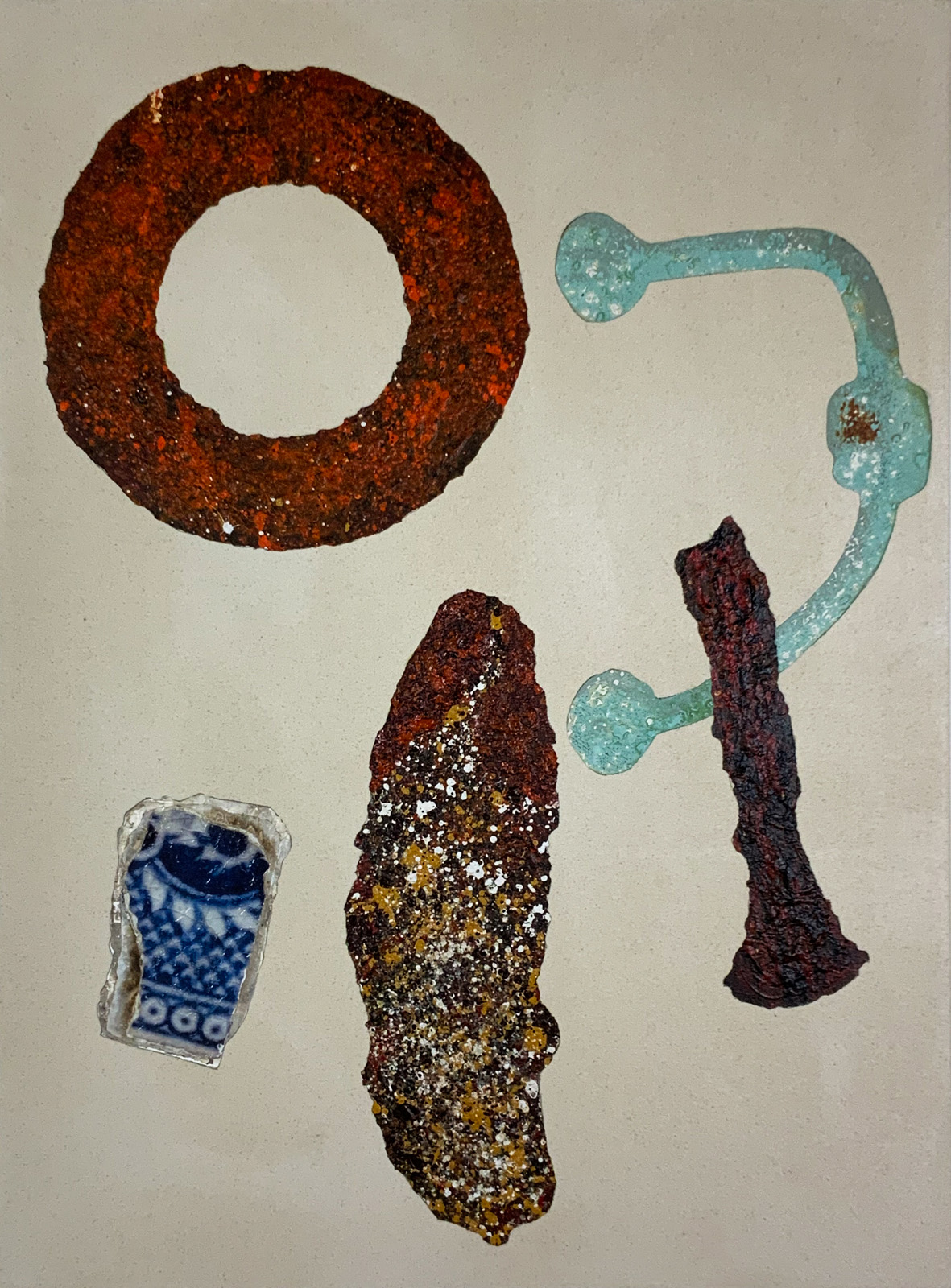
Mega Kintsugi
2024 · acrylic on canvas · 120 × 89 cm
Private Collection
Each object carries evidence of making, use, loss, weathering and time, while also opening a space for invention. Through drawing, projection, staining, sanding, washing and repeated layers of paint, something that can be held in the hand is enlarged and re-seen. Its surface becomes a field within the painting: built up, disturbed, partially erased and returned to, much like the landscape from which it emerged.
The paintings do not attempt to reconstruct the people or events of the past. They begin instead with an encounter in the present and with the question of what that material can still communicate. Painting becomes a way of thinking through the object and the place together.
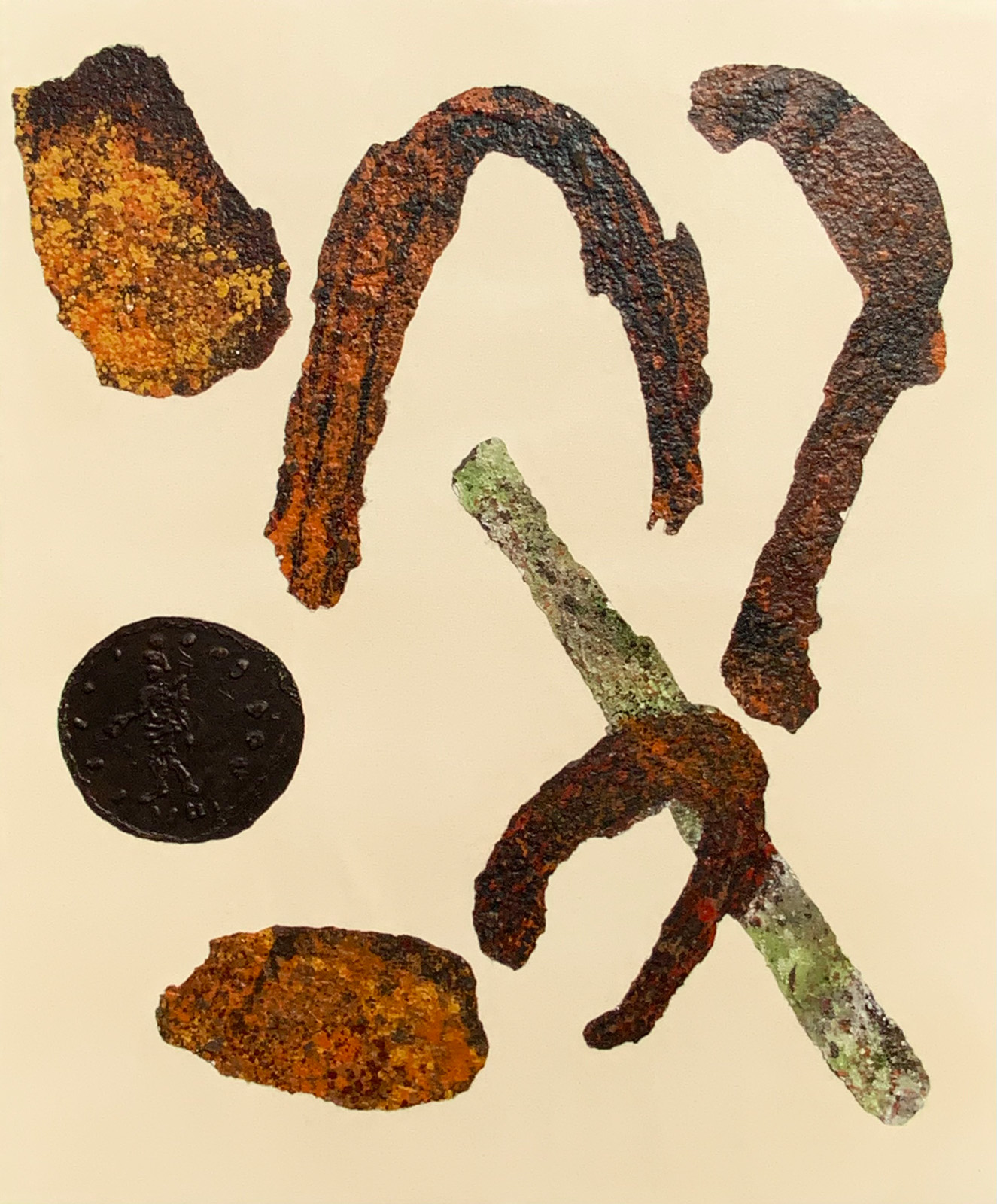
The Feast of Bacchus
2025 · acrylic on canvas · 120 × 100 cm
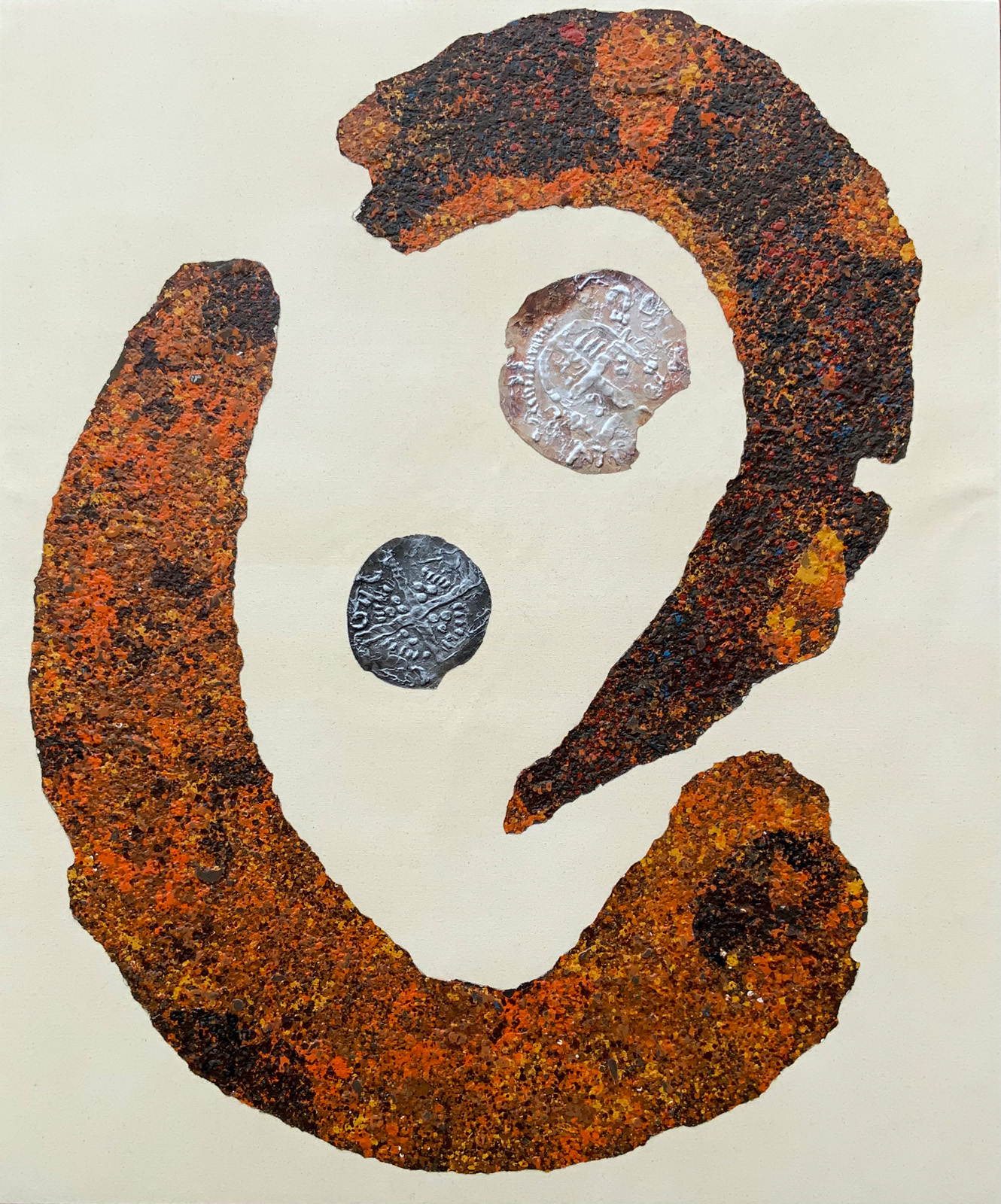
The Farrier's Purse
2025 · acrylic on canvas · 120 × 100 cm
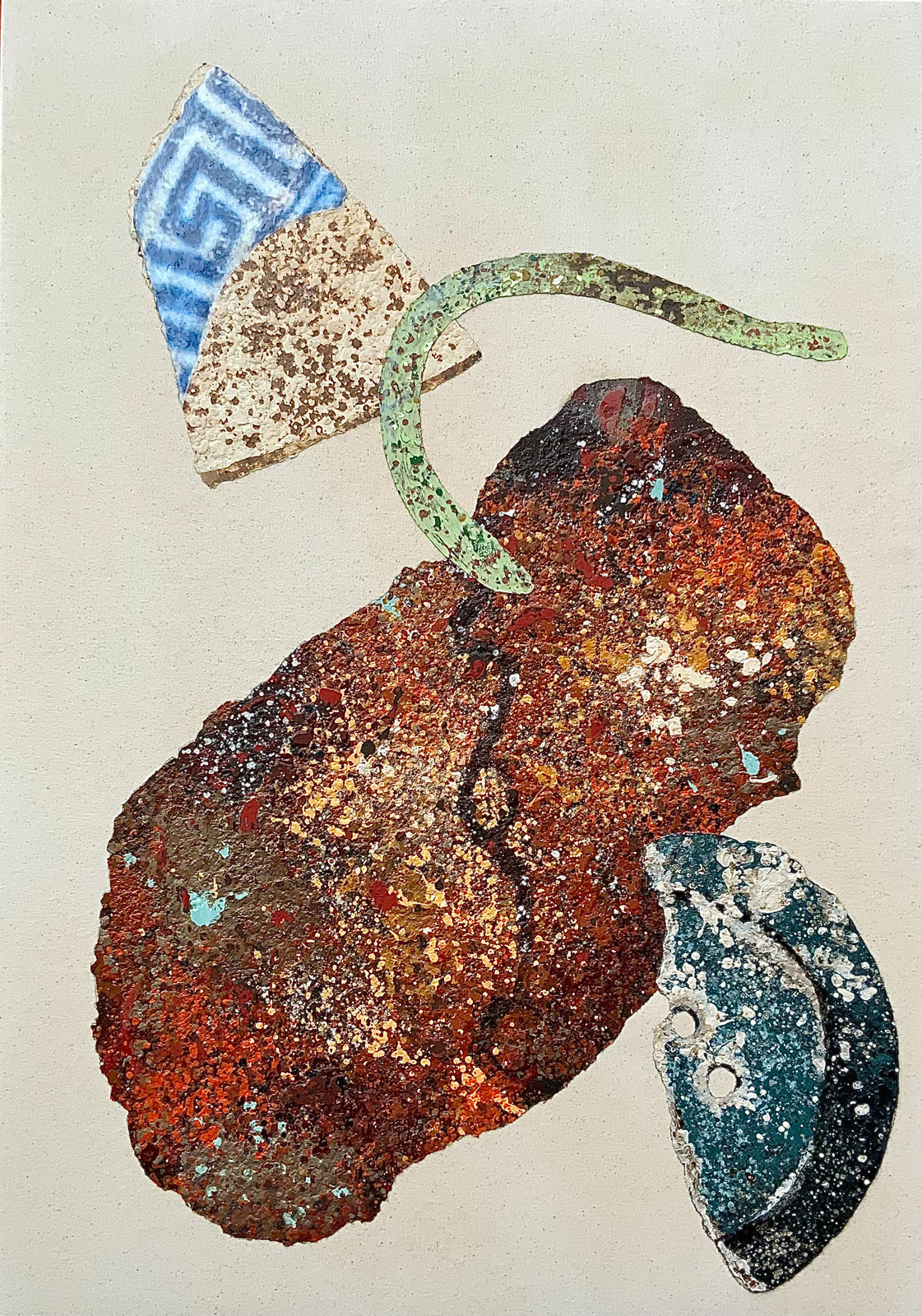
The Big Meander
2025 · acrylic on canvas · 85 × 60 cm
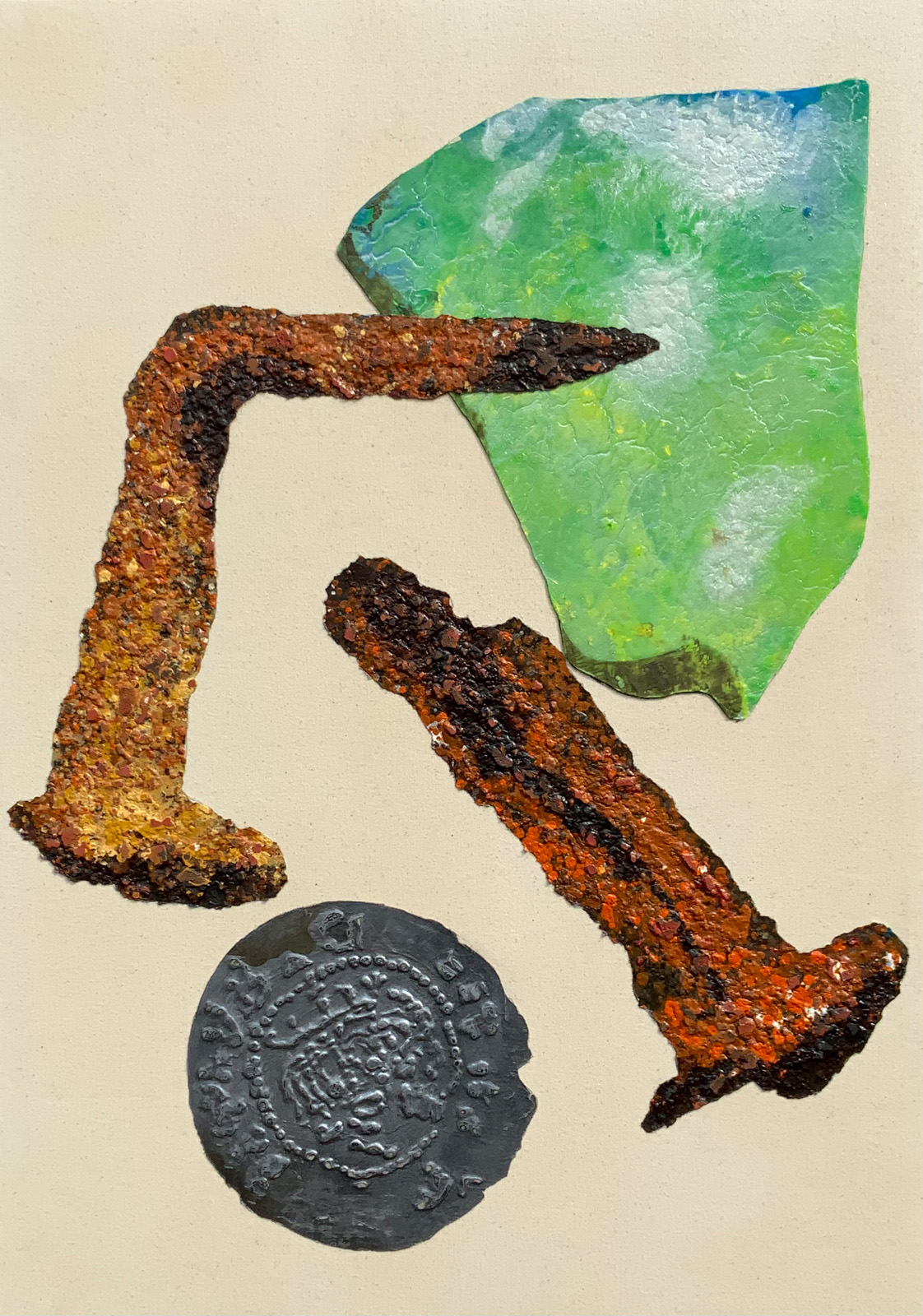
Hammered
2025 · acrylic on canvas · 85 × 60 cm
The Historic Environment
Wood Enderby is a small Lincolnshire village within a much larger historic landscape. Situated close to Haltham, with Tattershall to the south-west and the site of the Battle of Winceby to the north-east, it occupies a landscape shaped by centuries of settlement, agriculture, movement, conflict and changing patterns of land ownership.
The Haltham Beck flows through farmland where much of my fieldwork has taken place. The beck is an enduring feature within a landscape that has been repeatedly inhabited, worked and altered. Over successive visits, the surrounding fields have yielded Roman coins and brooches, Iron Age material, medieval and later objects, fragments of pottery and worked metal. Together they suggest continuity of human activity rather than the remains of one easily defined archaeological site.
Among the material are copper and bronze fragments, casting waste and worked objects that appear to suggest much earlier metalworking activity. These finds sit beside later industrial iron slag, which, according to the landowner, was deliberately spread across the fields as an agricultural soil improver, helping to improve the soil by reducing acidity. Similar-looking materials can therefore belong to very different moments: one associated with making metal, another with the modern improvement of farmland.
The surrounding area also contains the traces of conflict. The Battle of Winceby was fought nearby in 1643 during the English Civil War, and repeated visits to the wider landscape have produced a substantial number of musket balls. They cannot all be assigned securely to that event, but their presence introduces another history of movement, violence and loss into land already carrying evidence from much earlier periods.
Local memory contributes another form of evidence. The farmer recalls, his grandfather had "scrobbled out"—a local expression for levelling—a barrow on the farm around the time of the Second World War to improve the plough line. This account is anecdotal rather than archaeologically verified, but it remains part of the remembered landscape. Considered alongside the concentration of prehistoric, Iron Age and Roman material found nearby, it becomes one of the many fragments through which the place is encountered and understood.
Beyond the immediate farmland, the wider landscape continues to reveal successive layers of history. To the north lies Horncastle, the Roman settlement of Banovallum, an important centre within the Bain Valley whose archaeological remains continue to shape our understanding of Roman Lincolnshire. The River Bain flows south through Haltham before joining the network of waterways that have influenced settlement and communication across the county for centuries. Nearby stands Bolingbroke Castle, birthplace of Henry Bolingbroke, later King Henry IV, while to the south-west lies Tattershall Castle, where this body of work was first brought together in the exhibition Brick & Stone, Iron & Bronze. Together these places frame a landscape whose history extends from prehistory through the Roman, medieval and Civil War periods to the present day, providing the wider context within which the paintings have developed.
Material, Memory and Time
French archaeologist Laurent Olivier's writing, particularly The Dark Abyss of Time: Archaeology and Memory, has become important to my understanding of this work. His conception of the historic environment as an accumulation of surviving material, rather than a sequence of neatly separated historical periods, closely reflects my own experience of the landscape and the way this body of work has evolved.
The material record does not emerge in a clean historical sequence. Roman coins, medieval buckles, pottery, modern iron slag and fragments that may relate to much earlier metalworking can occupy the same plough soil. Different times coexist, brought together through cultivation, erosion, deposition and recovery.
My understanding of the land has developed empirically: by walking it, handling what emerges, recording and cataloguing finds, listening to the knowledge held by the people who work there and reading the wider history of the area. None of these forms of evidence is complete on its own. Together, however, they begin to reveal the historic environment as something active and continually changing rather than a sealed archive of the past.
The paintings grow from this process of repeated encounter. They are not archaeological conclusions, nor do they attempt to replace archaeological investigation. They are a means of running my hand over the land as well as the history: of thinking through the accumulated material record of a place and allowing observation, uncertainty and imagination to remain present within the work.
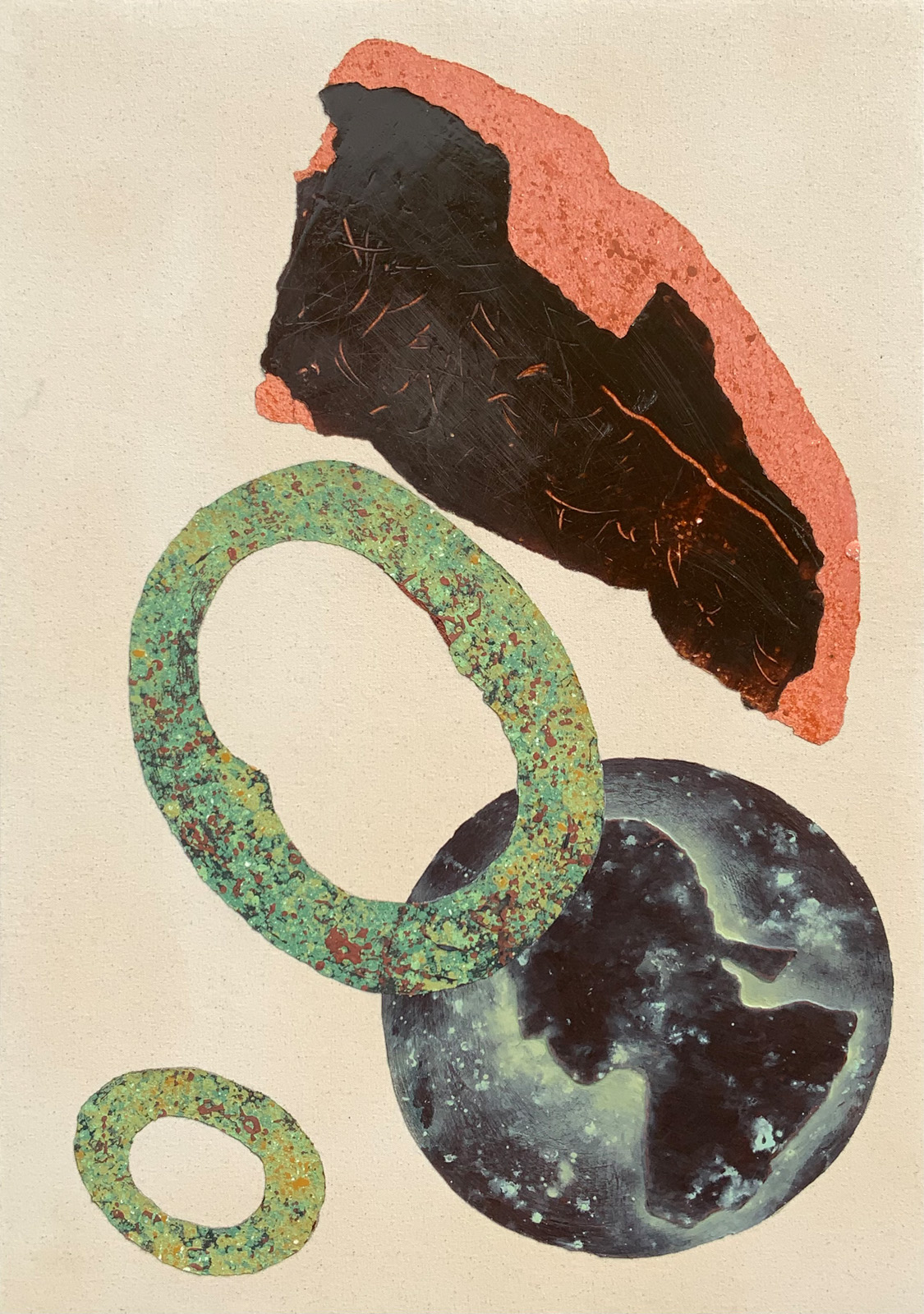
The Halfpenny King
2025 · acrylic on canvas · 85 × 60 cm
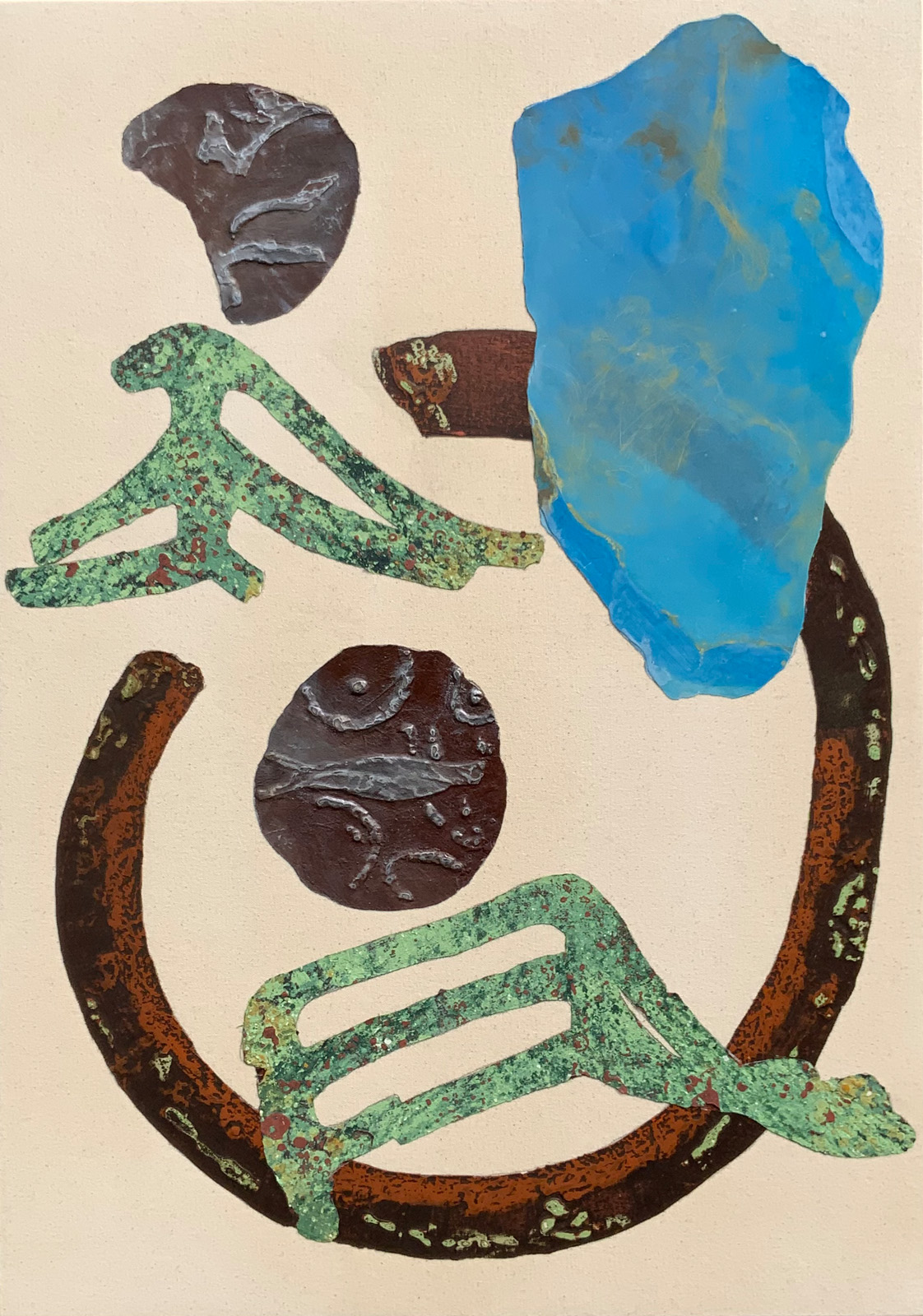
The Shivered Boar
2025 · acrylic on canvas · 85 × 60 cm
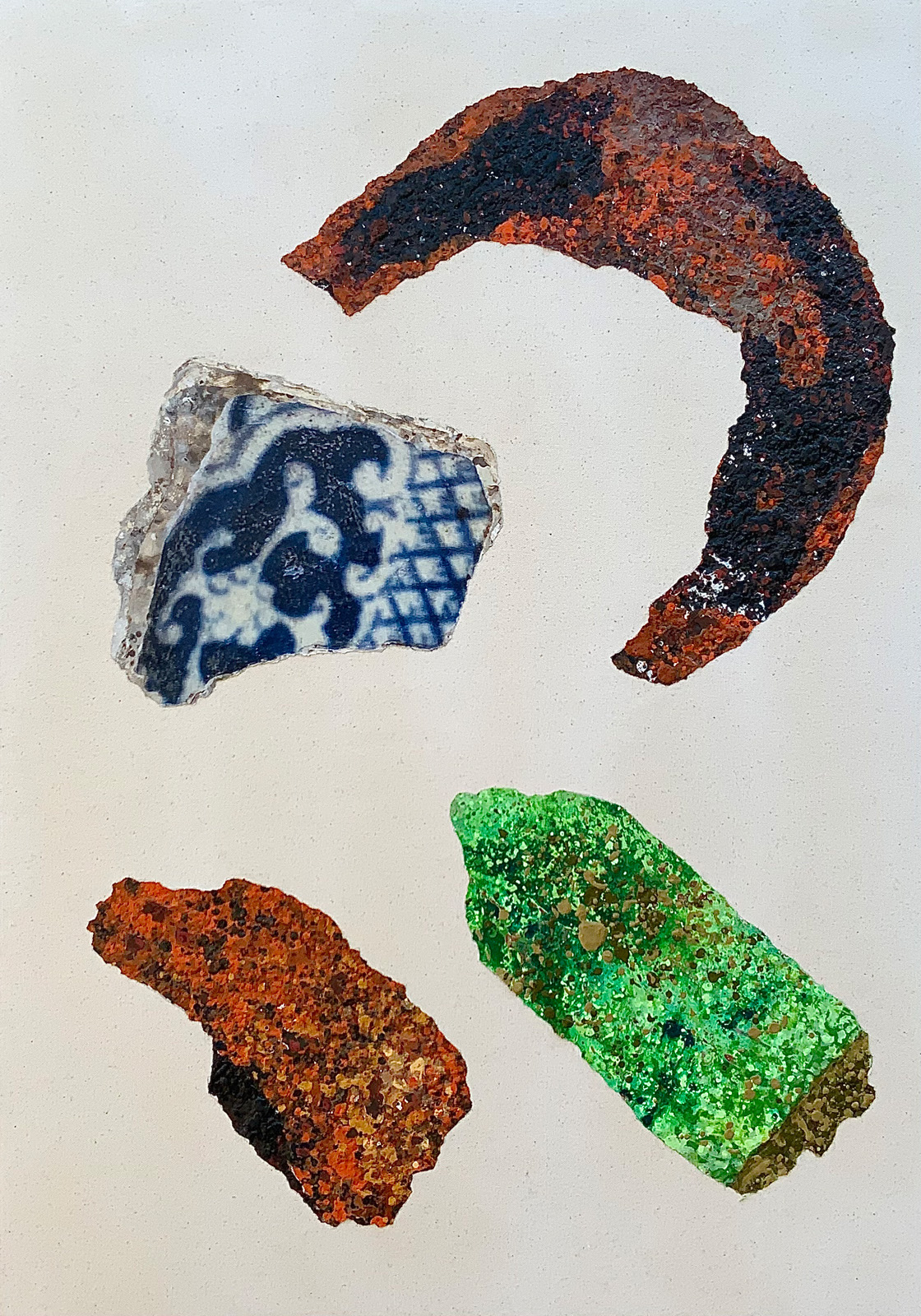
Umble Pie
2025 · acrylic on canvas · 85 × 60 cm
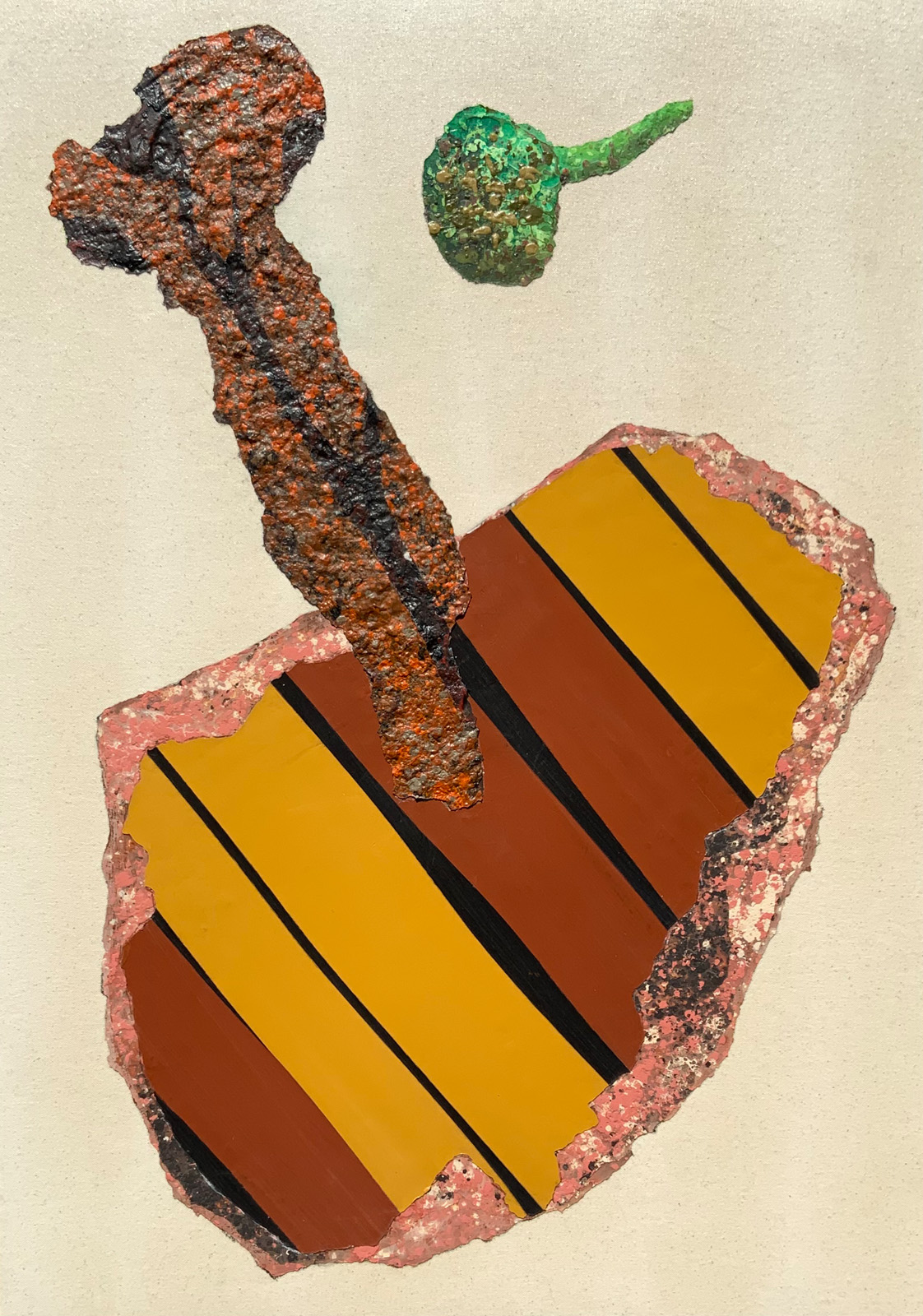
A Pie for a Bride
2025 · acrylic on canvas · 85 × 60 cm
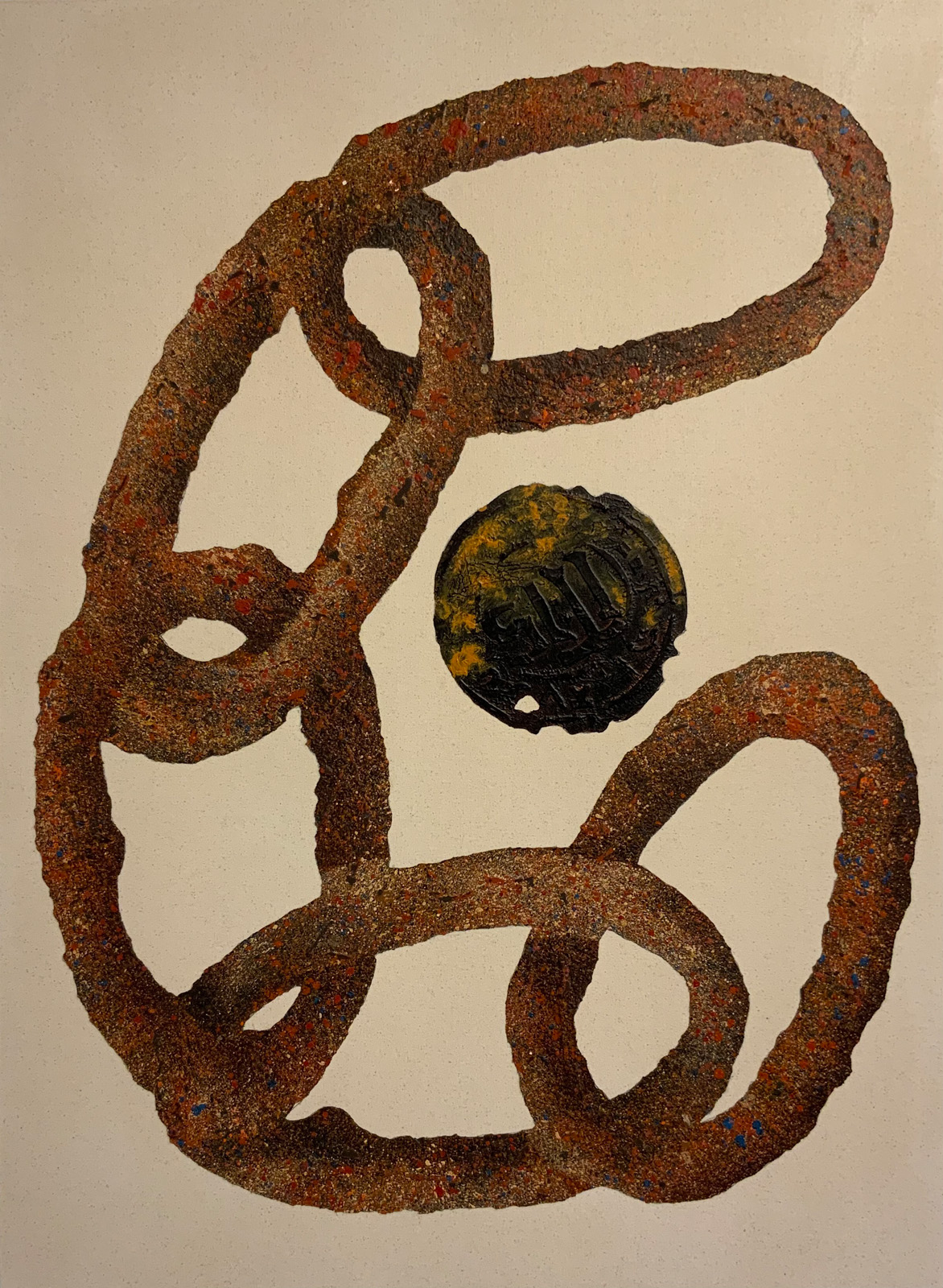
Bonjour Le Soleil
2025 · acrylic on canvas · 120 × 89 cm
Private Collection
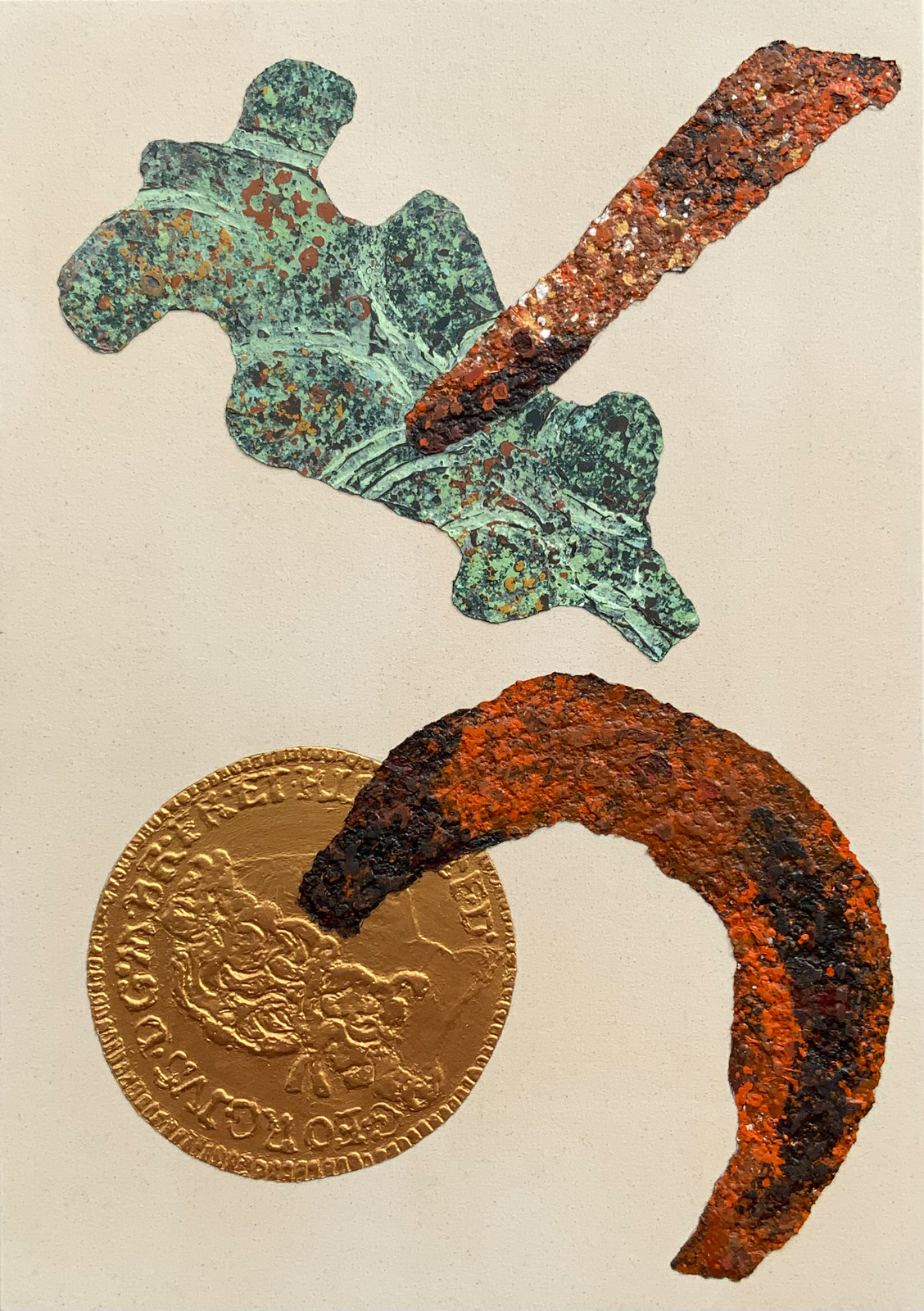
The Dualists
2025 · acrylic on canvas · 85 × 60 cm
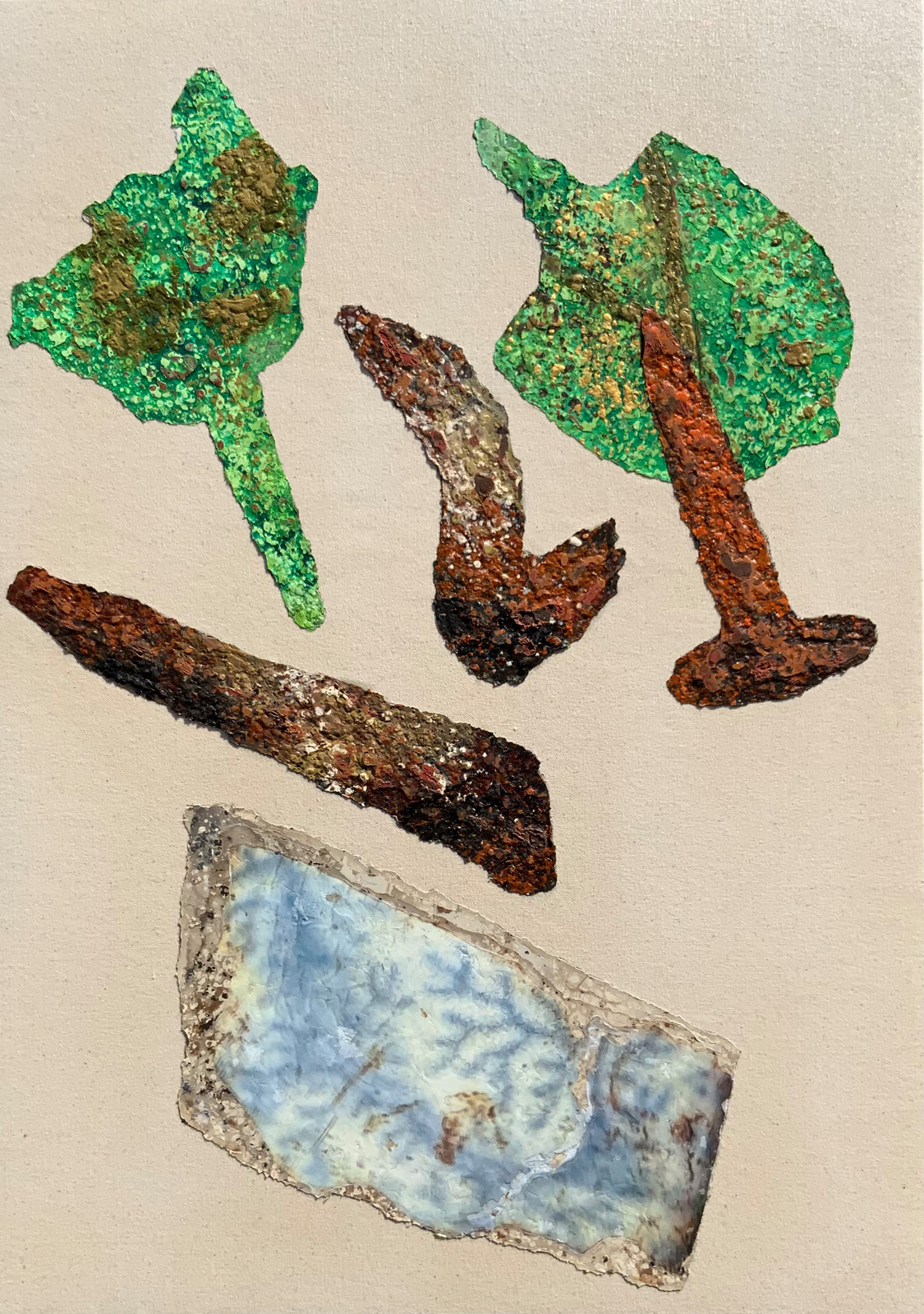
Cream Tees
2025 · acrylic on canvas · 85 × 60 cm